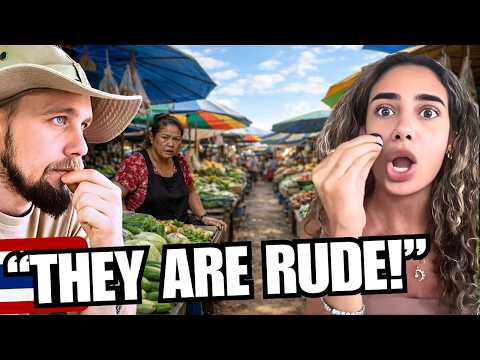
Thailand... She Went Too Far
AI Summary
The video features a long-term resident of Thailand responding to a viral TikTok from a British creator who claims that Thai locals are exceptionally rude and disrespectful to foreigners. The TikToker argues that Thai people should improve their English or at least use tools like Google Translate to communicate better, rather than ignoring tourists. The narrator of the video uses his sixteen years of experience living in Thailand to deconstruct these claims, offering a perspective rooted in cultural nuance and personal history.
The narrator begins by noting that the TikToker’s negative experiences in Thailand follow similar complaints she made about Turkey and Egypt. He suggests that if a traveler finds "rudeness" in every country they visit, the problem might lie with their own attitude rather than the local population. He observes that the TikToker comes across as aggressive and confrontational. In Thai culture, aggression is often met with a "shut down" response. Because many Thais find direct confrontation deeply uncomfortable, they may turn away or become silent to save face. To an outsider, this looks like being ignored or dismissed, but the narrator explains it is actually a defense mechanism used to avoid a stressful interaction the local person isn't equipped to handle.
A major point of contention in the transcript is the language barrier. The TikToker expresses frustration that locals don't simply say "no English" or pull out a translation app. The narrator counters this by pointing out the inherent entitlement in a tourist demanding that a local worker in their own country speak a foreign language. He questions why the TikToker herself didn't use Google Translate to facilitate the interaction. He highlights the reality of the people she likely encountered: older women or rural workers running fruit or smoothie stalls. These individuals often come from regions like Isan, where English might not have been offered in school. They are working long hours for small incomes, dealing with high levels of stress, and facing a constant stream of tourists speaking various languages, including Russian, French, and Hebrew. Expecting them to stop their work to navigate a translation app for every English-speaking tourist is, in the narrator’s view, unrealistic and disrespectful.
To provide a counter-narrative to the "rude" label, the narrator shares his own statistics. Over sixteen years, he estimates he has had roughly 20,000 interactions with Thai people. Out of those thousands of encounters, only about four were negative. He recounts instances of extreme kindness that define his experience in the country, such as locals helping him transport a broken motorbike to a garage for free, or strangers letting him stay in their home after he lost his wallet. He argues that the "majority" of locals the TikToker claims are rude represent only a tiny fraction of the population. She has likely only interacted with people in high-pressure tourist zones and hasn't met the teachers, hospital staff, or factory workers who make up the bulk of the nation.
The video also touches on a growing resentment among locals in tourist hubs. The transcript includes a perspective from a Thai person who explains why some locals are becoming less welcoming. This resentment stems from a rise in "bad behavior" by foreigners, such as stealing motorbikes, staying in hotels without paying, and leaving restaurants without settling the bill. In places like Phuket or Pai, which are becoming unrecognizable due to mass tourism, the local attitude is often a reflection of the disrespect they receive from visitors.
The narrator concludes by advising the TikToker—and travelers like her—to practice more self-awareness. He suggests that the energy a person puts out into the world often dictates the response they receive. Rather than demanding the Thai population "fix up" their behavior, he suggests the TikToker should learn the basics of the Thai language and try to understand the financial and social pressures the locals are under. Ultimately, he characterizes her complaints as a product of "influencer entitlement" and a lack of empathy for a culture that is generally soft, kind, and friendly when approached with respect.