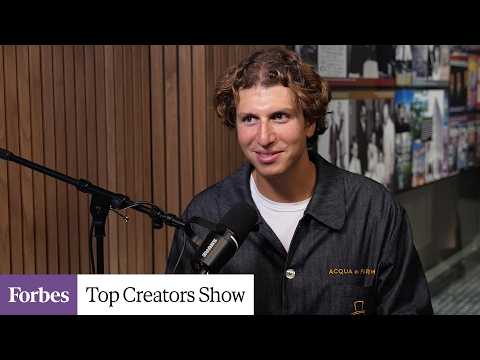
The Satire Account Followed By Billionaires: How The Gstaad Guy Built a Luxury Empire
AI Summary
The Shtad Guy, a prominent lifestyle creator, discusses the genesis of his brand, which began as a personal joke eight years ago and has since evolved into a multi-million dollar business. Initially, he created a satirical video imitating his friend's wealthy lifestyle in St. Moritz, Switzerland. This video, shared on WhatsApp, unexpectedly went viral within a wealthy social circle, leading to him being dubbed "the guy from St. Moritz" or "the Shtad Guy." The longevity of this accidental skit, which outlasted many other videos he saw, prompted him to create an account and further develop his content.
He transitioned from a dream job at Apple, working on growth for Apple Pay, to pursuing Shtad Guy full-time over four years ago. This decision was met with mixed reactions from his family and friends. His mother was risk-averse, while his father encouraged him to take the leap. Some friends expressed concern about potential embarrassment associated with his satirical content. This feedback highlighted his own fear of being perceived as "cringe," a common challenge for creatives that he had to overcome to embrace his authentic creative self. He ultimately decided to pursue his passion, driven by a significant brand deal that exceeded his Apple salary, offering him the financial security and time to scale his content creation endeavors.
The Shtad Guy's success lies in his ability to satirize the ultra-wealthy lifestyle while simultaneously forming a strong community with that very demographic. His initial jokes about the absurdities of the St. Moritz lifestyle resonated with individuals who also vacationed in places like Monaco, the Hamptons, and Palm Beach. These were people with a degree of self-awareness about the excesses of their lifestyle, who could laugh at themselves. He uncovered an existing joke within this community and brought it to the internet, focusing on their consumption habits. While acknowledging the indulgence, he frames luxury as an "icing on the cake" rather than a necessity. Brands like Loro Piana, known for their exceptionally crafted items, became a focal point. His humor often targeted the understated nature of such brands and the obsession with them. Ironically, he would purchase these items himself, catching the attention of brands like Loro Piana. The Loro Piana team noticed that their slowest-moving items were becoming their fastest-moving due to his videos, a testament to his reverse-intention impact.
His relationship with Loro Piana deepened beyond on-camera content. He was invited to visit their cashmere farms in Mongolia, witness the cross-breeding of goats for fine cashmere, and tour their factories in Italy, gaining an intimate understanding of their craftsmanship. This behind-the-scenes access is crucial to his authentic storytelling, as he emphasizes the importance of genuinely loving and understanding what you discuss.
For brands, especially luxury ones, he advocates for a shift away from traditional advertising towards genuine connection. He dismisses the overused term "authenticity," preferring "credibility," and emphasizes that brands should work with creators who can organically convey their message without it feeling like a commercial. He views creators as "ambassadors" who should tell the brand's story in their own voice, rather than being used as a vehicle for press releases. He criticizes brands that dictate specific talking points, recognizing that audiences are savvy and can detect a forced advertisement. Instead, creators should be given products to explore and share their genuine reactions, fostering a sense of alignment with the audience.
He argues that luxury brands, while protective of their image, cannot control perception. Creators should have the freedom to digest and perceive products in their own way, acting as a public, truthful customer rather than reading a script. He believes brands should control their own channels but not attempt to control independent creators' platforms.
His content creation process, despite lacking a formal background in media or marketing, is driven by a strong understanding of digital creators' advantage: rapid feedback loops. He uploads nearly daily, using audience reactions to refine his strategy. He has developed skills as an editor, videographer, and scriptwriter through this iterative process. He notes the democratization of content creation, where tools and algorithms now allow individuals to produce high-quality content that would have previously required a large team.
A typical 60-second Shtad Guy video requires approximately 20 hours of work, with significant time dedicated to scriptwriting and storyboarding. This process begins with archetyping, studying real-life individuals who embody the Shtad Guy persona. He meticulously researches their consumption patterns, manners, and lifestyles to create engaging, informative, and entertaining content. The content capture must be visually appealing, and the editing must align with the narrative. He acknowledges that the process is more art than science, as some videos that require extensive effort may not perform well, while simpler ones can achieve great success. The emotional impact on the viewer is a key, intangible element.
His research methods for these archetypes initially involved informal coffees and lunches with individuals he identified as Shtad Guys, asking about their calendars, events, travel, and attire. He acknowledges the privilege of growing up around such individuals, which provided him with adjacent exposure. Now, people often approach him. His initial pitch to potential interviewees involved a promise of secrecy and clarity that his aim was humor and uncovering truths, not exposure. He found that most were happy to share, partly as a form of bragging and partly to support a young creative. He notes that in cities like New York and London, inspiration is readily available by simply observing people in upscale venues.
He observes that extreme wealth can lead to entitlement, and while some individuals are genuinely self-aware, many tend to "one-up" each other, especially in social settings with alcohol. He prefers interactions during daylight hours with families who appreciate the humor.
The Shtad Guy brand has expanded beyond brand partnerships to include product lines, such as his jewelry brand, Pubelle, which features charms expressing personal interests and hobbies. He also consults with luxury brands, offering insights into the consumption habits of ultra-high-net-worth individuals under 40. He notes a generational difference in spending, with younger generations often enjoying more luxuries than their parents, sometimes embracing trends like hype culture and brands like Chrome Hearts, while their parents might focus on excellence in wine, travel, and clothing.
He identifies charity events as the most over-the-top "Shtad Guy" moments, where the value of clothing and diamonds often surpasses donations, highlighting the absurdity of ego-driven philanthropy. He observes a significant divide between American and European outrageous moments. Europeans, with longer vacation times and multi-generational wealth, tend to have more regimented spending habits and a certain "snobbery." Americans, with limited vacation time, tend to approach life's celebrations with less judgment, splurging and enjoying the moment, as evidenced by their significant luxury spending in places like Saint-Tropez.
His audience has evolved from a niche concentration of ultra-high-net-worth individuals to a broader base of nearly 2 million followers, including aspirational individuals. He aims to offer relatable content while also de-glamorizing the vulgar aspects of extreme wealth. He distinguishes between "a la poubelle" (to the trash) content, which debunks superficial trends, and "fantastique" content, which highlights substance over status.
He challenges the common social media advice of being oneself, arguing that fiction can be equally, if not more, effective. He notes that popular films and books are largely fictional, and questions why social media has lagged in this regard. He believes audiences see through forced authenticity and that a polished or even fictionalized version of self can resonate, much like an actor playing a role. He finds it surprising that fiction is not more prevalent on social media, as it can heighten emotion and improve storytelling.
Switching between his real self and the Shtad Guy persona is not always easy. While he offers the Shtad Guy's composed advice, he admits he doesn't always follow it himself. He admires the Shtad Guy's composure, access without need, timelessness, kindness, and well-mannered demeanor, qualities he strives to embody. His non-Shtad Guy indulgence is a weekly fast-food meal, particularly Chick-fil-A in the US.
His business ventures include partnerships with AP watches, his own Pubelle brand, Loro Piana, and Aqua di Parma. He also collaborates with tourism boards and hotel groups, recognizing hospitality as a key experiential aspect of luxury. He is planning a major car collaboration with Bentley, a limited edition "Chalet on Wheels" Bentley Bentayga, specced to reflect the coziness and elegance of a chalet. This project, which he has been pursuing for years, involved extensive collaboration with Bentley's design team. The car will feature subtle branding, emphasizing the chalet aesthetic. He also previously worked with Bombardier on the launch of their Global 8000 aircraft.
His daily life, when not traveling, involves a mix of problem-solving, creative endeavors, and content production. He operates as a generalist, leveraging technology to enhance his skills. He has recently launched a podcast, breaking character for the first time on Logan Paul's "Impaulsive" podcast. The podcast allows him to have conversations with people he admires and wants to learn from, focusing on stories of excellence and passion. While currently a small part of his business, he sees it as a long-term investment. He travels extensively, averaging two to three flights per week, driven by deals, events, and content creation.
His bucket list trip is to South America, specifically Peru, to see the vicuña, a creature known for its fine wool. His last meal would be ramen. He is motivated by a passion for expertise and discovering stories of excellence, finding inspiration in individuals who have achieved mastery in their crafts.