"46% MORE Bankruptcies" - Is The Strait Of Hormuz Blockade DESTROYING Farmers?
Audio Summary
AI Summary
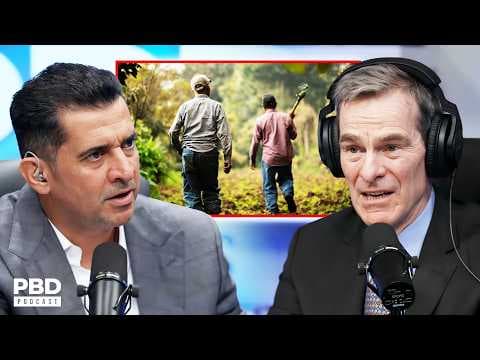
Farmers are currently facing severe economic hardship, with bankruptcies up 46% last year. They are struggling with increased regulations and soaring fertilizer prices, which jumped from $300 to $650 in months. Farmers' profit margins are incredibly thin, averaging 0% to 5%, and often they lose money. This situation is impacting the broader economy, with first-time home buyers dropping from 40% to 26%, a problem exacerbated by recent global events.
While direct checks to everyone are inflationary, subsidies for farmers are considered necessary, with $44.3 billion allocated this year. This support is crucial as less than 9% of farmers are under 35, indicating a lack of younger people entering the profession. Historically, farmer subsidies have increased significantly, from $11-12 billion ten years ago to the current amount.
The discussion highlights the underappreciated issue of fertilizer supply, particularly from the Strait of Hormuz. This vulnerability could lead to countries falling and regimes collapsing, emphasizing the global impact of agricultural instability. The rising prices of gasoline, expected to reach $5-$6 per gallon, and food prices, which will increase in three to five months, will contribute to widespread unrest, especially before the midterms. Even if the Hormuz issue is resolved, the short-term economic pain is unavoidable.
The U.S. relies on its farmers, and the fertilizer issue is seen as much worse for the rest of the world, making American leadership essential. A critical challenge for farms is the lack of American workers, leading to produce rotting on the vine and an increased reliance on illegal immigrants.
The conversation then shifts to the debate around farming subsidies and their impact on the free market. While some argue that eliminating subsidies would lead to cheaper food and more productive farms by weeding out inefficient producers, others, like former President Trump, have continued or even increased subsidies. Trump, despite his free-market rhetoric, is seen as catering to farmers for their votes, particularly in states like Iowa, where corn ethanol subsidies are popular despite their inefficiency and environmental impact.
The argument is made that there's no strong anti-free market case against food production; it's a simple process of planting, growing, and selling, with prices fluctuating naturally. However, government intervention often leads to artificially high prices, with the government then buying surplus at these inflated prices and distributing it through programs like food stamps, effectively nationalizing aspects of the agricultural system.
This trend of consolidation is not unique to farming. Similar patterns are seen in banking and defense industries, where the number of companies has shrunk significantly, leading to less competition. While large companies can be efficient, concerns are raised about crony capitalism, where powerful lobbyists influence regulators to create rules that favor larger players, hindering smaller businesses. This system, where monopolies are effectively granted by the government through regulations and a lack of enforcement of anti-monopoly laws, undermines true competition.
The example of Apple's dominance in the smartphone market (55% U.S. market share) is cited as a potential failure in enforcing monopoly laws, which traditionally focused on consumer welfare and anti-competitive practices. The speaker advocates for limited government and the elimination of lobbying to foster genuine free-market competition, where smaller businesses have a fair chance.
The discussion concludes with an invitation to the VOL Conference, an annual event aimed at discussing business, money, family, faith, and politics without inhibition. Expecting 12,000 attendees this year at the MGM Grand Arena, the conference offers a comprehensive manual and aims to provide valuable insights for business owners and individuals looking to grow.