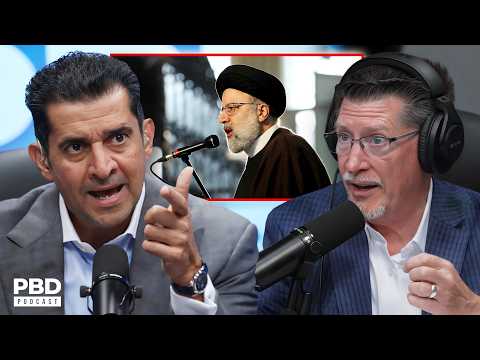
“They Control The World’s Oil” - Iran’s Strait Of Hormuz Power THREATENS Global Economy
Audio Summary
AI Summary
Iran has always possessed significant power over the Strait of Hormuz due to its geographical location, making it challenging for foreign invaders to control the region in the same way Iran can. This geographical advantage made other nations hesitant to invade Iran, as the potential for disrupting global oil markets was always a major concern. The current situation has made Iran's crucial role in the global oil market even more apparent.
A significant new factor amplifying Iran's power is the advent of drone technology. Previously, concerns revolved around blockades or mines in the water, but now, Iran can produce drones for a few thousand dollars, and the mere threat of their use is enough to deter shipping. This technological shift, where even poorer countries can effectively defend themselves against more powerful nations like the United States using inexpensive drones against multi-billion dollar assets, represents a major change in military strategy. A small oil nation, unable to acquire traditional military hardware or amass a large army, can, overnight, become a regional military power with 10,000 drones. The only remaining questions are the payload capacity of these drones and the sophistication of their electronic countermeasures. This signifies a departure from traditional warfare based on the size of armies, towards a new era where technology, especially autonomous vehicles, plays a decisive role.
The immediate aftermath of the attack has seen Lloyds of London close the Gulf to shipping, effectively cutting off insurance coverage. This means that even if a ceasefire is declared, shipping companies will be hesitant to resume operations without insurance, regardless of any direct military threat. The discussion then shifted to how many ships have actually transited the Strait since the incident. While some reports indicated a single ship, others suggested ten ships had transited in the last 24 hours, which is significantly lower than the normal daily activity of 60 ships, indicating a 10% operational rate. A key question is whether these transiting ships paid any tolls to Iran, with some reports suggesting that some ships have indeed paid. The idea of a 50/50 split ownership of the tolls was mentioned, possibly as a negotiation tactic, but this would ultimately lead to increased costs for consumers as these taxes are passed on.
The speaker expressed skepticism about the current ceasefire terms, believing that if certain conditions are met, Iran would be seen as the victor in the negotiation, which the U.S. President would likely not allow. The political ramifications, particularly concerning the upcoming midterms, were highlighted. A month prior, the Senate was unlikely to go Democrat, but recent developments have shifted it to a 50/50 chance, with even traditionally Republican states like North Carolina now potentially leaning Democrat in Senate races. This shift is primarily attributed to economic issues, specifically affordability and inflation.
The ceasefire's impact on the economy is a major concern. The flow-through effect of rising oil prices will be reflected in economic data like the Consumer Price Index (CPI), potentially keeping inflation high through the summer months. Despite recent drops, oil prices are still significantly higher than six weeks ago, requiring a substantial further decline to return to pre-crisis levels. This exacerbates an already existing inflation problem that the Federal Reserve was grappling with, along with a weak labor market. The speaker emphasized the need for oil prices to return to $60 immediately, as traders, despite a ceasefire, will continue to hedge their bets due to the lingering two-week window of risk, preventing a quick return to lower prices. A definitive resolution, rather than a ceasefire, was preferred to provide economic certainty.
The speaker, an American born and raised in Iran, shared personal experiences from the Iran Revolution and the war with Iraq, recalling the fear and uncertainty of those times, such as his father taping windows to protect against blasts. He expressed deep sympathy for the Iranian people, particularly children and parents, who desire freedom and a better life, but noted that this remains elusive as long as the IRGC (Islamic Revolutionary Guard Corps) holds power due to their fanatical ideology. While acknowledging the libertarian argument that this is not "our problem," the speaker found solace and guidance in scripture, specifically Psalms 82:4, which calls to "Rescue the weak and the needy. Deliver them from the hand of the wicked." He concluded by expressing faith in prayer for a miracle, given the seemingly impossible circumstances, and ended with a call to action for viewers to subscribe to their YouTube channel, highlighting its growth and the importance of viewer support for expanding their operations and delivering better content.