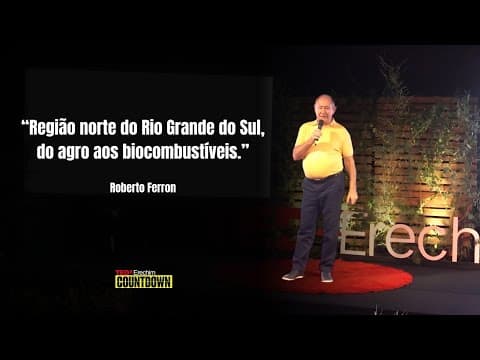
Região norte do Rio Grande do Sul, do agro aos biocombustíveis | Roberto Magnos Ferron | TEDxErechim
Audio Summary
AI Summary
Decarbonization, energy transition, and biofuels are global priorities. Brazil, particularly the Alto Uruguai region, is a leader in this transformation. Historically, energy evolved from ancestral fire to wood, which led to deforestation, and then to fossil fuels, causing significant environmental problems. Fossil fuels are responsible for 75% of greenhouse gas emissions and global warming.
Brazil's vast land, with 8% arable and 21% pastureland, offers immense potential. Importantly, 50 million hectares of degraded land can be repurposed for agriculture without new deforestation. Brazil also boasts 66% native forest, abundant water, fertile soil, and sunlight.
The agricultural revolution, spearheaded by Embrapa, transformed soybeans from food to energy. Brazil is now a major exporter of commodities and a producer of clean, biodegradable biofuels. "Green oil refineries" produce diesel from grains like sunflower and canola, and trees like macaúba, reducing greenhouse gas emissions by 50-90%. A plant in Passo Fundo produces 100% biodiesel, reducing emissions by 99.5%.
Brazil has 68 biodiesel companies and 356 ethanol industries, with 17 new ethanol plants underway. Rio Grande do Sul is a biotech hub, with 70% of its biodiesel companies in the northern region. A new wheat ethanol plant in Passo Fundo will produce 22% of Rio Grande do Sul's ethanol and 27,000 tons of vital gluten, currently 100% imported. This plant alone will boost Passo Fundo's GDP by 23%.
The biofuel industry utilizes organic waste like wood chips, bagasse, and rice husks, creating agro-energy. This transition signifies food security, energy autonomy, national sovereignty, sustainable development, job creation, and research advancements. Rio Grande do Sul is a global example, demonstrating sustainable regional development and bioenergy production for planetary decarbonization.