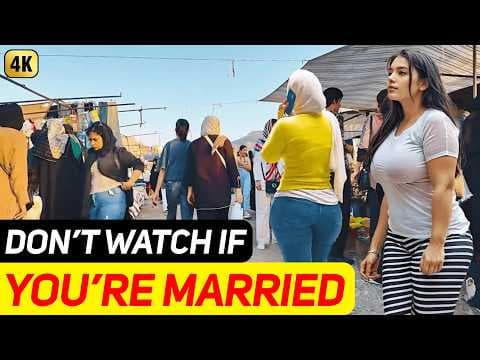
Life in UZBEKISTAN! - A Paradise of EXTREMELY BEAUTIFUL Women and LOW PRICES (Documentary)
AI Summary
Uzbekistan, officially known as the Republic of Uzbekistan, is a Central Asian nation with breathtaking landscapes and welcoming people, offering a clear window into the region's unique blend of mystery, history, and hidden stories. As one of the seven independent Turkic states, it gained independence from the Soviet Union approximately 35 years ago. Covering about 447,400 square kilometers, much of Uzbekistan consists of deserts and mountains, yet it is the most populous country in Central Asia, with roughly 38 million inhabitants.
Tashkent, the capital, serves as the primary gateway for tourists. During the Soviet era, it was a significant commercial hub and the third most populous city in the Soviet Union after St. Petersburg and Moscow. Today, it is home to around 3 million people. Uzbekistan is a landlocked country, possessing only rivers and lakes. The Aral Sea, once the world's fourth largest lake, has dramatically shrunk over time.
Uzbekistan is remarkably rich in natural resources, ranking as the fourth largest gold producer globally. It also boasts significant reserves of uranium, natural gas, oil, and coal. Its fertile lands make it one of the top five cotton producers worldwide. These resources are exported to countries like Russia, China, Kazakhstan, and Turkey, contributing to its relative prosperity within the region.
Historically, Uzbekistan was a vital center of life and trade in Central Asia, serving as a crucial hub on the Silk Road, which facilitated cultural exchange between China and Europe. Its strategic importance attracted powerful rulers such as Genghis Khan and Alexander the Great. The Mongol conquests, in particular, left devastating scars. Later, the great Turkic ruler Timur rose to power, transforming Samarkand into a center of science and philosophy by attracting scholars and philosophers. However, by the 16th century, the Silk Road's glory faded, leading to economic difficulties and a struggle to maintain independence against Russian expansion. In the 18th century, it fell under the Russian Empire's control, and in 1924, it was incorporated into the Soviet Union. The collapse of the Soviet Union in 1991 granted Uzbekistan its independence and rebirth, a pride evident in its people and culture today.
The country is divided into 12 regions and one autonomous republic, Karakalpakstan, in the west. It shares borders with Afghanistan, Turkmenistan, Tajikistan, Kyrgyzstan, and Kazakhstan. Besides Tashkent, Samarkand and Bukhara are major historical and cultural centers. Flights from Istanbul to Tashkent typically take 4 to 5 hours. Tourists can stay for up to 30 days without a visa, while longer stays require work and residence permits.
Uzbek and Russian are widely spoken, and speakers of closely related languages like Turkish and Azerbaijani can often communicate effectively. Over 90% of the population is Muslim, reflecting its identity as a Muslim Turkic nation. Despite this, Uzbekistan is a modern country that upholds freedom of dress and religion. Contrary to some perceptions, it is considered one of the safest, most livable, and peaceful places in Central Asia. For those with income in US dollars, the country can feel like a paradise due to favorable exchange rates, making one feel like a "billionaire" with the local currency, the Uzbekistani sum.
Upon arrival, visitors will encounter lively bazaars, historic covered markets, and a mystical scent in the air. Uzbek bakeries are almost sacred, producing fresh, dense, rich, and hearty bread in traditional tandoor ovens throughout the day at remarkably affordable prices. This bread is nutritious and satisfying, with one legend stating it could remain fresh for up to a month. An average bakery produces around 8,000 loaves daily, selling every single one. The food culture is primarily meat-centered, offering high-quality dishes like shish kebab for just a few dollars. Vendors often offer free samples, reflecting their confidence in product quality and the deep-rooted hospitality of the Uzbek people, who welcome visitors as guests.
Exploring the vast and complex region with a local guide is highly recommended. In rural areas, locals often invite visitors into their homes to share traditional meals and conversation, as hospitality is a matter of honor. Main dishes are typically meat- and rice-based, similar to many palates. Tea culture is prevalent, with both black and green tea, often flavored, consumed from morning to evening. Traditional fermented kumis and horse meat are also common. When invited into an apartment, removing shoes before entering is a sign of respect. Speaking Russian can facilitate communication, especially in cities like Tashkent, where it remains essential for trade and daily life.
The climate is a crucial consideration for travel. Temperatures in cities like Tashkent, Samarkand, and Bukhara can exceed 50°C in mid-July. The "velvet season," from late August to November, offers a more comfortable experience and the chance to enjoy fresh fruits and nuts at reasonable prices.
Nightlife in cities like Tashkent, Samarkand, and Bukhara is vibrant, with local dancers in traditional costumes often appearing in squares. There are no restrictions on enjoying elegant restaurants or modern nightclubs. Despite this vibrancy, Tashkent carries the memory of a devastating 8.0 magnitude earthquake in 1966, which flattened 16,000 buildings and left 300,000 homeless. With massive Soviet support, the city was rebuilt, featuring modest three-to-five-story buildings due to ongoing seismic risks.
Chevrolet cars are remarkably common, reflecting a government initiative to support local manufacturing. In rural areas, traditional life persists with horseback riding, traditional sports, and centuries-old rituals. Uzbek plov, a dish of lamb, dried grapes, peas, and garlic, is a culinary masterpiece, though its richness in meat and fat contributes to high rates of heart and vascular diseases. Samsa, pastries baked in stone ovens, are another unique rural delicacy. World-renowned Uzbek carpets, meticulously handcrafted over months, are surprisingly affordable.
For history enthusiasts, Khiva offers architecture preserved for over six centuries, creating a fairy-tale experience. Bukhara, a two-hour high-speed train ride from Samarkand, features the magnificent Kalyan Minaret, which even Genghis Khan spared. Uzbek streets are spacious, wide, and well-organized. Architecturally, many buildings resemble Russian designs, with some side streets still featuring untouched Soviet-era playgrounds. Most signs in the capital are in Russian. The Uzbek language is very similar to Turkish, reflecting close linguistic ties despite geographical distance.
While Uzbekistan is no longer a closed-off nation, challenges remain. Children begging on the streets of Tashkent, often directed by others, are a visible issue. The Tashkent Metro, opened in 1977, is Central Asia's first metro system, known for its striking design, with each station resembling an art gallery. Trains are the most common mode for intercity travel. The minimum wage is around $320, with good jobs earning approximately $500, indicating that making ends meet can be challenging. Many young people seek better opportunities in Europe or the United States.
In conclusion, Uzbekistan offers a unique cultural and gastronomic richness, leaving lasting impressions. However, it may not be ideal for long-term living or building a high-income lifestyle.