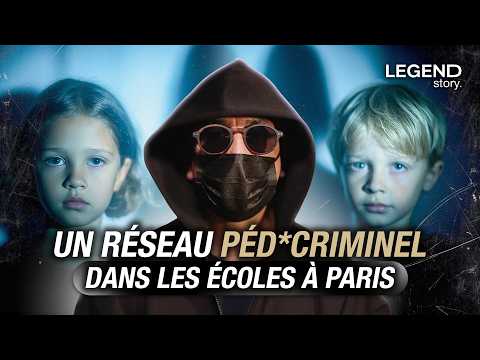
UN RÉSEAU PÉD*CRIMINEL AU CŒUR D’ÉCOLES MATERNELLES À PARIS, SON FILS DE 3 ANS EN EST VICTIME
AI Summary
This episode addresses a deeply disturbing scandal involving allegations of sexual abuse and violence against children in Parisian preschools. Franck, a father whose 4-year-old son was sexually abused in a prestigious 7th arrondissement school, shares his harrowing experience. His son was reportedly abused by multiple animators and other children, with dozens of children potentially suffering sexual violence in this particular school. Franck, whose identity has been anonymized for fear of reprisals, emphasizes that the truth about these abuses, which authorities allegedly tried to conceal, must now come to light.
The scandal is widespread, with reports indicating a significant increase in child abuse cases in Paris in 2025. According to Le Parisien, at least 15 investigations into sexual assault have been opened in preschools, leading to the suspension of 30 animators across various schools. However, some of these individuals were merely transferred to other schools and continue to be employed, raising serious concerns about systemic failures. Franck's lawyer highlights the critical distinction between the National Education system, which manages teachers and directors, and the city hall, responsible for after-school programs and animators. This division of responsibility has complicated accountability.
Initial attempts to gather information from the school director were met with resistance, and the city hall has been unresponsive. The rectorate, in turn, has placed responsibility on the city hall. This lack of transparency and accountability has deeply frustrated the affected families.
Franck chose this particular school for its proximity, its reputation as a good public school in the 7th arrondissement, and its rare bilingual program. Like many parents, he had blind faith in the public school system and its personnel, never imagining that the very institution meant to protect his child would become a source of such grave violence.
The animators involved varied in age from 20 to 50, both men and women. A critical issue identified is the inadequate training of these individuals, many of whom lacked proper qualifications for childcare or pedagogical programs. Their backgrounds were largely unknown to parents. While some animators appeared friendly, most had little interaction with parents beyond a simple greeting. Franck and other parents initially had no reason to suspect anything amiss, interpreting their children's reluctance to attend after-school programs as normal childhood behavior.
The abuses described include sexual assault, rape, physical and psychological maltreatment, shouting, crying, and confinement in dark, locked rooms referred to as "prisons." The recruitment process for animators is a major point of concern, as it appears anyone can be hired to fill immediate staffing needs, often without adequate vetting. This oversight is particularly alarming given the significant impact these individuals have on children's mental and physical well-being.
Many children exhibited symptoms of regression, such as bedwetting after being potty-trained, night terrors, and increased aggression. Some also displayed physical signs like skin rashes or anal fissures. Parents initially attributed these symptoms to illnesses, losing crucial months investigating various medical conditions before realizing they could be linked to the abuse at school.
The turning point for Franck and many other parents came with the broadcast of a "Cache Investigation" report by Elise Lucet, which featured hidden camera footage from their school. Recognizing the school, animators, and children, parents were shocked. The report initially highlighted non-sexual abuses, such as an animator kissing a boy on the mouth, which was already considered highly inappropriate. It was only after this broadcast that parents began to share their own observations and past attempts to report concerns to authorities like DASCO and CASPE, which manage after-school activities, and the 7th arrondissement city hall.
Following the report, Franck's son revealed he had been forced to kiss animators on their mouths, faces, and intimate parts. He also spoke of a "prison" in the school where a classmate had been locked in the dark. This "prison" was later identified as a multi-purpose room that children referred to as a "torture room" where they were confined as punishment. These revelations quickly escalated from physical and psychological violence to sexual and sexual torture. Franck immediately sought help from a specialized child psychologist, as public services were overwhelmed, indicating a broader crisis in Paris.
Franck filed a complaint with the police, only to discover that the 7th arrondissement police station was already inundated with complaints specifically from the Saint-Dominique school. He learned that many parents had reported similar stories, including a "wolf" in the dormitories who subjected children to various abuses. One particularly horrifying revelation was a game invented by animators called "sodiz," where children were made to jump over a dildo attached to a bed. Psychologists confirm that children aged 3 to 5 cannot invent such detailed and explicit accounts without having been exposed to them. The children described penetrations with toys and fingers, and kisses on genitals.
Franck's son's psychologist revealed further details, including masturbation and other unspeakable acts performed on him. This led Franck to file a second complaint, implicating additional animators, both male and female. The pattern suggested an organized system where animators either covered for each other or isolated children for abuse.
The lack of immediate action from authorities has fueled parents' anger and frustration. Despite numerous complaints and the severity of the allegations, there have been no arrests or searches of the animators' homes more than a month and a half after the "Cache Investigation" report. The animators are currently suspended but continue to receive salaries from the City of Paris, and could potentially find work elsewhere in France as there is no national suspension.
It was revealed that prior to the "Cache Investigation" report, there had already been complaints and warnings. In 2024, a first report against the school's education manager led to his suspension, but parents were told he was on sick leave. In November 2025, three new reports concerning several animators, including one who was subsequently transferred to another school (Volontaire school) where he allegedly committed three rapes, were made. This systemic failure to act, merely displacing problematic animators, has allowed crimes to continue with impunity.
A city of Paris circular issued in mid-November, coinciding with these events, outlined procedures for handling school violence reports, including immediate suspension and administrative investigation. However, this policy was not followed in this case, with the DASCO of the 7th and 15th arrondissements prioritizing animators' careers over child safety. This decision, described as "giving them a second chance," demonstrates a shocking disregard for the children's well-being.
Franck believes there has been an "omerta" surrounding these issues, with associations fighting similar battles for years in obscurity. The slow pace of justice, with no arrests or house searches, suggests a lack of prioritization for these cases. The lawyer notes that children are even more vulnerable than women when it comes to having their voices heard in sexual violence cases. She points out that if the justice system prioritized these cases as it does terrorism, where suspects with incriminating images are immediately apprehended, progress would be much faster. The possibility that evidence, such as photos or videos mentioned by some children, may have been destroyed due to the delay, is a terrible concern for parents.
Franck also observed subtle behavioral changes in his son, such as covering his mouth when they spoke loudly, or attempting to strangle them while playing – actions uncharacteristic of a child his age. His son once told him, "Shut up, you're not allowed to open your mouth," a phrase later linked to an animator silencing him.
The parents hope for severe condemnation and the highest possible penalties for the perpetrators, emphasizing that these are grave offenses warranting trials in an assize court. The greatest scandal, according to Franck, is the prolonged delay by school officials in informing parents about the initial reports and complaints. This negligence prevented parents from connecting their children's symptoms to the abuse, betraying their trust and failing in their duty to protect the children. The former director, now on maternity leave and confirmed not to return, allegedly prioritized the school's reputation over the children's safety.
Parents' associations, despite being aware of early reports, also remained silent, and mothers who tried to report issues were dismissed or called "crazy." This widespread cover-up has eroded all trust in the school administration. Franck questions who protected whom and why, given that it's a small school where isolated or crying children should be easily noticed.
Franck and his wife consider their son a "survivor," not a victim, and avoid asking suggestive questions to prevent further trauma. They try to reassure him that the "bad guys" are gone, but he still asks if they are in prison. Franck assures him the police are investigating and will put them in jail. The emotional toll on the parents is immense, with constant fear and physical symptoms like headaches.
Franck emphasizes that parents in similar situations are not alone, urging them to seek support from associations. He expresses his hope that the government and media will recognize the gravity of the situation, acknowledging that schools are not always safe havens. He struggles with immense guilt, wishing he had recognized the subtle signs earlier, but also acknowledges the impossibility of living in constant hyper-vigilance. He, his wife, and son are all receiving psychological support, as there is no official guidance for families in their situation.
The most shocking revelation for Franck was his son being forced to kiss animators' intimate parts. He calls for justice, hoping the perpetrators face the same fate in prison as their victims. He encourages parents to trust their instincts and seek the truth, as failing to do so will lead to lifelong regret. He highlights that animators often target young children because they lack the vocabulary to express what is happening, making them easy victims. The use of "ludic" terms by abusers to describe their actions further complicates detection, making it crucial for parents to understand that any secret that causes pain or fear is problematic and should be revealed. The fight for justice, protection, and acknowledgment of this widespread issue continues.