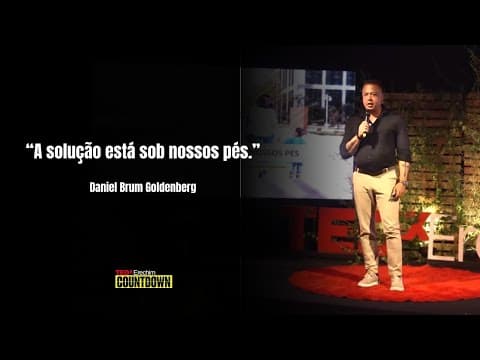
A solução está sob nossos pés | Daniel Brum Goldenberg | TEDxErechim
Audio Summary
AI Summary
The speaker highlights that visible trash indicates an unresolved problem, drawing a parallel to tripping over pebbles rather than mountains in life. Having worked in the poultry industry, where strict export demands enforce meticulous waste disposal and organization (utilizing the 5S system: utilization, discipline, organization, cleanliness, standardization), the speaker questions why cities tolerate widespread trash. This industry experience demonstrated how financial incentives drive the implementation of great ideas and the allocation of significant resources to ensure compliance and certification for exports.
The speaker contrasts this with the urban reality, where people accept encountering trash, which poses health risks like dengue fever. They lament the common disregard for proper waste disposal, noting that people often feel no responsibility once an item is discarded. The speaker shares experiences from flood relief efforts, where identifying personal items amidst trash was difficult, emphasizing the human goodness seen in collective disaster response. However, they stress the need for preventative education and accountability to foster a culture of proper waste management, rather than merely relying on reactive measures.
The narrative traces the evolution of waste disposal from larger families storing trash at home for collection to smaller, urbanized households generating more waste and lacking storage space. This led to faster disposal on streets, attracting animals and creating public nuisances. Municipalities responded with shared containers, which, while seemingly a solution, shifted the problem by creating communal dumping grounds. These containers become magnets for scavengers, who extract valuable materials, leaving behind the undesirable waste and exacerbating issues like rodent infestations, foul odors, and neighborhood conflicts.
The speaker proposes an underground waste disposal system as a "clever solution" that addresses these issues. By moving trash below ground, it eliminates rodents, prevents water and dirt contamination due to sealing, and restricts informal scavenging at the collection point. This system enhances accessibility, increases property values, and can even become a point of reference for local businesses. The speaker emphasizes that technology, including automation and sensors, can be integrated to monitor and manage these systems effectively. This approach improves upon existing container systems without reverting to outdated methods.
While acknowledging the role of waste pickers, the speaker suggests that this improved system, by generating a larger volume of higher-quality waste at cooperatives, could create opportunities for them in operational sorting roles. This transforms "trash" into a "product" with value, generating revenue that can be reinvested into education, technology, and sustainable programs. The core message is that society must stop accepting visible trash and instead embrace innovative, preventative solutions, recognizing that collective responsibility and action can overcome this "pebble" of a problem.