PRÉSIDENTIELLES : Le PLAN SECRET des MÉDIAS ! 😡
Audio Summary
AI Summary
The upcoming presidential elections are anticipated to be highly contentious, marked by misleading polls, disingenuous politicians, and a media landscape intent on promoting its favored candidates through relentless propaganda. However, these elections also present an opportunity to introduce and popularize a new term: "medi-harassment." This concept describes the way media repetition influences society, and this discussion aims to explore how to counteract it and play a role in shaping public discourse. Through annual funding, the goal is to circumvent mainstream media and offer alternative perspectives, thereby "saving" the presidential election. Sustained support is crucial to continue producing such content throughout the electoral year.
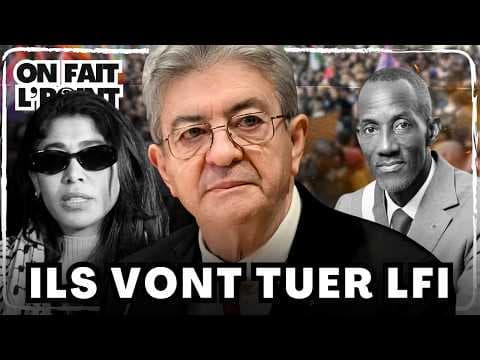
"Medi-harassment," a portmanteau, refers to media campaigns designed to discredit individuals or groups. La France Insoumise (LFI) is identified as a primary target of such media tactics. The arguments used against LFI are consistently recycled, often portraying the party as undemocratic, both internally and in its ambition to seize power, with Jean-Luc Mélenchon depicted as a despot. The party is also frequently accused of flirting with antisemitism, communalism, and, by extension, Islamism. The speaker expresses doubt about Mélenchon being antisemitic, suggesting instead that he strategically manipulates the issue. This raises questions about why antisemitism is linked to the pursuit of the Muslim vote, implying a manipulative intent.
LFI is further characterized as a party of extremists and far-left radicals that deliberately provokes controversy, promotes violence, and supports the brutalization of public debate. Evidence of this media focus on LFI is seen in numerous weekly headlines compiled by Akrimè. Recent months have reportedly been a "festival" of such attacks. For example, in May 2025, a book titled "La Meute, enquête sur la France insoumise de Jean-Luc Mélenchon," written by two Le Monde journalists, was released, reinforcing the narrative of a despotic party centered around Mélenchon. The authors were widely invited on TV shows to discuss their findings.
In August, LFI held its summer university and refused to accredit the book's authors. This refusal was widely reported by both public and private channels as proof of LFI's undemocratic nature, reiterating the existing media narrative. Many journalists condemned LFI's decision as an attack on press freedom, leading to a joint statement from several journalists' societies. In October, another book, "Les nouveaux antisémites" by Nora Busini, a journalist who conducted an "immersive" investigation, emerged. The author claims that after the October 7th events, she observed feminist and LGBTQ+ collectives celebrating the attacks, interpreting them as the "colonized rebelling against the colonizer," which prompted her to revisit the issue.
December saw the creation of a parliamentary inquiry commission into links between political parties and Islamism, initiated by Laurent Wauquiez with the aim of implicating LFI. Mélenchon initially resisted participating but eventually did, turning the tables on the commission's initiators. He acknowledged that one might occasionally find themselves alongside undesirable individuals, comparing it to encountering "lunatics" at demonstrations, including those with strange placards, and questioning if others had never been in similar situations. He specifically referenced the "marriage for all" demonstrations, where diverse groups, including those with views on family closer to the right, participated without issue.
In January, the US attack on Venezuela became a point of contention. Hugo Chavez, Maduro's predecessor, was a comrade of Mélenchon. LFI's denunciation of the attack and call for the Venezuelan president's release was spun by the media as abhorrent support for a communist dictator who abuses his population. Mélenchon clarified that he was not defending Maduro but opposing an unacceptable aggression that violated international law.
Another controversy arose when Mélenchon mispronounced "Epstein" as "Epsteine," leading to accusations of antisemitism. The media focus was not on the gravity of the Epstein affair or the inaction of French justice, but on Mélenchon's pronunciation. This occurred despite a lack of specific antisemitic quotes from LFI's history, Mélenchon, or the party program. This incident was framed as a "new antisemitic gaffe" and led to comparisons between Mélenchon and Trump. The speaker suggests that these accusations are manufactured, creating a "no smoke without fire" narrative even when no evidence exists.
No official complaints have been filed regarding antisemitism, which is a crime in France, indicating that the "trial" is purely media-driven. Interviewers act as interrogators, and commentators deliver verdicts, often concluding that LFI has gone "too far." Unscrupulous politicians, such as those from Tondelier, Glucksmann, or Dominique de Villepin, exploit these narratives for electoral gain. They question if playing on Jewish-sounding names is a left-wing tradition, asserting that the true left is the antithesis of such behavior. Following a minute of silence in homage to a young man named Quentin, there were widespread accusations that Mélenchon and LFI had "innocent blood on their hands." These successive controversies led politicians to ban LFI from an electoral agreement, though it is suggested this decision was already made and the controversies merely provided a pretext. This entire process is presented as a clear example of "demonization."
However, after the municipal elections, despite media and poll predictions of LFI's defeat, the party actually strengthened. Other left-wing parties, despite their participation in the medi-harassment, subsequently merged with LFI lists, highlighting a lack of consistency. The speaker argues that these strategies against LFI are ineffective, as Mélenchon consistently outperforms poll predictions and continues to gain strength.
The media's aggressive stance is attributed to a corporatist reflex. LFI's program includes proposals to prevent media concentration, establish a journalistic ethics commission to hold media accountable, and extend reforms to industry and agriculture, all of which challenge the interests of media owners and the bourgeoisie. Medi-harassment, in essence, attempts to define what is acceptable or unacceptable in society, using terms like "republican arc." LFI has been repeatedly excluded from this "republican arc" since 2023 for denouncing the genocide in Gaza. The term "republican arc" itself, though sounding official, was virtually nonexistent before 2022, becoming a tool for political and media propaganda through medi-harassment. Those deemed "acceptable" are within the arc, while LFI is positioned outside it.
Continuous news channels and radio stations, by repeating the same narratives, facilitate this type of manipulation. A Media Part investigation in April 2024 revealed how Pascal Praud repeatedly named individuals in a public shaming tactic. This demonstrates that medi-harassment is not distinct from cyber-harassment; they reinforce each other. Media narratives provide justification for online harassment, creating a "no smoke without fire" illusion. Professional propaganda firms, such as Avaisa Partenaire (led by a Macron supporter), Net Watch (Macron's 2022 campaign agency), and Progressif Média (linked to Canapus, responsible for a fake petition against LFI deputy Louis Boyard), have long been involved in these practices. These "professional manipulators" are now leveraging AI to generate vast amounts of articles, comments, and videos, creating a media landscape detached from reality, primarily to depoliticize the masses. This is seen as the future of propaganda and medi-harassment in the upcoming presidential election.
To counter this, the speaker proposes building networks of trust, organizing in-person meetings, screenings, and workshops to "short-circuit" mainstream media and reclaim the presidential election. Financial support is requested to sustain these alternative media efforts for another year, enabling the implementation of this program until the election. The situation is described as a critical moment in French history, where those at the top are "armed," and those at the bottom must build a genuine resistance.