Progressives have a new playbook. We tested it in Queens | America, Actually
Audio Summary
AI Summary
The discussion centers on the terms "progressive" and "affordability" in politics, exploring their meanings to elected officials versus the general public. The Congressional Progressive Caucus, a significant bloc of Democrats, recently unveiled its "affordability agenda," a 10-point plan aimed at reducing costs for Americans in areas such as utility bills, childcare, and prescription drugs. Key policies include requiring double wages for overtime, banning surveillance pricing (where companies use personal data and AI to raise prices), and offering $20,000 in down payment assistance for first-time homeowners, alongside expanding rental assistance.
The timing of this proposal is notable, given that Democrats do not control Congress and these policies lack immediate short-term viability. The agenda is seen as an effort by progressives to define "affordability" ahead of the 2026 midterms and the 2028 presidential election, which will shape the party's future in a post-Trump America.
Congressman Greg Casar, head of the Congressional Progressive Caucus, explained the rationale behind releasing the agenda now. He stated that the plan is designed to tackle big corporations and the ultra-rich who inflate prices. The goal is for candidates to campaign on this agenda in primaries, win elections by connecting with voters on cost reduction, and then, if the majority is achieved, pass these policies. Casar suggested that if policies like reducing utility bills by $500 or capping childcare costs are passed, it would challenge Donald Trump to block them, thereby clarifying who voters should blame if costs remain high. He emphasized that voters want to know what Democrats stand for, especially on economic issues.
Casar believes these planks are achievable and can unify Democrats, despite Congress's recent reputation for legislative stagnation. He highlighted voters' anger over rising costs as an opportunity to pass significant bills, such as taking on big pharma to produce generic drugs and reduce prices, and confronting Super PACs. He views this moment as ripe for forging a new consensus within the Democratic Party.
The agenda is also a signal to fellow Democrats about the progressive definition of affordability. Casar noted that they intentionally crafted an agenda that polls well across the political spectrum, including with Trump voters and independents, to ensure its broad appeal and potential for passage. This "no excuses agenda" addresses the primary concern of everyday voters: the high cost of living.
When asked why issues like climate change or Medicare for All are not explicitly listed, Casar clarified that these are part of the caucus's "flagship agenda," which they continue to fight for. The new affordability agenda, however, comprises "battleships" – issues with consistently high voter support (around 80%) – that can achieve consensus and be passed now, while still pushing for bigger ideas.
Casar acknowledged that the climate movement needs to better connect with everyday people's lives, countering the Republican narrative that climate action is an elite luxury. He suggested that focusing on how electrification can make things cheaper, starting with utility bills, can build trust and demonstrate how a climate agenda can enhance affordability.
Regarding the ban on surveillance pricing, Casar, who introduced a bill on the matter, explained that it would prohibit using AI and personal data (like financial history) to set prices and wages. While acknowledging the broader need for AI regulation, he believes tackling surveillance pricing is a more immediately relatable and unifying issue, as it directly addresses consumers' frustration with unfair price increases based on their data. He cited an example of a flight price surging after a user searched for a funeral, which was then linked to clearing cookies, illustrating how companies use personal data to inflate prices.
Defining "progressive" in 2026, Casar stated it means two things: first, uniting people against powerful entities that worsen their lives, whether through civil rights oppression or cost increases; second, a hopeful enterprise believing the world can be much better than the status quo. He contrasted this with traditional Democratic politics, which he believes often advises caution on issues like AI regulation due to lobbying concerns or a focus on competing with China, potentially sacrificing guardrails against surveillance or job displacement. Casar argued that progressives should unite working people to vote for politicians who prioritize their interests, even if industries campaign against them, and strive for more than the status quo, avoiding becoming a surveillance state or losing jobs in the race against other countries.
When asked how most Americans would define a progressive, Casar admitted diverse answers. He critically noted that the movement needs to ensure people know progressives care about their ability to afford childcare, housing, and retirement. He believes focusing solely on civil rights, while deeply important, has led to losses on those fronts because economic trust has not been regained. He argued that once economic trust is restored, civil rights can also be advanced.
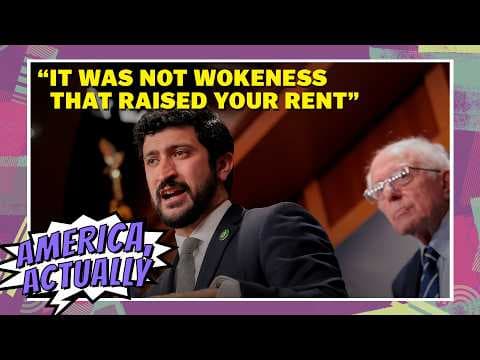
Addressing the Republican branding tactics, particularly Donald Trump's successful use of cultural issues to portray Democrats as out of touch (e.g., "Kla Harris was for they them not you"), Casar emphasized the need to defend attacked groups like trans folks and immigrants. However, he stressed the importance of identifying the "real villains," such as Wall Street hedge funds for rising rent or healthcare CEOs for worsening healthcare, rather than allowing blame to be shifted to cultural issues or specific groups. He believes building a coalition requires addressing people's core economic concerns, even if social issue differences exist.
On "defund the police," a slogan Casar was always wary of, he clarified that his stance was about reallocating funds from police budgets to other services like scientifically run DNA labs or domestic violence shelters. He believes progressives need to reclaim public safety and civil rights, moving beyond slogans to ensure people understand that they care about both safety and civil rights, and to not abandon police reform.
Casar reflected on the 2020 election, recalling a campaign stop in Nevada for the Vice President where Latino voters, who had previously supported Democrats, expressed intentions to vote for Trump because they felt Democrats were "focused on other stuff," referring to cultural issues. He believes this is a broader Democratic Party brand issue that needs to change. If the party is only known as "anti-Trump" and fails to articulate what it stands for, it will be a significant failure.
The discussion then moved to Astoria, Queens, a highly progressive area nicknamed the "Kami Corridor," to gauge public opinion. When asked about "progressive," residents offered definitions like "more modern" and "new ideas," with "equality and affordability" topping the list of expected issues from a progressive.
Upon being shown the Congressional Progressive Caucus's 10-point affordability plan, residents reacted positively to planks like vacation time, putting money in people's pockets, and getting big money out of politics, though some questioned the viability of the latter. One resident, originally from a "very red state" where "progressive" has a negative connotation, emphasized that focus should be entirely on affordability and economic issues. They argued that money is "the root of everything" and universal, while social and cultural issues are secondary priorities.
The segment concluded by reiterating that constituents in progressive districts prioritize cost of living above other issues, even if it means de-prioritizing some cultural topics. This aligns with Congressman Casar's view that economic issues are connected to other concerns, and credibility on one can be gained by leading on the other.