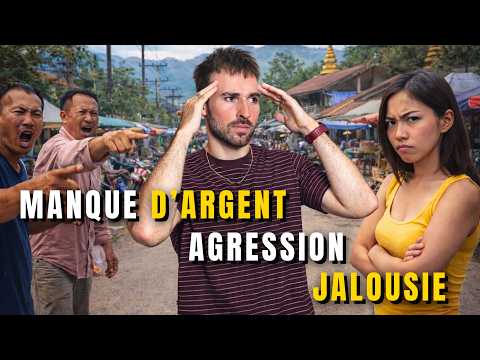
La première année en Thaïlande n'a pas été facile
AI Summary
Sébastien, a 27-year-old from the Grand Est region of France, shares his experiences of living in Thailand for almost a year, primarily in Chiang Mai. His story is presented as a "textbook case" for those considering moving to Thailand, highlighting both the allure and the potential pitfalls.
Sébastien's journey to Thailand began two years prior with a vacation. Dissatisfied with his sales job, which followed a burnout from a previous career as a restaurant manager, he sought a change. A passionate Muay Thai practitioner for over four years, he knew Thailand as the sport's homeland. Initially planning a trip with a friend, the friend canceled at the last minute. In a spontaneous decision, Sébastien invited a gym acquaintance he barely knew, and they embarked on a two-week whirlwind tour of Thailand, including Bangkok, Chiang Mai, and the islands. They experienced a high-energy trip, sleeping little and seeing everything possible.
The return to France was jarring. The contrast between the vibrant Thai experience and the mundane reality back home was stark, leading to what he describes as "the gloom." Both Sébastien and his travel companion, an engineer with a good salary, felt they couldn't remain in their current lives. His friend ended up traveling to Tahiti, while Sébastien, who had lived in the same apartment for 25 years (even born there), realized there was "something else, probably something better, elsewhere."
Sébastien opted for an intermediate step: French Guiana. This choice was strategic, offering a French-speaking environment where it was easier to find work and where his mother provided some support. It served as a temporary test of living abroad. During his less than six-month stay, he saved money, having previously saved for years to buy an apartment in France. However, skyrocketing interest rates in France led him to abandon his apartment purchase plans. He left his job in French Guiana after his probationary period, without unemployment benefits, choosing to live off his savings.
His desire for rest and the positive memories of his first trip led him back to Thailand, which he considered a "safe zone." He chose Chiang Mai for its "chill aspect" and to join a Muay Thai camp, initially on a 60-day visa exemption.
His Muay Thai journey in Thailand, however, was mixed. He recounted a "bar fight" in French Guiana, an informal bout against his friend where he won by decision, receiving a shot of vodka as a prize. This experience, while fun, contrasted sharply with his first official fight in Chiang Mai after a two-month camp. He chose a "tourist gym," which, despite its good location and English-speaking staff, lacked the serious training, sparring, and dedicated coaching needed for competitive fighting. He felt his dedication was not reciprocated, and the coaches didn't take him seriously. The fight itself was plagued by last-minute changes to the date, weight, and opponent, and he found himself significantly lighter than his adversary. Psychologically unprepared, he felt no adrenaline in the ring and lost by technical knockout in the last round. This experience taught him about the realities of fighting in Thailand, particularly the difference between tourist-oriented training and the professional scene.
Following this, Sébastien's friend from Tahiti joined him, and they embarked on another adventure: a 4500-kilometer motorbike trip across Vietnam. To prepare, Sébastien extended his stay in Thailand for another 60 days to retrieve his belongings. During this period, he began exploring options for a longer stay, leading him to secure a one-year educational visa through a Thai language school in Chiang Mai. The school and visa cost 32,000 baht, with total annual expenses, including flights to Malaysia for visa runs and extensions, estimated at €1200. He attends two Thai classes per week, finding the teacher dedicated and the student group motivated.
However, the student visa comes with requirements. Every three months, holders must pass an interview in Thai at immigration. Sébastien's first interview was challenging. Despite his ability to converse generally in Thai, he struggled with specific formal phrases like "introduce yourself." The immigration officer also noted that while the school reports daily attendance, he only attends two hours a week, implying an expectation of a higher language proficiency.