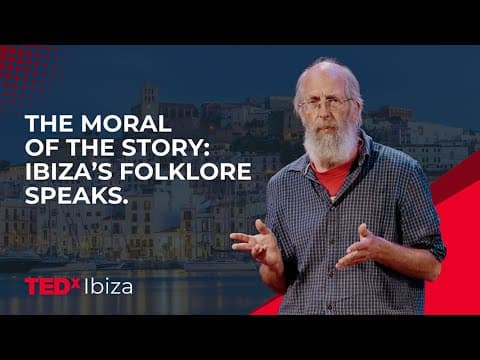
The Moral of the Story: Ibiza’s Folklore speaks | Dan Cohen | TEDxIbiza
Audio Summary
AI Summary
This video explores the traditional folktales of a Mediterranean island, referred to as "IA," and contrasts them with the island's current reality of unsustainable consumption and social disparity. The speaker, who came to IA 30 years ago, discovered these tales while working on a translation project.
The folktales, collected by Jewan Castillo Gouash, offer a glimpse into IA's past, a time approximately 75 years ago when the population was much smaller, tourism was minimal, and the society was largely homogeneous with a strong sense of shared culture. A significant part of this culture was the "rondals," or traditional folk tales passed down through generations.
These stories primarily feature poor, simple characters like farmers and fishermen, with nobility often playing minor, sometimes comical, roles. The narratives depict a largely classless society where external authority figures are distant and unimportant. The tales highlight ordinary conflicts, such as a mother's desire for her daughter to marry well or misunderstandings between urban and rural dwellers, rather than grand quests for power or wealth.
The core themes revolve around interpersonal relationships, emphasizing kindness, helpfulness, and avoiding cruelty or exploitation. The characters in these stories employ two main tools to resolve conflicts: cleverness and goodness. Cleverness is depicted not as cunning or shrewdness, but as quick-wittedness and the ability to think outside the box, as illustrated by a story about dividing an inheritance. Goodness is shown as a virtue that brings its own rewards, even without immediate personal gain. An example is a slave who, after receiving kindness from a farmer, later returns the favor when the farmer is in need. The stories suggest that good deeds lead to positive outcomes, while evil actions result in punishment, and that maintaining balance and avoiding disruption is important.
The speaker then contrasts this idealized past with IA's present. The island now attracts the rich and famous, with luxurious resorts and beaches, but this comes at the cost of uncontrolled, unsustainable consumption that depletes resources. This has led to precarious living conditions for some residents, particularly immigrants, and a stark disparity in wealth, where the wealthy live in luxury while service workers may struggle for basic necessities. The once homogeneous society is now fractured.
The video concludes by reflecting on the relevance of these old tales to modern challenges. The speaker shares a final story about the creation of the world, where attempts to "shake things up" by the Lord lead to increasingly problematic societal structures, culminating in a world with extreme inequality. This story, the speaker suggests, highlights that a society lacking solidarity, where the poor are exploited and resources are used for personal gain at the expense of the common good, is the worst possible outcome.
The final message is one of self-reliance. The tales imply that no external force will solve IA's problems. Instead, the responsibility lies with its inhabitants to use their goodness and wits to find solutions. The "rondals," the speaker asserts, have shown the path forward, urging immediate action.