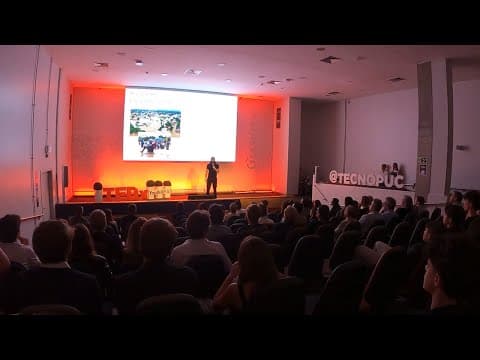
Redefining Global Citizenship | Charlie Pettitt | TEDxPAS Youth
Audio Summary
AI Summary
Good evening. I’m Charlie, and I’m a bit nervous to be here. I want to start with a confession: when I was sixteen, I skipped school. I was struggling in French and convinced my parents a week in Paris would help me catch up. While I mainly craved adventure, the plan surprisingly worked. Forced to interact with strangers without smartphones, I overcame my shyness and discovered Parisians were far from the snooty stereotype; they were patient and helpful. This experience taught me that learning a language unlocks a new world and connecting with people from other countries is exhilarating, not intimidating.
This journey toward becoming a global citizen began then. At eighteen, I moved to Quebec, Canada, to work at a ski resort. Living abroad for the first time hooked me. Beyond improving my French and skiing, I learned about identity and cultural differences, like the distinctions between French in France and Quebec. I realized I wasn't just addicted to travel, but to experiencing cultures deeply through slow travel, living, working, and making local friends.
My goal evolved into a life mission: to live on every continent. After studying law and French in the UK, I participated in an Erasmus scheme in France. Then, I moved to Asia, teaching English in Thailand and China. In 2020, I found myself in India during the pandemic. Each country offered unique insights and valuable experiences, and despite being a foreigner, I formed close friendships with people from diverse backgrounds, struck by their openness and hospitality.
My journey continued to Latin America, where I lived in San Pedro, Honduras, a place once known for crime. There, I found a resilient community and made genuine connections. I also learned to speak Spanish and dance salsa. Now, I’m in Porto Alegre, Brazil, surrounded by friends. I’ve heard stereotypes about the people here being unfriendly, but my experience has been the opposite; they’ve been incredibly welcoming.
Remarkably, I’ve noticed a connection between the people of Honduras and Brazil. Both communities had recently experienced devastating natural disasters. In both instances, neighbors banded together, supporting each other through heroism and community resilience. In these times of crisis, differences of race, religion, or beliefs faded, revealing our shared humanity.
I’ve traveled extensively, living in eight countries across four continents and visiting many more. However, I’ve realized that being a global citizen doesn't require extensive travel. It requires a mindset: international-mindedness, the ability to see beyond your own perspective with empathy. This mindset is fostered by our school, which combines different educational frameworks to encourage diverse viewpoints.
The IB aims to develop internationally minded people who recognize our common humanity and shared guardianship of the planet for a better world. The College Board defines global citizenship as understanding the world beyond your borders, emphasizing that cultural awareness and collaboration with diverse people broaden your perspective. Neither definition requires international travel; both require empathy, cultural awareness, and action.
To adopt this mindset, I suggest three practices: Lead with empathy, seeking to understand rather than judge. Learn another language, which offers access to new friendships, perspectives, and a more attentive self. Finally, take action wherever you are, by welcoming others, speaking up against intolerance, and living in a way that makes everyone feel they belong.
A quick survey reveals many of you are already global citizens, friends with people from different backgrounds, learning languages, or helping strangers. As Kofi Annan said, "It begins in your own community." Thank you.