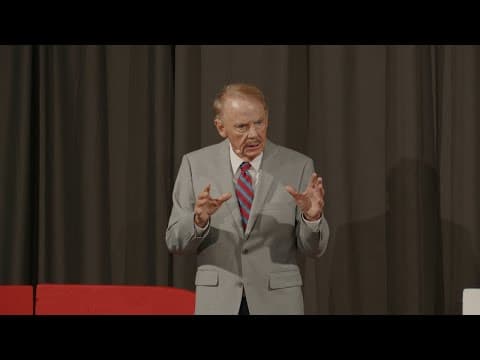
Your Brain Is Smarter Than You Think | Daniel Steininger | TEDxEmory
Audio Summary
AI Summary
We constantly hear about strengthening our bodies through exercise, diet, and sleep, but rarely about strengthening our brains. This three-pound organ controls everything we do, making us mere "vegetables" without it. A stronger brain is crucial for navigating life's unpredictable challenges.
I experienced this firsthand when bitten by a rattlesnake in Phoenix. Despite being an Eagle Scout, my wife initially refused to suck out the venom, a technique I believed in. After much convincing, she did, and to my surprise, the toxicologist at the hospital confirmed I had less venom than average, conceding that the method, though not recommended, had worked. This incident highlighted how creative thinking, even in an unexpected emergency, can be life-saving.
Our brains contain roughly 85 billion neurons connected by trillions of synapses, constantly firing. For years, scientists believed we steadily lost neurons after peaking around age 25, leading to a decline in "fluid intelligence." However, recent advancements in medical devices like MRIs and PET scans have revealed a groundbreaking truth: our brains can actually grow new neurons, a process called neurogenesis. Unlike other body parts that can't regenerate, we can grow new brain cells, making our brains stronger.
The key to growing these new neurons is creativity. Many people believe they aren't creative, but consider how children effortlessly learn to communicate, mastering thousands of words and complex grammar by age five. This demonstrates our innate creativity. The challenge is that societal systems, from school to professional life, often suppress this creativity, prioritizing conformity over innovative thinking.
To unleash your brain's creative potential, cultivate certain lifestyle changes. First, embrace solitude. When you sleep, the brain's executive function, which handles analytical tasks and environmental processing, turns off, allowing the creative right side of your brain to become unleashed. This is why we have vivid dreams and often wake with new ideas. Similarly, activities like showering or swimming can turn off this executive function, fostering creative thought. Dedicate daily time to solitude, free from constant digital stimulation, to allow your right brain to emerge.
Second, incorporate humor into your daily life. Anthropological evidence suggests early humans used funny dances to signal friendliness and prevent conflict. Humor shifts your brain from its analytical left side to its creative right side, making it invaluable for fostering creative thinking.
Third, regular physical exercise is vital. Scientists have discovered that exercise increases blood flow to the brain, promoting growth and strength. It also releases endorphins, relaxing the brain and enhancing creativity.
Beyond these habits, I offer a "secret sauce" for creativity, particularly for unexpected life challenges. When faced with a problem, first, understand it and identify its root cause. Second, engage in "ideation," generating as many potential solutions as possible. Third, and most importantly, establish clear criteria to evaluate these ideas. For instance, when choosing a car, you'd weigh factors like cost, safety, and fuel efficiency.
I once faced a life-threatening situation in Kenya while in the Peace Corps. I contracted malaria in a remote village during the rainy season, with no medical help available. My wife and I quickly researched, found a nearby mission with medical staff, and I received a life-saving injection. This rapid, creative problem-solving saved my life.
Dr. Sheri All from the cognitive research center in Chicago compares strengthening your brain and creating new neurons to building a bank account. These stored neurons will aid you when needed, potentially even enlarging your brain. Learning new skills, like a language or a musical instrument, or taking a challenging course, actively grows these neurons.
Finally, a stronger brain offers a "double bottom line": human happiness. As Aristotle and Maslow's hierarchy suggest, happiness stems from setting and achieving goals, or self-actualization. Think of a child learning to ride a bike—the joy of achieving that goal is unparalleled. This same sense of accomplishment applies to overcoming life's challenges.
Furthermore, a strong, creative brain fosters "post-traumatic growth." While we acknowledge post-traumatic stress, we can also use our creative talents to recover from life's hardest blows—loss of loved ones, jobs, or other tragedies. Like the character in "Little Miss Sunshine" who remembered most how she got back up after being knocked down, a stronger brain with more neurons enables us to navigate challenges and find growth. I encourage you to embark on this creative journey, starting tomorrow.