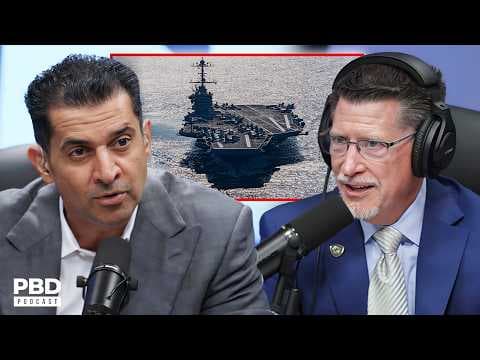
“China Is Afraid Of America” - Hormuz Blockade SHOWDOWN Sends China Ships Scrambling
Audio Summary
AI Summary
The discussion centers on the US blockade of the Strait of Hormuz and its impact, particularly on Chinese shipping. A Chinese-owned oil tanker, the Rich Sterry, which was blacklisted by the US in 2023, attempted to cross the Strait of Hormuz but was forced to turn back to Iran. This incident demonstrates the effectiveness of President Trump's blockade in preventing ships carrying Iranian oil from exiting the vital shipping lane. The US Navy has successfully halted at least five ships from leaving the Gulf of Oman, according to trade analysis. Iran has also contributed to stifling traffic through Hormuz, which previously carried 20% of the world's oil, by threatening to attack tankers that do not pay ransom. The Rich Sterry, previously accused of helping Iran skirt oil sanctions, had been in the Persian Gulf for over 10 days before attempting to leave. Loaded with 250,000 barrels of methanol, it initially seemed to pass the blockade but updated tracking data showed it stopped in the Gulf of Oman.
This U-turn by a Chinese ship signifies the significant power the US holds, compelling even China to comply with the blockade. The US is effectively controlling the Strait of Hormuz. It was noted that ships are now taking a northern route, avoiding the southern route near Oman due to the presence of mines, which Iran claims not to remember the locations of. Additionally, it was revealed that Trump had a leaked conversation with Chinese President Xi, in which he reportedly told Xi to stop providing military support to Iran, including rocket fuel and satellite images of US bases in the UAE and Oman. China was essentially providing targeting intelligence to Iran, and the Rich Sterry is identified as a smuggling ship used by the Chinese government to transport oil despite blockades and sanctions. The success of the blockade is evident, as even Chinese ships are now complying.
Despite this compliance, China has publicly criticized the US military blockade of the Strait of Hormuz as a "dangerous and irresponsible move." However, the actions of the Rich Sterry suggest that China is more apprehensive of America than Iran, and is now heeding US demands. A Chinese foreign minister's statement on maintaining a prudent and responsible approach to military exports and opposing "groundless smears" was perceived as vague and did not directly address the issue of sending rocket fuel to Iran.
The conversation then shifted to a broader perspective, suggesting that "Operation Economic Fury," initially perceived as targeting Iran, is primarily focused on China. The speaker posits that conflicts and situations in Venezuela, Cuba, Iran, Syria, Lebanon, and Russia are all interconnected and ultimately aimed at China. The endgame is seen as China, with the second half of the current administration's term expected to be entirely dedicated to economic warfare against China. This economic warfare involves choking off oil from the Strait of Hormuz, maintaining US hegemony, promoting stability through strength, encouraging domestic oil production ("drill, baby drill"), ensuring the dollar's dominance in international transactions, implementing tariffs, and addressing the BRICS alliance.
The speaker emphasizes that President Trump's actions are not random but strategic, calculated, and part of a cold-blooded economic plan. The discussion also touched upon the sentiment of some Americans who are "cheering against" the US, a phenomenon the speaker finds concerning. A point was made about the perceived double standards in criticizing Trump, where any action or inaction he takes is met with negativity. For example, if he intervenes militarily, he's criticized for "boots on the ground"; if he doesn't, he's criticized for not helping people. If oil prices rise, he's blamed for economic mismanagement; if they fall, he's accused of caring only about the economy.
Finally, a new "Faith over Fear" hat was introduced, featuring a cross and Hebrews 11:1, as a symbol of faith in Jesus Christ. This launch is tied to a recent Gallup poll indicating a significant increase in the number of young men (ages 18-29) who consider religion very important in their lives. The hat is presented as a way to represent this shift towards faith and to start conversations.