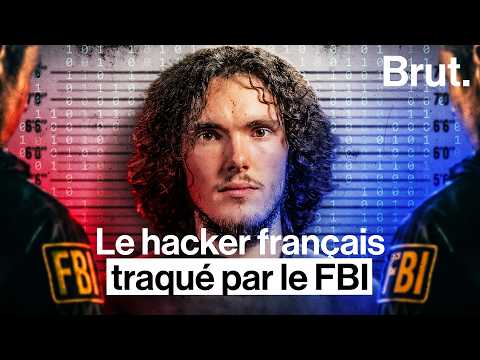
Il a hacké Microsoft et a été emprisonné aux États-Unis
AI Summary
Sébastien Raoult, a computer enthusiast since adolescence, delved into the world of hacking, initially driven by curiosity to test website vulnerabilities. This led him to cybercrime, including hacking Microsoft's networks, which resulted in an FBI arrest warrant and an international arrest warrant issued by Washington. At just 20, Sébastien was arrested in Morocco and extradited to the United States, facing a potential sentence of up to 116 years in prison.
Sébastien recounts his arrest on May 31, 2022, at a Moroccan airport while attempting to return to France via Belgium. Initially, customs officers questioned him about his visa, which he didn't believe he needed as a tourist. He was then escorted to an office where he was pushed onto a chair and tied down. He described his confusion and panic as multiple officers and officials entered the small room, speaking various languages. It was then that he started to suspect his activities on the internet were the cause, as he had dabbled in cybersecurity and sometimes crossed lines unknowingly. He was later informed of an international arrest warrant from Washington.
At this point, Sébastien believed someone might have used his online pseudonym to commit crimes, leading to his arrest. The next day, at the courthouse, a prosecutor informed him of the accusations: being a member of the "ShinyHunters," a group known for hacking companies, selling data online, and engaging in phishing. Sébastien denied being part of ShinyHunters, stating he only learned about them during his arrest and believed it was a separate entity.
Sébastien's journey into computers began at age 4 or 5, initially for simple tasks like viewing Dragon Ball Z posters and playing Nintendo DS games. His curiosity was piqued when he sought solutions for game challenges on online forums, leading him to create accounts and ask questions. In high school, he became interested in how people obtained free iPhones, which involved database hacking. This curiosity drove him to learn programming and cybersecurity. He would test websites for vulnerabilities, driven purely by the desire to see if something worked or was exploitable.
The COVID-19 pandemic and subsequent confinement led to a period of demotivation. He associated with online groups involved in "little tricks" on the internet. He admitted that in this environment, it became easy to lose sight of ethical boundaries, experimenting and crossing lines that he previously would not have considered. He initially viewed his activities as "research" or "tinkering," not realizing the gravity of his actions until his arrest and incarceration. He claims he had no activist or financial motivations, only the satisfaction of successfully challenging major companies.
Sébastien describes participating in "phishing" campaigns targeting developers on GitHub, a Microsoft platform. The goal was to trick users into revealing their login information. This was done with a small group he refers to as "co-conspirators" in the American indictment, not the ShinyHunters, whom he still considers a separate entity. He explains that accessing developer accounts could lead to finding access to company databases and cloud infrastructures, making it an "exciting" challenge due to the potential impact. He was 19 at the time, in 2020.
After his arrest in Morocco, Sébastien spent eight months in prison. He describes the conditions as harsh: stone beds, thin blankets, dirt, cockroaches, and rats. He shared cells with many foreigners awaiting extradition. Initially, he was in a state of disbelief, struggling to comprehend his situation. He focused on what he could control, such as contacting his parents, which he was only able to do 15 days after his arrest. His parents were not informed by French authorities about his arrest for several days after reporting him missing. They were incredibly supportive, forming a collective with friends to fight for his return to France.
Sébastien was eventually extradited to the United States. Before boarding a commercial flight, he was transferred to FBI custody, with Moroccan police even taking selfies with the FBI agents. During the flight, he was flanked by FBI agents, with the surrounding rows kept empty. Upon arrival in New York, he was placed in an immigration cell, where he was given a meager meal. He was informed of his right to contact his consulate and request a translator before appearing before a judge.
In the US, he was assigned a public defender and learned the specific charges. He understood that he was accused of conspiracy to commit wire fraud and aggravated identity theft. He explains the US legal concept of "conspiracy," where merely discussing a crime, even as a joke, can be considered a criminal act. This legal framework allowed authorities to link him to the ShinyHunters' data resales, despite his insistence that he was not a member and had no direct involvement in selling data or making ransom demands. He attributes the confusion to the use of shared VPNs and the ease with which pseudonyms can be misused online.
Sébastien felt compelled to accept a plea agreement, as fighting the charges in court (a "trial") would likely result in a much harsher sentence, given the 98% conviction rate in federal cases. Under the plea deal, he pleaded guilty to two charges: conspiracy to commit wire fraud and aggravated identity theft. The prosecution recommended a 7-year sentence, based on a points-based classification system, reduced from a potential 116 years if all charges were cumulative. Ultimately, he was sentenced to 3 years, with the 8-9 months spent in Moroccan prison counted towards his sentence. He was released in December 2024, after approximately 30 months of detention.
His return to France involved being transferred to ICE custody, then taking a commercial flight to Chicago. Upon landing in France, he was met by police at the airport and taken to a police station, then to the Paris courthouse, where he was officially charged. He was finally released to his father and a friend.
Reflecting on his experience, Sébastien expresses a sense of injustice regarding not being extradited to France for judgment, believing the case should have been handled under French law. He also criticizes the US concept of "conspiracy" for making it difficult to defend oneself. He acknowledges that his rights were respected according to US law but maintains that a French court would have rendered a fairer judgment.
Sébastien is now working as an entrepreneur, building websites and applications, and developing tools for cybersecurity. He stresses that he will never again cross ethical or legal boundaries, particularly to avoid putting his family through such an ordeal again. He describes his reunion with his family as joyful and his readjustment to everyday life as somewhat strange, noting the cultural differences in social interactions after his time in prison.