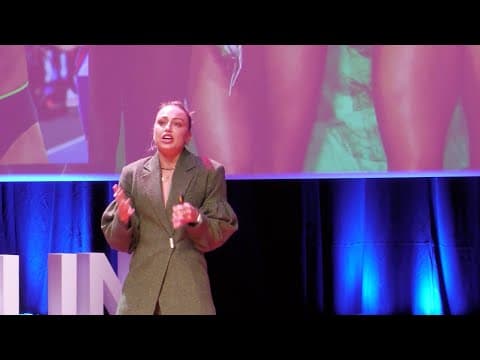
From asthmatic kid to Olympian | Sophie Becker | TEDxTUDublin
Audio Summary
AI Summary
The speaker recounts the electrifying atmosphere before the women's 4x400 meter relay final at the Paris Olympic Games, feeling immense pride alongside her teammates. This vivid scene sharply contrasts with her athletic upbringing, which was marked by disappointment and last-place finishes rather than early success. Growing up in rural Wexford, she participated in various sports, with her parents acting as constant chauffeurs.
At eight years old, she was diagnosed with asthma, a condition that significantly impacted her breathing. This led her to athletics, not for competition initially, but to learn how to manage her breathing. Her journey was a slow progression; she didn't earn her first Irish vest until age 21, long after many of her peers had achieved this milestone. The sting of seeing others with their Irish kits, especially the backpacks, fueled her determination. Her progress was gradual, moving from last place to second last, then to semi-finals, and finally to finals.
She emphasizes that her motivation wasn't winning, but the process of improvement. This philosophy, she believes, is applicable to life in general. Unlike other sports she quit due to a lack of skill, athletics held her attention because of her parents' unwavering support, regardless of her performance. They offered encouragement whether she won or lost. A pivotal moment at 16, failing to advance from a heat, was met with her mother's usual supportive response, including a McDonald's stop and continued attendance at training. She describes herself as always being in the background, never the prodigy, but consistently showing up.
Running, for her, is more than a sport; it's a calling, a state of being in alignment with her true self, her "eudaimonia." The track is her home, a place of both her greatest triumphs and deepest struggles. Her childhood focus was on the present, on running, and on improving her times lap by lap, rather than future outcomes. This approach, she suggests, is key to sustaining motivation.
Her journey to the Olympics was an "unfinished future," with success arising from the unwritten parts. She advises pursuing dreams without fear of not being the best or of the unknown. Trusting the process, even when races don't go as planned or when facing new training regimes, is crucial. After the Paris Olympics, she quit her job to become a professional athlete, a decision driven by a strong inner feeling, despite financial uncertainties.
Challenges as a professional athlete include injury, such as a stress fracture discovered the same week she committed to her career, and financial pressure where performance directly correlates to income. Despite fleeting thoughts of a "normal" life, she returns to the track, reminded of her love for the sport. She embraces the unknown, living each day fully, channeling her eight-year-old self's willingness to take on challenges. Her future on the track is unfinished, with sights set on the European Championships, World Championships, and a third Olympics in LA. She encourages others to be brave, try new things, and give their all, as the "rest is still unwritten."