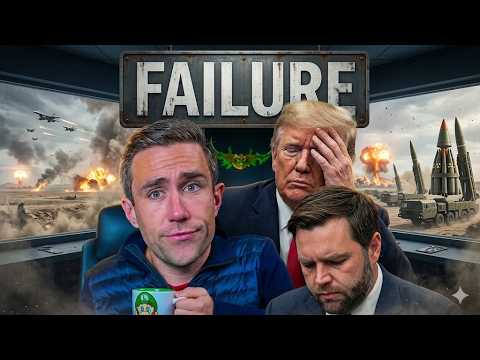
*SH*T* IRAN TALKS JUST COLLAPSED
Audio Summary
AI Summary
Talks between the United States and Iran have broken down, with JD Vance returning to the U.S. without a deal after 21 hours of negotiations. A key point of contention is Iran's demand for control over the Strait of Hormuz, including war reparations or tolls, which they did not previously have. Currently, only Iran's allies or ships paying "extortion fees" are navigating the strait, often avoiding an island believed to be heavily mined. Iran's expertise in naval mines is noted, though there's a concern they may not even know the locations of their own mines.
Another major disagreement centers on Iran's pursuit of nuclear enrichment, which they view as a "god-given right." The U.S. and other nations are unwilling to allow Iran to become another North Korea. JD Vance stated that the U.S. negotiated in "good faith" and presented a "best and final offer" that included no nuclear enrichment and no tolls for Hormuz, essentially returning to the pre-ceasefire position. This contrasts with earlier suggestions from Trump that some items like enrichment and tolls might have been workable in a ceasefire plan, leading to speculation about whether Trump needed an "off-ramp" or if market players benefited from the situation.
Despite in-person negotiations, no agreement was reached, a fact the speaker finds disappointing given their usual optimism for such discussions. Vance characterized the outcome as "bad news for Iran, less so bad for America," emphasizing that the U.S. made its red lines clear, particularly regarding preventing Iran from acquiring a nuclear weapon. The U.S. has not seen any fundamental commitment from Iran to forgo developing such a weapon, leading to "shortcomings" in the talks. Other ongoing issues in negotiations include sanctions relief and the war in Lebanon.
Iranian propaganda, in contrast, claims the U.S. has "excessive demands" that hindered progress. While Iran's foreign minister stressed the importance of seriousness and good faith, and a rejection of "maximalist and unlawful demands," the U.S. delegation is now returning home. The term "unlawful" likely refers to Iran's belief in its right to enrich uranium.
The situation in the Strait of Hormuz has significantly changed, with ship transits dropping from 140-150 per week before the war to about 70 now. Iran now asserts that every vessel passing through the strait, which they consider "their straight," must coordinate with them. This suggests Iran has found a "United States's Achilles heel."
The speaker expresses slight disappointment, having been 60% hopeful for a positive outcome. They note that unlike previous negotiations under Donald Trump, where an "outline" or "list" of items being worked on would typically emerge, Vance's statement was a straightforward "best and final offer. Peace." The speaker concludes by expressing dissatisfaction with the outcome of the talks.