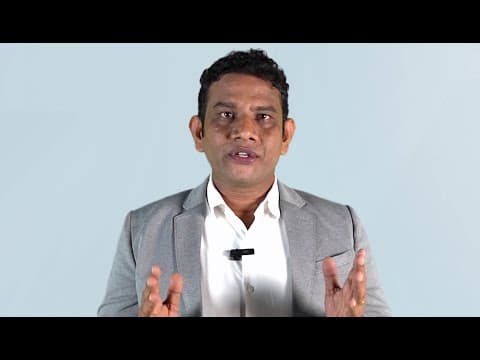
The future of ocean and plastic management | Dr. Abhay B. Fulke | TEDxParamita High School
Audio Summary
AI Summary
Dr. Abay Biful, a scientist at India's National Institute of Oceanography, shares how his childhood experiences fueled his passion for environmental science. He explains that while many see beaches as places for photos, he views them as indicators of the ocean's health. He believes that by learning to read the "signals" in the sand and water, we can understand the impact of human activity and find solutions to pollution.
His journey began in a small village in Maharashtra, India. Due to his father's police career, his family moved frequently, exposing him to diverse landscapes like villages, forests, and towns. As a child, he spent hours exploring forests, which he considered his classroom. His curiosity led him to observe animal tracks, broken branches, and droppings, trying to deduce which animals had passed by. This early realization that "nature always leaves clues" and that "every ecosystem tells a story" was fundamental to his future research.
This curiosity eventually led him to a career in environmental science. He highlights the staggering scale of plastic pollution in oceans and the slow degradation of toxic compounds. While numbers define the crisis, Dr. Biful emphasizes that solutions lie in our observations and choices, not just data. He now monitors the ocean, similar to how a doctor checks vital signs, by assessing water quality, sediment, microbial pollution, heavy metals, and plastic presence.
Choosing this path over a family tradition in law enforcement was challenging but necessary. He stresses that early experiences shape our journey and that our present choices determine the future. Dr. Biful concludes by urging everyone to listen to nature's signals, emphasizing that the real magic and change happen in the small choices we make when stepping outside our comfort zones.