Maclear marché secondaire : la vraie raison pour laquelle les autres plateformes n'en ont pas
AI Summary
In this video, Jeremy discusses MacLear, an online investment platform, focusing on its secondary market feature. He notes that the video is sponsored by MacLear and provides an affiliate link in the description, offering a €15 welcome bonus and 3% cashback for 90 days. Jeremy reminds viewers that investing carries risks, including the potential loss of capital, and clarifies that the video is not financial advice, nor are past performances guarantees of future results.
Jeremy has previously mentioned MacLear, a platform he personally invests in and values. He highlights that today's video is particularly interesting due to internal statistics provided directly by MacLear, which he will share. He navigates to his MacLear dashboard, showing a total fund of €2337.91, with less than €80 available and the rest invested across 13 projects. He emphasizes that all projects are on schedule with no delayed or defaulted payments, underscoring MacLear's reliable system. He points to the "Relevé de compte" section, displaying perfectly dated transactions and interest repayments, even small amounts like €0.38 or €1.90, confirming the system's smooth operation.
The core topic of the video is MacLear's secondary market. Jeremy explains that a significant challenge in crowdfunding is the immobilization of funds until the project's completion. For instance, if an investment contract is for 12 or 13 months, the money is typically locked for that duration. This raises a crucial question for investors: how to recover funds before the planned term if needed? This is the issue of liquidity, often a weakness for peer-to-peer investment platforms. Many crowdlending platforms do not offer a secondary market, while some have announced it in their roadmaps for years without implementation. Others have existing markets that lack liquidity and dynamism, primarily due to insufficient assets.
A well-functioning secondary market changes this dynamic by offering investors a third option beyond simply locking funds for the full term or not investing at all. It allows them to invest with the possibility of exiting early if necessary, albeit under specific conditions. Jeremy then presents data illustrating the secondary market's growth and activity.
He shares a graph showing the monthly volume of the secondary market. In May 2024, the volume was €6,736. By February 2026, it surged to €1,878,305, representing a 278-fold increase in 22 months. A second graph details transactions and participants. In May 2024, there were 27 trades involving 26 participants. By February 2026, these numbers jumped to 7,268 trades and over 1,515 participants. The blue curve represents completed transactions, and the light blue curve shows participants.
A third graph reveals the average transaction amount on the secondary market. In May 2024, it was around €250, and in February 2026, it remained stable at approximately €250. This stability indicates that the market's growth stems from an increasing number of participants, not from larger individual operations. This signifies organic demand and a living, growing market, not just a "gadget."
Next, Jeremy demonstrates how the secondary market functions, particularly for selling investments. He navigates to his "My Investments" section. For each project, there's a "Sell" option. He notes the repayment calendar provides a forecast of expected returns. For an initial investment of €500, he can sell up to 100% (€500) or a portion, such as 50% (€250). For another project, "Petrol Marca," with a smaller initial investment, he can sell amounts like €99.88 or €199.76.
When selling on the secondary market, a "decode" or discount of 2% to 6% is applied, making the investment more attractive to potential buyers. Sellers incur a 2.5% fee. For example, selling a €500 investment incurs a €12.50 fee, while selling €250 incurs a €6.25 fee. These fees apply only if the sale occurs within 14 days; otherwise, the sale expires and must be relisted manually. These 2.5% fees contribute to a provision fund, a mechanism explained in a previous video.
From the buyer's perspective, there are no purchase expenses on the secondary market. Buyers also benefit from a reduction compared to the original price. For instance, a "CELTA" project initially priced at €30 might be available for €29, a 3.3% reduction. This allows investors to access projects they might have missed on the primary market. While the "decode" can be small, it can also be significant. For "Omega Trade," a 7.6% reduction is available on a larger initial price of €500, making it €462. Buyers can also filter projects by shorter durations, which is appealing to investors seeking high-end products with very short investment periods.
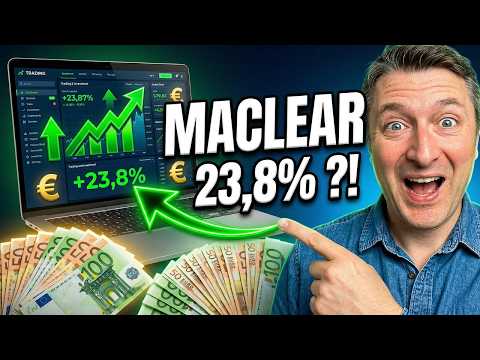
Jeremy provides an example with a "Krypton" project, showing how a 5.9% decode boosts profitability. An initial €500 investment over 11 months at 16% interest would yield €73.33, resulting in a 14.67% return over 11 months (16% annualized). With a 5.9% decode, the purchase price becomes €470.50. The interest remains 16% of the original €500, yielding €73.33. However, the additional gain from the decode (the difference between €500 and €470.50, which is €29.50) brings the total gain to €102.50. This increases the return over 11 months to 21.86%, or 23.8% annualized.
Despite the benefits, there are important considerations. A 30-day "carence" period is imposed after a purchase, during which the investment cannot be resold, preventing excessive speculation. All project conditions, including guarantees and collateral, remain identical to the original project.
However, liquidity is not guaranteed. There's no assurance that an investment will be sold instantly, as it depends on finding a buyer. It might take some time. Furthermore, the secondary market does not protect against the risk of the company defaulting. If a project faces difficulties, potential buyers will factor this into their decisions.
Selling an investment on the secondary market also impacts the loyalty program. MacLear rewards investors based on their total investment amount. For example, reaching €5,000 might grant a "Beta Plus" status, offering an additional 2% interest on future investments. Exceeding €40,000 could lead to "Alpha" status, providing 2.5% additional interest. Selling investments can reduce an investor's total amount, potentially lowering their loyalty status.
Jeremy emphasizes that MacLear's secondary market is a tool, not a current account. If an investor anticipates needing liquidity within six months, MacLear might not be suitable. The question of liquidity is critical. He reiterates the risks of capital loss and that past performance doesn't guarantee future results.
In summary, MacLear's active secondary market is a rare and valuable feature in the European crowdlending landscape, as evidenced by the shared data. This significantly improves liquidity. Jeremy believes MacLear, combined with its secondary market, offers a good diversification option but should be part of a broader portfolio that might include other peer-to-peer platforms, ETFs, bonds, or savings accounts. He concludes by reminding viewers of the affiliate link for the welcome bonus and cashback, encouraging likes, subscriptions, and comments for questions.