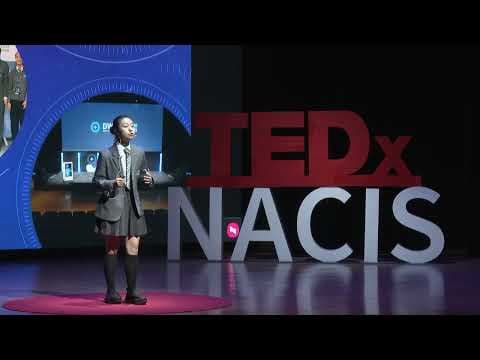
The Architecture of the Box: Redesigning Our Climate Future | Zhu Yolanda | TEDxNACIS Shanghai Youth
Audio Summary
AI Summary
The speaker, an environmental enthusiast aiming to empower future climate youth leaders, challenges the audience to question their conceptual boxes, which are built from certainties, value models, and trusted ideas. While life presents problems like melting glaciers, these "chocolates" are within a box of our own making. Three intellectual journeys from Oxford, Belgium, and MIT transformed the speaker's understanding of climate solutions, prompting a re-examination of not just solutions but the structure of these conceptual boxes.
The first journey began with fellow students at COP 28 and 29, inspiring the creation of a student-led eco-committee. Projects included a uniform recycling initiative and a black soldier fly larvae project that converted cafeteria waste into aquaponics feed. In an Oxford climate change competition, the team addressed the unsustainability of conventional agriculture by pioneering black soldier fly larvae as a superior, high-performance feed alternative. This offered economic efficiency and environmental sustainability by improving water quality and waste utilization. The key takeaway, or "first chocolate," was that real change lies in transformative and accessible solutions, not just big or flashy ideas.
The second "chocolate" came from the Digital with Purpose 2025 summit in Belgium, which focused on using technology to make cities greener. While enthusiasm for optimizing traffic and managing building resources was high, a question arose: how can we be sure these green digital solutions are actually green? The concern was that utilizing fundamental resources for building these solutions could negate their positive impact due to a lack of clear measuring sticks. This led to the realization that the most powerful ingredient for change is not technology, but a robust system.
The third "chocolate" was received at the MIT Climate United Nations, where the focus shifted from single innovations to global policy and finance. The discussion highlighted that developed nations need to cut subsidies that prevent renewable energy from becoming the default. This reinforced the idea that the ultimate ingredient for change is not technology, but a systemic approach.
These three experiences from Oxford, Belgium, and MIT taught the speaker that climate innovation requires integrity, systems that regenerate rather than just manage, and ultimately, the construction of new systems. The essence of "thinking again" involves rebuilding mental infrastructures from compartmentalized certainty to interconnected curiosity. The fight against climate change requires transformed thinking, not just technology. The speaker encourages the audience to audit their own mental infrastructures, question limiting certainties, and be brave enough to let new ideas fundamentally change them. The call to action is to "think again, build again, heal the future" by redesigning our conceptual boxes.