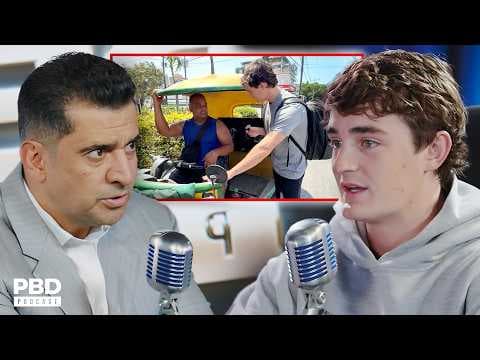
"$40 Per Gallon On The Black Market" - Nick Shirley UNCOVERS Cuba's Fuel CRISIS
Audio Summary
AI Summary
The speaker introduces a video about Cuba, noting it's an unreleased clip, making the audience the first to see it. The video's intro shows the speaker driving with a tour guide, leading into a discussion about communism and the humanitarian crisis in Cuba.
Cuba, a one-party communist country, faces severe food shortages, daily blackouts, and lack of medicine. A US blockade restricts oil and gas. The speaker, wanting to experience communism firsthand after Cuba's 60 years under it, obtained a visa for journalistic activity. However, upon arrival, his camera gear was seized, and within 24 hours, he planned an escape after being followed by intelligence and a two-star general searched for him at his hotel.
The reality in Cuba is dire due to a lack of gasoline. Gas stations are inoperative because there's literally no gas. The US capturing Maduro, their main oil supplier, cut off their supply. People wait in lines for government gas, which costs $1, but black market gas is $10 per liter, or $40 per gallon. Before Maduro's capture, gas was readily available.
The average Cuban citizen endures immense daily struggles. The streets are desolate, even more so than during the COVID-19 pandemic, with hardly any people or cars. Monuments to leaders stand in empty plazas. People are reluctant to speak on camera, fearing repercussions from the government.
Internet access is illegal, requiring VPNs. To watch TV shows or movies, people visit booths where media is loaded onto hard drives, similar to old CD playlists. Theaters show old films, and require at least nine people to be present, otherwise the show is cut off. Power blackouts further limit entertainment consumption.
One person reported not having eggs in a year, highlighting the severity of food shortages and the government's control over rations. When asked about Trump, some expressed optimism for change, while others, often older individuals, were brainwashed into believing the current system was good. The speaker blurs faces in his video to protect interviewees from being jailed. Many individuals refused to be recorded, fearing government reprisal.
Few children are seen on the streets, which is unusual for a Latin American country. A 12-year-old boy playing soccer stated that random power outages were the biggest challenge in his life, affecting studies and daily routines.
Cuba is a large country, about twice the size of Haiti and the Dominican Republic. The speaker visited Havana, a city of two million people, yet its streets were empty. He stayed at the Hotel National.
Some Cubans pleaded for help, asking if the speaker was bringing news of freedom. They expressed gratitude for him documenting the situation, unlike propagandist trips where government-approved tour guides control what is seen and who is interviewed. The speaker's trip, initially planned for 60 hours, was cut short to 24 hours due to security concerns, as intelligence surrounded their hotel. His security team, experienced in high-risk zones like Haiti and anti-human trafficking missions in Mexico, deemed the situation too dangerous.
Changing the flight was smooth, but they tried to keep their early departure a secret. However, a two-star general was waiting for them at the hotel when they tried to leave, confirming that an earlier interaction with a woman taking photos had been reported to the government. The general questioned why they were leaving early.
Cuban monthly salaries are $14 USD. The speaker tipped people with $1 and $5 bills. While some were grateful, others asked for more, showing a capitalist desire despite the communist system. The speaker encountered other tourists, many wearing pro-communist gear, which he found baffling given the dire conditions he witnessed. He questions how anyone could support such a system after seeing the reality in Cuba.