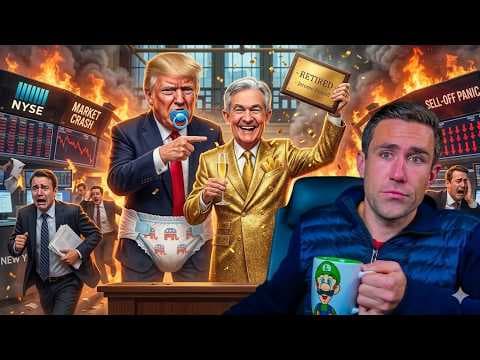
What the Fed JUST Said. The FINAL Reveal.
Audio Summary
AI Summary
Jerome Powell's final press conference as Fed chair has concluded, marking a significant moment. The speaker plans to provide a report card on Powell's tenure, discussing his economic optimism, the conditions for rate cuts, and his stance on inflation.
A notable aspect of the recent Federal Reserve meeting was the 8-4 vote, indicating a lack of consensus. Three members, Hammock, Qashqari, and Logan, voted for a decline to remove the "easing bias" from the statement, signaling a desire to wait for more data before making further adjustments, particularly in light of potential oil shocks.
The speaker has been monitoring oil prices, with Brent crude at $95 and a warning bell set for $120. Recent geopolitical events, including comments from Donald Trump regarding potential conflicts, have pushed oil prices up to $119, nearing this alarm level. The speaker explains that $120 isn't a recessionary threshold but a point where increased discussion and institutional nervousness could lead to market caution and reduced stock buying, especially given the current "greed" sentiment in the CNN greed and fear index.
Despite potential near-term volatility and the possibility of earnings misses, the speaker has become more bullish on economic data since the onset of the war. This optimism is supported by metrics like capital goods spending and stabilization in the labor market, even in private payroll surveys. Powell himself highlighted that Private Domestic Final Purchases (PDFP), the Fed's preferred measure of economic growth, is growing at a rate exceeding 2%.
Powell acknowledged the pain felt by those without jobs or experiencing unemployment, recognizing that the labor market, while less desirable for job seekers, has also contributed to reduced labor market inflation, which is beneficial for the Fed's inflation-fighting efforts. He noted the series of shocks the economy has faced, including COVID-19, the war in Ukraine, and a banking crisis.
The dissent among Fed members regarding the easing bias is seen as potentially making things more challenging for the incoming Fed chair, Jerome Worsh, in May. The speaker expresses a sense of sadness at Powell's departure after eight years of coverage, humorously contemplating a statue in his honor if he achieves a soft landing.
The Federal Reserve faces increasing difficulty in building consensus due to the uncertainty surrounding the duration of oil shocks and consumer spending. While consumer spending has remained resilient, supported by higher net worth individuals with stock market exposure, the sustainability of this trend amid rising energy prices is questioned. The speaker recalls successfully calling for a bullish market turn following a ceasefire announcement, despite initial skepticism.
Powell intends to remain at the Federal Reserve until his legal situation is fully resolved, seeking confirmation that no further investigations will be reopened. He views his continued presence as a check and balance, aiming to maintain the independence of the institution without acting as a "shadow Fed chair." The speaker expresses personal respect for Powell's transparency and his willingness to stand by his convictions, despite acknowledging that Powell was not perfect, citing the initial misjudgment of inflation as "transitory."
Powell's extended tenure could last until January 31, 2028, potentially overlapping with a portion of a future presidential term. He reiterates that rate cuts are unlikely before 2027, emphasizing the need to navigate economic shocks and for the year-over-year effects of past tariffs to roll over. The next FOMC meeting might see the removal of the easing bias, shifting towards a neutral stance and a meeting-by-meeting approach.
Regarding rate hikes, Powell indicated a high bar, prioritizing minimizing damage to the labor market. This patient approach, he believes, avoids repeating the mistakes of the 1970s. The speaker agrees that hikes are improbable, with the Fed likely maintaining a patient stance, especially as rates are considered slightly above neutral.
The speaker points to strong ADP job creation numbers as further evidence against immediate rate cuts. He also discusses his personal investment strategy, suggesting that buying opportunities arise when the greed and fear index is at "fear" or below, while his own bullishness scale is high, indicating a divergence between his view and the broader market.
Powell expressed optimism about the economy's performance, driven by spending, artificial intelligence, and labor market stabilization, which the speaker considers a rebound. He believes Powell is leaving on a high note, having navigated the economy well despite underlying issues that his successor will need to address.
While acknowledging that current bond yields and mortgage rates are not ideal, the speaker maintains a positive outlook on Powell's performance, giving him a 96 out of 100. He anticipates that future Fed chairs will face ongoing challenges. The speaker also promotes his live streams and educational resources, encouraging viewers to join for market analysis and investment advice. He also shares a personal note about a bread recipe posted on his Instagram.