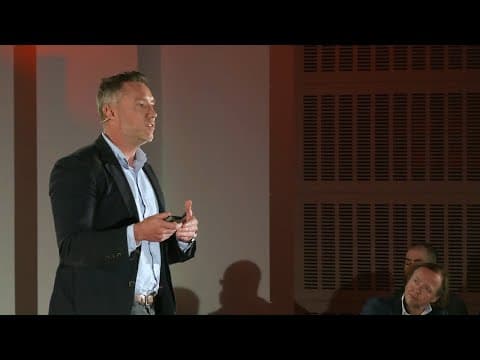
The Ecosystem to Maximise the Blockchain Opportunity | Lory Kehoe | TEDxTrinityCollegeDublin
Audio Summary
AI Summary
The speaker, who admits to being a potentially poor PhD student, emphasizes the importance of curiosity in research, particularly concerning ecosystems. Their personal interests lie in entrepreneurs, ecosystems themselves, and blockchain technology. Entrepreneurs are defined as individuals who create projects and businesses. Ecosystems, whether in business or nature, are groups of interacting players that form something larger than their individual components. Entrepreneurial ecosystems are characterized by resilience, evolution, and adaptation. Blockchain technology is described as a database with unique attributes: immutability, transparency, and the functionality of smart contracts, which are self-executing agreements.
A central question driving the speaker's research is how ecosystems form, especially from seemingly barren origins, and where the talent, skills, and knowledge within them originate. The speaker notes a human tendency to seek shortcuts by looking at successful examples like Silicon Valley, which possesses funding, talent, and a deep-rooted entrepreneurial mindset. However, the speaker stresses that simply copying and pasting successful models does not work for creating new ecosystems. Instead, it's crucial to identify and leverage the unique strengths and attributes of a specific community, city, or country.
The speaker uses Ireland as an example of a place with many ingredients for a thriving entrepreneurial and blockchain ecosystem, including a credible regulator, university talent, established fintech companies, major banks, and access to funding. Despite these advantages, the speaker argues that simply having these components isn't enough to guarantee the formation of a successful ecosystem.
Based on their research, the speaker outlines four key elements for ecosystem development:
1. **Risk-Taking:** This involves entrepreneurs taking risks to explore new technologies and create ventures, as well as governments making significant commitments to emerging technologies rather than just dabbling.
2. **Planning:** A strategic plan is necessary for development.
3. **Execution and Accountability:** Plans need to be executed effectively, with mechanisms for accountability.
4. **Connective Tissue:** This is identified as the often-overlooked "softer side" and intangible elements that are hard to imitate but add significant value. This "connective tissue" acts as a coordinating layer between all the individual components of an ecosystem, much like insects and bees facilitate pollination in nature. Without this layer, components remain siloed.
The adoption of emerging technologies by startups and companies leads to legitimacy, which eventually surpasses the initial hype. The speaker concludes by reiterating that blockchains are interconnected databases and ecosystems are interconnected ways of bringing actors together. Therefore, to create entrepreneurial ecosystems, especially around blockchain, it is imperative for individuals and companies to collaborate, take risks, plan, execute, and establish this crucial coordinating layer.