Trump Just Declared War on Oil — Here's What It Means for Your Money
Audio Summary
AI Summary
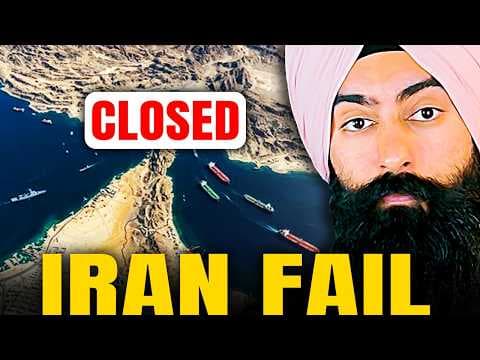
A recent negotiation between the United States and Iran regarding a ceasefire in the Middle East has failed, as JD Vance concluded 21 hours of talks with no agreement. Immediately following this, President Trump announced on Truth Social that the U.S. Navy would blockade all ships attempting to enter or leave the Strait of Hormuz. This news caused stock futures to fall and oil futures to rise, reflecting investor concern that the conflict in the Middle East will escalate, prolong, and have a greater impact on the economy and stock market.
Investors are particularly worried about a repeat of events from the early 1970s. During that period, three key things occurred:
1. **Money Printing Problem:** In 1971, President Richard Nixon removed the U.S. dollar from the gold standard, allowing the Federal Reserve to print unlimited money. This enabled the government to spend large sums it didn't possess, leading to inflation.
2. **Middle East Conflict:** The U.S. became involved in the Yom Kippur War around 1973, causing oil prices to surge.
3. **High Interest Rates:** To combat inflation and save the dollar, interest rates were significantly raised, resulting in a deep recession and a stock market crash.
Today, two of these three conditions have already emerged. First, a "money printing problem" arose in 2020 due to the pandemic, with the Federal Reserve printing substantial amounts of money and the government spending heavily on PPP loans, unemployment, bailouts, and stimulus. This subsequently led to an inflation problem. Second, in 2026, the U.S. entered a conflict in the Middle East, which has caused oil prices to spike. The similarity to the early 1970s raises the question of whether the Federal Reserve will now raise interest rates to fight inflation or cut them.
However, a crucial difference between now and the 1970s is the current national debt, which stands at almost $40 trillion. The fastest-growing expense for the U.S. government is not military or infrastructure, but interest payments on this debt. Tax dollars, the government's sole income, are increasingly being used to service this debt rather than provide public services. Unlike a fixed-rate mortgage, much of this government debt has variable interest rates and shorter terms. In the 1970s, loans were primarily 10-year and 30-year, meaning interest rates on debt changed less frequently. Today, there are many more one-year and two-year loans, making interest rates on the national debt more susceptible to immediate adjustments.
If the Federal Reserve is compelled to raise interest rates, the cost of servicing the national debt will increase. This means an even larger portion of tax dollars will be allocated to interest payments, putting more pressure on the government, potentially leading to further money printing and an exacerbated inflation problem.
High oil prices worsen inflation because they increase the cost of nearly everything: gas, groceries (due to higher diesel, shipping, and fertilizer costs), and travel. The Federal Reserve typically combats inflation by either withdrawing money from the economy or raising interest rates. In the 1970s, interest rates were aggressively raised to around 20%, leading to mortgage rates of 15-18% and driving the economy into a deep recession and the stock market down by almost 50%.
Currently, oil prices have risen, and inflation is a concern. If oil prices remain high or climb further due to the Middle East conflict, inflation will worsen. The conflict impacts oil prices because Iran controls the Strait of Hormuz, a critical passageway for global oil transport. Unable to fight militarily, Iran can disrupt oil transport, reducing supply and driving up prices to exert economic pressure on the U.S., potentially pushing it into a recession.
If sustained high oil prices lead to increased inflation, the Federal Reserve will face a difficult choice: cut interest rates to stimulate the economy, thereby worsening inflation, or raise rates to combat inflation, risking a deeper recession and a larger stock market crash, similar to the stagflation (high inflation, slowing economy) experienced in the 1970s. Stagflation is particularly painful because prices rise while incomes fall.
The economy is already showing signs of pain, including in the job market (due to AI) and from existing higher interest rates. The prolonged conflict in the Middle East could further elevate oil prices, increasing the pressure on the Federal Reserve to raise rates. Higher interest rates would make borrowing more expensive, impacting mortgage rates, refinancing opportunities, and industries like retail (Lowe's, Home Depot), real estate (National Association of Realtors, Mortgage Bankers Association), and private credit. Many businesses, having borrowed at near 0% interest rates between 2020-2022, are now facing significantly higher adjustable rates (5-9%), leading to defaults and hurting banks that lent through private credit. Wall Street is hoping for lower interest rates to allow these businesses to refinance. However, if oil prices remain high, the Fed will be unable to cut rates, hurting these industries further.
The economy operates as an interconnected system; a downturn in one sector, like housing, can ripple through others, affecting consumer spending and other businesses. While higher oil prices benefit oil companies and well owners, the average American becomes poorer due to inflation. Inflation, fundamentally, is the devaluation of currency, meaning dollars buy less. While it hurts the average person, it can enrich the wealthy and financially savvy because asset prices (real estate, stocks, businesses) tend to rise with inflation, even as everyday goods become more expensive. Wage growth has not kept pace with inflation, with reported inflation between 2020-2026 at 25-26%, while incomes grew by 22-23%. The actual inflation felt by many is likely even higher.
The trend of incomes not keeping up with inflation has been ongoing since the dollar was taken off the gold standard in 1971, with money printing leading to a decline in the dollar's value and increased prices. This post-pandemic inflation, exacerbated by high oil prices, is making life unaffordable for many. Wall Street, like most sane individuals, does not want war, but the economic costs are significant and often borne by the average person through inflation.
Given this economic outlook, understanding how these events impact personal finances is crucial. The speaker emphasizes the importance of being an investor. Market downturns, while often causing panic, historically create opportunities for financially savvy individuals to acquire good investments at discounted prices. Investing in the broader U.S. economy through funds like S&P 500 ETFs is suggested as a simple starting point. History shows that recessions and market crashes are common (16 recessions, 25 market crashes in the last 100 years), and each has presented opportunities for some to become wealthy by buying investments when they are "on sale." Long-term investors are advised to view downturns as opportunities to buy more, rather than panic-selling.