Geography of the World Europe The People
AI Summary
Europe is a region characterized by numerous countries, diverse languages, and unique regional and national traditions. Despite this variety, several common traits are shared by most Europeans. Education is highly valued, with mandatory schooling and high literacy rates, such as 99% in Germany and 97% in Spain. School children often learn multiple languages, which is crucial for communication in a linguistically diverse region where most languages belong to the Indo-European family and use the Latin alphabet.
The majority of Europeans share the Christian religious tradition, and the continent is known for its beautiful churches, though mosques are also present, particularly in countries like Bosnia and Albania with significant Muslim populations. Europeans generally enjoy good health, benefiting from nutritious food and excellent medical facilities, leading to high life expectancy and low infant mortality rates compared to global averages. While most European countries are densely populated, the overall population growth rate is slow, with some countries like Germany experiencing declines. A significant majority of Europeans, about eight out of ten in some areas, reside in cities and towns of 10,000 or more people. Most Europeans also enjoy a high standard of living, with sufficient income for housing, cars, and vacations, though disparities exist.
European economies are highly industrialized, with a large portion of the workforce employed in various industrial sectors, including sales and services. Agriculture, while important, employs a smaller percentage of the labor force than in many other parts of the world, and most of it is highly mechanized. Communication and transportation systems are well-developed, facilitating easy movement of people and goods. All European countries have democratically elected governments, and in the 21st century, many have formed a union with a single currency and reduced trade barriers, making travel between member countries easier.
The history of Europe spans thousands of years, with evidence of early human habitation through stone tools and cave paintings dating back 30,000 years. Around 8,000 years ago, farming methods spread into Europe from Southwest Asia, leading to the growth of farm villages and the construction of megalithic monuments. The adoption of farming led to rapid population growth and the development of cities, with ruins in Western Turkey and Greece dating back nearly 4,000 years. By the 5th century BC, Greeks built impressive temples and established colonies across the Mediterranean.
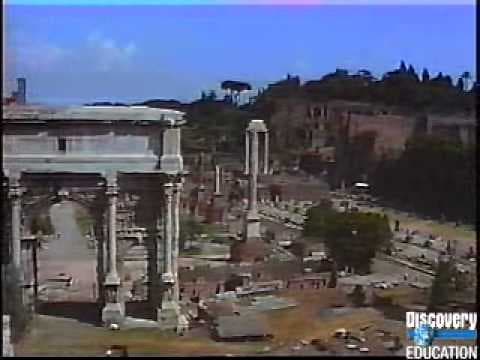
Rome rose to power toward the end of the first millennium BC, conquering much of Europe, including England. By the 2nd century AD, the Roman Empire encompassed all lands bordering the Mediterranean, unified by a single legal, political, and economic system, with excellent roads and control of the seas. Christianity became the official religion of the Roman Empire in the late 4th century. The empire later split, with the Western part entering a Dark Age due to invasions and plagues, while the Eastern part became the Byzantine Empire. The Roman Catholic Church, headed by the Pope, was one of the few institutions to survive this period, preserving learning and Christian teachings.
In the early 8th century, Muslim warriors from North Africa invaded Spain, leaving behind a legacy of Islamic architecture. Vikings from Scandinavia attacked other parts of Europe in the 9th and 10th centuries, with some settling in Normandy and later conquering England in 1066. The Crusades began in the late 11th century, leading to often bloody but also culturally enriching contact between Christians and Muslims. The high medieval period (1100-mid-14th century) was a time of creativity, urban growth, flourishing trade, and the construction of Romanesque and Gothic churches, ending with the devastating Black Death in 1348.
The Renaissance emerged in Italian cities, rediscovering ancient Greek and Roman intellectual and artistic achievements. The invention of the printing press in the mid-15th century facilitated the spread of these new ideas. During the 15th century, European navigators began voyages of exploration, with Portuguese navigators reaching India in 1498 and Christopher Columbus discovering the Americas in 1492, claiming lands for Spain. This led to increased global competition among European states for resources.
The early 16th century saw the Protestant Reformation, initiated by Martin Luther, which challenged Roman Catholic practices and led to religious wars. The 18th century, the Age of Reason, promoted cosmopolitan and humanistic values. The French Revolution in 1789, with its cry for liberty, equality, and fraternity, marked a major turning point. Napoleon Bonaparte's dream of a united Europe under French control ended with his defeat in 1815, but the ideas of the French Revolution fueled nationalism and a reaction against authoritarian monarchies, leading to the emergence of new countries.
The 19th-century Industrial Revolution brought major socioeconomic changes, including technological advancements, urbanization, and migration. Low wages and high unemployment led many Europeans to seek opportunities abroad. Eventually, profits from industrialization created a growing middle class that advocated for democratic institutions and increased opportunities. Meanwhile, European countries expanded their colonies, often in competition.
Growing nationalistic tensions led to World War I in 1914, which lasted over four years and resulted in nearly 10 million military deaths and crippled Europe's economies. The interwar period saw the rise of authoritarian governments, with leaders like Adolf Hitler blaming social and economic problems on minority groups. Hitler's invasion of Poland in 1939 sparked World War II, which ended in Europe with Germany's defeat in May 1945.
The aftermath of World War II saw Europe divided into Eastern and Western blocs, with the Soviet Union dominating much of Central and Eastern Europe, including Eastern Germany. The Cold War deepened this division with an "iron curtain." While Soviet-controlled areas recovered slowly, Western Europe experienced rapid recovery with U.S. economic aid. Post-colonial migration increased multinational populations in Western Europe. Awareness of the need for larger economic units led to the formation of international organizations, culminating in the European Community in 1967 and the European Union in 1992. The "iron curtain" fell in 1989 as the Cold War ended, allowing more countries to join the EU. Twenty-first-century Europe benefits from increased social and economic cooperation, with most countries now part of the European Union, an organization aiming for a peaceful and prosperous future.