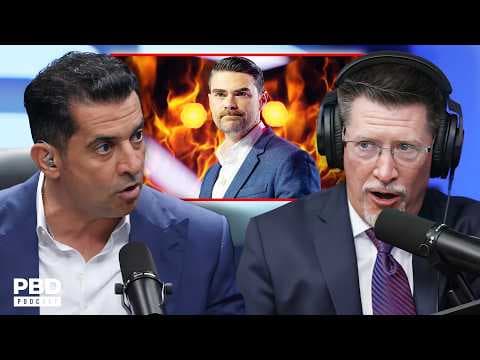
"170M Down To 22M” - Daily Wire Layoffs REVEALS Billion Dollar Miscalculation
Audio Summary
AI Summary
The Daily Wire has implemented layoffs across various teams, primarily impacting their Nashville headquarters. A spokesperson stated that the company is grateful for the contributions of those affected and that the restructuring is part of an investment in new formats, locations, and production models. The company has been expanding its production staff in other regions like DC, the Northeast, and Florida, and is focusing resources on upcoming entertainment projects. They also plan to continue investing in their editorial team and investigative journalism, having already hired new reporters and established a DC bureau.
One reporter, Cameron Aran, confirmed he was among those laid off and is seeking new opportunities. Candace Owens, a former employee, suggested that over 50% of the company's staff might have been affected, a claim refuted by Daily Wire's editor-in-chief, Brent, who stated the layoffs were not nearly at that percentage.
The discussion then shifts to the underlying reasons for these changes. One perspective is that the company's reliance on personalities, rather than a robust business model, has led to vulnerabilities. When these personalities, like Ben Shapiro or Candace Owens, leave or are let go, a significant portion of their audience follows. Ben Shapiro's YouTube views, which once reached 170 million per month, have reportedly declined to 22 million. This decline is attributed, in part, to his more aggressive stance on Gaza post-October 7th, which may have narrowed his audience and created internal tension. The departure of other personalities like Brett Cooper is also cited as a factor in audience loss.
The company's attempt to diversify into areas like conservative entertainment, children's content, and streaming products is seen as stretching resources too thin, akin to trying to run a newsroom, film studio, and product line simultaneously without sufficient capital or discipline. While there have been some successes, such as Matt Walsh's documentary, many ventures have not yielded the expected results. The stepping down of Jeremy Boring as CEO is viewed as a sign of instability.
A key argument is that the Daily Wire's brand is built on personalities, and the connection audiences have is with these individuals. When these voices are lost, the audience often follows. Despite the appearance of a large operation, the company is perceived as heavily reliant on the talent carrying it.
Ben Shapiro is identified as the face of the Daily Wire, and while the company has other talented individuals, his stance on certain issues, particularly his support for Israel, has reportedly created rifts. The question is posed whether the Daily Wire changed or the media landscape changed. The prevailing opinion is that the Daily Wire has remained consistent in its core values, but the market has shifted. Subscription numbers are seen to correlate with public sentiment on the Israel-Gaza conflict.
It's suggested that Ben Shapiro would likely make the same choices again, prioritizing standing for his beliefs over audience numbers, even if it means losing subscribers or viewership. This is compared to a hypothetical scenario where capitalism loses popularity; the argument is that one would double down on its principles.
Further analysis points to significant financial decisions, such as millions spent on a product called "bent key" that failed, and the departure of Jeremy Boring as CEO. The timing of these events, coupled with Meta's unsuccessful metaverse ventures, may have impacted the company's cash reserves. A chart showing Daily Wire's viewership declining into an election cycle, while other media outlets typically see an increase, is presented as an anomaly.
The difficulty of running a public business, especially one where the face of the company has strong opinions, is emphasized. Ben Shapiro's role as the primary personality is acknowledged, and while he may not be overly sensitive, the consequences of his opinions are significant. The departure of Jeremy Boring a year prior is seen by some as making him look good, perhaps as the creative force behind the company's initial success.
There's a critique of the rebranding efforts to make Ben Shapiro more humorous, and the strategy of attacking figures like Candace Owens is also viewed as ineffective. A potential avenue for regaining audience is suggested: Ben Shapiro engaging in on-the-road events and speaking at campuses, a format where he and others like Crowder and Charlie Kirk found early success. However, personal commitments, such as family safety, might deter this.
The possibility of a sale of the company a year or two prior, when valuations were higher, is raised. There's a mention of Daily Wire being on the market and having conversations with potential buyers, with Ben Shapiro soliciting backers or buyers. This timing is contrasted with the current economic climate, where rising interest rates have made acquisitions less common.
The conversation then broadens to the challenges faced by media companies in general, with CBS also experiencing difficulties. There's a discussion about the ownership and reporting structures within CBS, suggesting a Jewish leadership and ownership, and how this might be perceived. The current media landscape is described as very weird, challenging, and difficult, with a recommendation to build on systems rather than personalities. The departures of Jordan Peterson and Rudy Giuliani from public life due to health issues are also mentioned.
The difficulty of the media business is highlighted, and the need for a change in approach or reasoning is stressed. An anecdote is shared about an encounter at a grocery store with a persistent fan, illustrating the constant public attention faced by media personalities. The importance of adjusting media company strategies, moving away from traditional sponsorship models, and managing the influence of advisors on personalities is discussed. The resilience of personalities like Nolles and Walsh, who have stayed despite pressure to leave, is acknowledged.
The concept of choosing enemies wisely is introduced, with examples of individuals who have become adversaries of Ben Shapiro, such as Tucker Carlson and Megan Kelly. Their subsequent public statements, including Tucker Carlson calling Trump the Antichrist and Candace Owens advising against military service for Israel, are presented as potential negative outcomes for those who have been alienated. Nick Fuentes' call to vote Democrat is also mentioned. The question is reiterated: has the Daily Wire changed, or has the landscape? The argument is made that the Daily Wire is doubling down on its existing principles.
A personal anecdote about dealing with a manipulative colleague in a previous business venture is shared, illustrating a preference for directness over deception. The speaker emphasizes their refusal to engage in "fake friend" dynamics or behind-the-scenes undermining. The importance of reading books on power and manipulation is mentioned as a way to understand and counter such tactics. The speaker recounts making "40 Laws of Power" required reading in their company to prevent manipulation. The ethical dilemma of using one's power to destroy others' careers is discussed, with a strong condemnation of such behavior and an assertion that competition should be through out-messaging and out-competing, not sabotage.
Examples of perceived silencing of voices, such as YouTube channels and Dr. Mike's cancellation, are cited as actions that can occur on both liberal and conservative sides. The speaker expresses a preference for arguments and enjoys watching interviews where different perspectives are presented, even if they disagree with the individuals. The challenges of hosting guests like "BB" and Nick Fontes, and the last-minute changes in interview schedules, are mentioned.
The speaker reiterates their refusal to play "games" or use their influence to sabotage others' careers, even with those they might politically disagree with. The focus then shifts to personal family values, emphasizing a commitment to not bullying or being bullied. The speaker describes actively shaping their young daughter's habits, including writing exercises, as part of instilling discipline and values. The market is characterized as having many "bullies," some overt and some covert, with a particular dislike for deceptive bullies.
The conversation concludes with an announcement about a survey for PBD podcast listeners to provide feedback for improvement. Listeners are encouraged to text "PBD" to a specific number to receive the survey, and those who complete it will receive a $25 gift card to vmerch.com. The speaker reflects on the podcast's humble beginnings and expresses gratitude to the audience, highlighting the journey from basic videos to the current podcast format. The link for the survey is provided, and viewers are encouraged to participate to help shape future content.