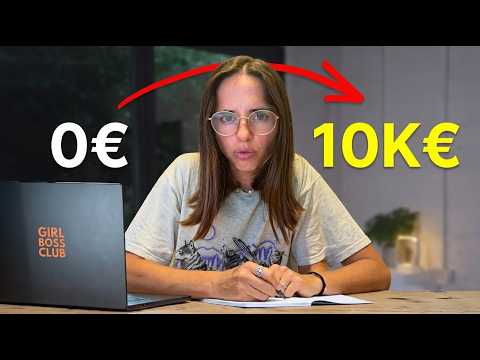
Comment j'ai atteint 10 000€/mois en e-commerce sans site, sans pub, sans stock
AI Summary
In this video, the speaker outlines a comprehensive strategy for generating online income using marketplaces like eBay and Cdiscount, without needing a website, inventory, or paid advertising. The method focuses on reselling without stock, minimizing risk, and leveraging these platforms for rapid sales growth. The speaker aims to provide a clear path from not knowing where to start to knowing exactly what and where to sell to earn online income quickly. For those interested in deeper insights, including negotiation scripts, templates, and a three-month coaching program, a link is provided in the description.
The strategy begins by addressing common concerns for individuals looking to start online, such as fear of scams, lack of funds, technical skills, or conflicting information. The speaker introduces their method, which involves selling on marketplaces without stock, ads, or a personal website. Marketplaces are defined as platforms like Facebook Marketplace, Vinted, Amazon, or Le Bon Coin, where individuals or professionals can list products.
While Amazon is a well-known marketplace, the speaker notes its high risk due to the need for stock or partnership agreements that result in minimal profit margins. Instead, they prefer Cdiscount and eBay, which allow for better margins and selling without inventory.
The first major step in this method is product discovery. After registering on Cdiscount and eBay, the goal is to find products that are already selling well on these platforms, rather than guessing. On Cdiscount, indicators are limited, primarily focusing on reviews and best-seller rankings. However, Cdiscount allows for adding hundreds or thousands of products for free, making it easy to list products even without certainty of their sales performance. This often leads to quick sales.
eBay offers more metrics, including the number of items added to cart (ATC), wish list additions, purchases, and reviews. These indicators make it much easier to assess a product's sales potential and determine if it's worth listing.
Once a promising product is identified, the next step is finding a supplier who sells that product at a lower price. This part of the strategy is explained in more detail in the speaker's coaching program, which also provides access to a private supplier after a certain number of orders. If a suitable supplier with a lower price is found, the product is then added to the chosen marketplace. If the supplier's price is higher or no supplier is found, the product is not listed.
After listing the product, the focus shifts to promoting it without paid advertising. On eBay, this involves engaging with the platform's algorithm. The speaker reveals that eBay favors active users, so performing daily actions on the platform can automatically boost product visibility. On Cdiscount, the "pump strategy" involves listing products on existing, high-performing product pages that already have reviews, leveraging their established visibility.
Another promotion method, exclusive to eBay, is "Pay-Per-Sale" (PPV) advertising. When listing a product, a percentage for advertising can be set. eBay then promotes the product for free, and only takes the specified percentage from the sale price if the product sells. This means advertising costs are only incurred upon a successful sale, and the percentage can be adjusted to balance visibility and profit.
Finally, Search Engine Optimization (SEO) is highlighted as a powerful and logical way to gain visibility without ads. This involves using relevant keywords in product titles and descriptions to improve search rankings.
Once products are listed and promoted, sales are expected. To increase sales further, several strategies are introduced. The first is creating "bundles" or product packs. This allows for selling products at a higher price while also increasing profit margins, as adding a small, inexpensive item can significantly raise the overall price. Bundles also help differentiate listings from competitors.
The second strategy, also detailed in the coaching program, is "high-ticket" selling. This involves transitioning from lower-priced products (e.g., €20-€30) to more expensive items once sufficient capital is accumulated. While sales volume might decrease, the profit margins per sale will be significantly higher, leading to more gain for less work.
The third strategy is duplicating stores. On Cdiscount, this means adding numerous products. On eBay, stores can be duplicated across different countries (e.g., UK, US, France, Germany, Italy, Spain), expanding reach and increasing potential earnings.
A final, unmentioned strategy is duplicating successful products. If a product sells well (e.g., more than three or four times), it can be duplicated with slight changes to the image or title to further leverage its success.
The speaker concludes by reiterating that these strategies, explained in more depth in the accompanying video and coaching program, can significantly boost sales and revenue. They encourage viewers to click the link below the video for more information and to watch an explanatory video before joining the coaching program. The speaker also invites questions on Instagram and encourages liking the video and subscribing to the channel for tips, personal insights, and podcasts featuring inspiring entrepreneurs from various fields, sharing their journeys and challenges.