“Public Execution Is NOT Enough” - Athena Strand Killer BLAMES Voices For Her Murder
Audio Summary
AI Summary
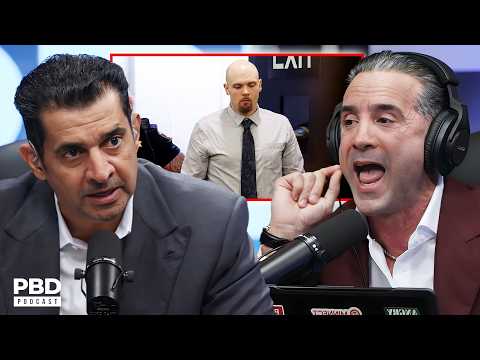
The discussion revolves around a horrific crime in North Texas involving an independent contractor for FedEx, Tanner Horner, who was delivering a Barbie doll to a seven-year-old girl, Athena Strand. In November 2022, Horner asked the child to enter his truck. The camera in the truck was reportedly covered, and the child subsequently disappeared. During court proceedings, audio was played that allegedly captured the child fighting for her life before being killed by Horner.
Following the murder, Horner was heard expressing self-pity, lamenting that he would miss Christmases and other milestones with his own children due to his impending imprisonment. He claimed that a voice in his head, named Zero, compelled him to commit the act. This claim draws a comparison to the movie "Primal Fear," where a character feigns mental illness, specifically multiple personality disorder, to escape conviction for murder. The speaker questions whether Horner deserves dignity given the heinous nature of his actions.
Further details from the court proceedings reveal that DNA evidence, including Horner's DNA, was found on the seven-year-old girl in places where it should not have been. The question of what punishment Horner deserves is raised, with a strong emphasis on the need for severe deterrence. One speaker argues that once a person has had their day in court and confesses to such a crime, there should be "absolute deterrence." The concept of deterrence is explored through historical examples, such as Chuck Colson's observations on the prison system becoming a "crime college" due to a lack of deterrence, and the 1980 movie "Scared Straight," which aimed to instill fear of prison life in young men to prevent them from committing crimes. The sentiment expressed is that people are no longer sufficiently afraid of the consequences of their actions.
The discussion then delves into the nature of justice for individuals who show no fear of death or God. It is suggested that the example made of such individuals is not for their redemption, as they may be beyond cure, but for others. While public hangings are mentioned as a historical form of visceral deterrence, the speaker acknowledges this is unlikely. Instead, swift execution or life imprisonment without parole ("throw away the key") are proposed.
A differing perspective on the case is offered, suggesting that Horner might have accidentally struck the girl with his vehicle, panicked, and then murdered her to cover up the accident and avoid losing his job or ruining his children's Christmas. This interpretation frames the murder as a desperate act to conceal an initial mistake, rather than a premeditated act driven by a voice in his head. The claim of hearing a voice is then viewed as a potential strategy to plead insanity and receive a softer sentence. However, this interpretation is challenged by the DNA evidence found and the audio recording from the truck, which captures the child fighting for her life as Horner allegedly strangles her. The emotional toll on the parents, forced to listen to the final moments of their daughter's life in court, is highlighted.
Biblical scripture (Matthew 18:6) is cited, condemning those who cause "little ones" to stumble, suggesting a severe fate. The speaker emphasizes that while he must pray for Horner, given his faith, he believes Horner does not deserve to live and will face eternal damnation if he does not genuinely seek redemption. The conversation touches on the last use of the guillotine in France (1977) and advocates for public execution in cases of clear admission and no valid insanity defense, arguing that public display of punishment, similar to certain practices in the Middle East for theft, would instill fear and act as a powerful deterrent. The current system of capital punishment, where executions are not public, is seen as insufficient.
The discussion then shifts to the idea that Christian beliefs, while commendable in their capacity for prayer and belief in redemption, may be too lenient in such extreme cases. The speaker expresses difficulty reconciling the idea of a murderer and alleged rapist reaching heaven through acceptance of Jesus. He advocates for the "highest extent of the law," suggesting that even public execution might not be severe enough, drawing parallels to Hammurabi's Code ("eye for an eye"). There's a call for harsher treatment of serious criminals while being more lenient with minor offenses. The idea of holding parents accountable for their children's heinous crimes, as seen in a Michigan case involving school shooters, is also brought up, suggesting that society needs to make "crazy examples" of such individuals through public executions or other humiliating punishments to deter future crimes. The conversation concludes with a commercial break for "Future Looks Bright" merchandise, including a limited edition 250-year anniversary hat.