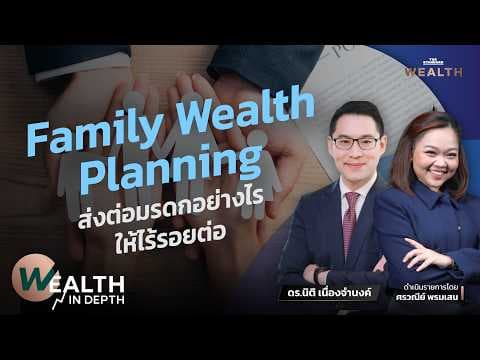
สมบัติพ่อแม่ หรือ สร้างเอง? วางแผนส่งต่อความมั่งคั่งฉบับคนเมืองยุค 2569 | WEALTH IN DEPTH #137
Audio Summary
AI Summary
The discussion centers on the complexities of family wealth planning and succession, emphasizing that a will, while important, is only one piece of a larger puzzle. Dr. Niti Nueangjamnong, Senior Director of Planning and Family Office at Siam Commercial Bank, elaborates on the challenges and strategies involved in transferring wealth across generations.
A fundamental aspect of wealth planning is the creation of a robust process that goes beyond simply drafting a will. The process should begin with open and honest communication within the family to establish a shared understanding of needs and goals. This is crucial because differing perspectives among heirs, such as some wanting to sell assets while others wish to keep them, can lead to significant conflict. The speaker highlights that the traditional approach of simply dividing assets equally can be problematic, especially with illiquid or unique assets like real estate or family business shares. Instead, the focus should be on preparing heirs to manage and enhance wealth, ensuring its sustainability.
The speaker outlines a multi-stage approach to wealth planning, likening it to a journey with several rest stops. The first stop is about establishing the right mindset within the family, fostering open communication and understanding. The second stop involves identifying common ground and understanding the true needs of all family members, acknowledging both private and jointly owned property. The third stop emphasizes the need for structural adjustments and documentation, which can include creating family constitutions, marriage contracts, or other legal documents that define rights, responsibilities, and obligations. This is particularly important when dealing with third parties, such as business partners or investors, and managing external relationships. The fourth stop focuses on the crucial element of professional third-party involvement, recognizing the need for experts in areas like legal, tax, and investment management to guide the family. The final major rest stop is dedicated to learning and investing, ensuring that heirs are equipped to manage the inherited assets effectively and that the family can learn and grow together.
A significant challenge identified is the lack of awareness and preparedness among heirs. Many families do not have a clear inventory of their assets, their value, or who owns what. This lack of clarity can lead to complications during the inheritance process. The speaker stresses the importance of heirs understanding the assets they will inherit and being prepared to manage them. This involves not just passing on ownership but also passing on knowledge and the ability to manage and enhance those assets for future generations.
The discussion also touches upon the evolving nature of family dynamics and succession. Unlike the past where a direct successor model was common, modern generations may have different priorities and expectations. The pressure on the younger generation to manage and grow inherited wealth is significant, especially in today's complex economic landscape.
Inheritance tax and wealth preservation are identified as critical concerns. The speaker notes that while many are aware of these issues, they often fail to take tangible action. The consequences of not planning can be severe, leading to liquidity problems when taxes are due, or conflicts arising from mismanaged or poorly understood inheritances. The example of land tax further illustrates the burden of asset ownership if it does not generate income.
The role of a will is discussed in detail. While still recommended, a will alone may not be sufficient. The speaker differentiates between assets that are easily divisible, like cash or gold, and those that are not, such as real estate or family business shares. For indivisible assets, specific designations within the will are crucial to avoid disputes. The complexity of distributing family business shares, which involve administrative power and legal rights, requires careful consideration.
The process of estate management after death is also examined. If a will exists, an executor is appointed. If not, legal heirs must discuss and petition the court to appoint an administrator. The speaker highlights that objections from any party can significantly delay the process, leading to prolonged disputes and legal battles. This underscores the need for proactive planning to prevent such complications.
The concept of a "Family Constitution" is introduced as a valuable tool that complements a will. It provides a framework for family governance, outlining values, rules, and expectations for heirs. However, the speaker emphasizes that a constitution should not merely be a set of rigid rules but should embody the family's spirit and values. The process of creating such a document should involve collaborative discussions and a deep understanding of the family’s unique dynamics.
The importance of communication and emotional intelligence in family wealth planning is repeatedly stressed. Discussions about inheritance can be emotionally charged, and approaching them with love, empathy, and understanding is vital. The speaker suggests that family gatherings and facilitated discussions can help bridge generational gaps and foster a sense of collective responsibility.
The speaker shares case studies that illustrate the practical challenges and potential solutions. One example involves parents who wanted to pass on real estate to their children. Instead of a simple division, the discussion revolved around the children’s willingness and capability to manage the properties, leading to a more nuanced distribution plan. Another case highlights a young heir who, after initial resistance, developed the analytical skills to manage business investments effectively over time, demonstrating the value of a structured learning process.
The role of SCB Wealth and its Planning and Family Office services is presented as a resource for families seeking to navigate these complexities. They offer services to help clients develop comprehensive wealth management and succession plans, addressing gaps in existing strategies and ensuring sustainability across generations.
Ultimately, the core message is that true wealth lies not just in assets but in the strength and quality of family relationships and the ability to manage and sustain wealth across generations. This requires a proactive, communicative, and collaborative approach, tailored to each family’s unique circumstances. The process of planning, learning, and communicating is presented as the most valuable asset, ensuring long-term prosperity and harmony.