Début des négociations au Moyen-Orient
Audio Summary
AI Summary
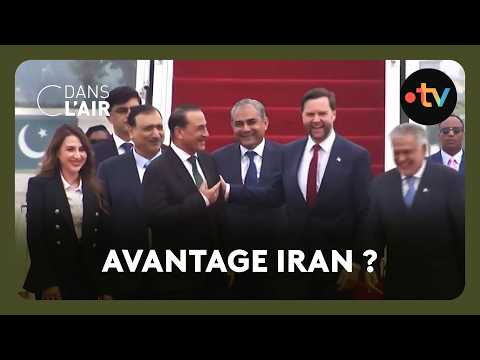
Negotiations between Iran and the United States are currently taking place in the Pakistani capital, with Pakistan's Prime Minister acting as a mediator. This marks the highest-level participation by an American president in talks with Iran since 1979. Before departing for Iran, JD Vance stated that if the Iranians are willing to negotiate, the US will extend a hand, but if they try to deceive, American negotiators will not be receptive. Tehran remembers the failure of previous negotiations with Washington in late February, just two days before the war began. Iran emphasizes the seriousness of the American delegation will be crucial and that discussions must lead to concrete results, otherwise, negotiations will be abandoned if the interests of the Iranian people are not guaranteed.
Tehran demands the lifting of all American sanctions, the continuation of uranium enrichment, and the unblocking of Iranian assets. State television has shown galvanized demonstrators claiming America is not in a position of strength and must make concessions, attributing Trump's call for a ceasefire and negotiations to Iran's military victories. Tehran still controls the Strait of Hormuz, which Donald Trump is obsessed with unblocking, stating that the Gulf or the strait will be opened with or without Iran, and if not, other means will be used.
The prospect of an agreement is further complicated by the issue of Lebanon, which Tehran insists must be included in any ceasefire. Israel, however, rejects this, continuing to bomb southern Lebanon, resulting in 357 deaths and over a thousand injured on Wednesday, and 13 Lebanese security forces killed on Thursday. Israel claims to have killed 180 Hezbollah fighters. Benyamin Netanyahu recently demanded that the Lebanese army disarm the militia, stating there is no ceasefire in Lebanon and that attacks on Hezbollah will continue until security is restored. Direct negotiations between Israel and Lebanon are scheduled for Tuesday in Washington.
Benyamin Netanyahu is notably absent from the current talks. A New York Times report details a February 11 meeting where the US entry into the war was decided. Netanyahu had proposed that the US strike Iran, a proposal rejected by Presidents Obama, Biden, and Bush, but accepted by President Trump.
Donald Trump's foreign policy is described as erratic, but his strategy on the Iranian nuclear program has been consistently tough. He tore up the previous agreement, deeming it insufficient, and has always considered it a red line. The possibility of military intervention against Iranian nuclear facilities has been discussed in Washington, Paris, and Europe since the early 2000s. Diplomats had concluded that such action would be complicated due to the risk of closing the Strait of Hormuz and the potential chaos in the Gulf. However, events have accelerated, particularly after October 7, 2023, when Israel intensified its stance, believing it impossible to coexist with proxies aiming to destroy it. Netanyahu's government found a president willing to enforce this red line, which was shared by Americans, Europeans, and Israelis.
The New York Times investigation questions whether Netanyahu lied to Trump or was misinformed. Benyamin Netanyahu is considered capable of lying to anyone, including his own population, to serve his political agenda and remain in power, especially with elections approaching. He needs to sustain the war to appear as the protector of Israelis against external threats. While external threats exist, Netanyahu is willing to do anything to maintain the war, including causing civilian casualties, as seen in Lebanon where bombing makes no distinction between civilians and Hezbollah members. This indiscriminate bombing is becoming a problem even for Donald Trump, as Americans are starting to view Wednesday's events as a massacre and an absolute shame, violating international law. The relationship between Netanyahu and Trump has cooled, and Trump is expected to ask Netanyahu to de-escalate, which Netanyahu may not be able to do. Reports indicate particularly difficult and stormy phone calls between Trump and Netanyahu this week. The New York Times narrative is complicated by an earlier gaffe by Marco Rubio, who implied Trump went to war because Netanyahu was launching an offensive, which Trump quickly refuted, asserting his leadership. The article also reveals that some Americans were skeptical of Israel's promise of regime change and popular uprising in Iran, though they agreed with other objectives like striking the nuclear and ballistic programs.