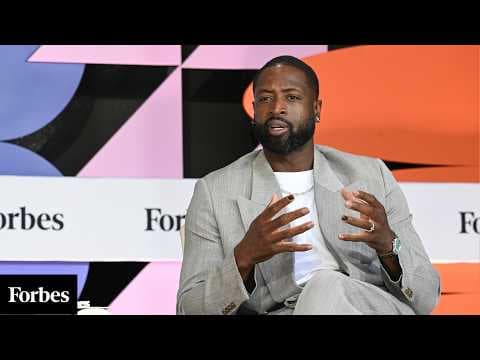
Dwyane Wade’s MVP Mindset: How Sports Strategies Can Make You A Business All-Star
Audio Summary
AI Summary
Dwyane Wade, a celebrated NBA Hall of Famer with three championships, discussed his transition from a highly successful athletic career to building a new identity in entertainment, production, sports ownership, and business. He emphasized his willingness to learn from scratch and enter unfamiliar industries, often in spaces where he was underrepresented.
Wade attributes his drive to his family and his community. Growing up in Chicago, he experienced scarcity and developed a strong desire to provide for his loved ones. He believes his journey, marked by empathy and awareness, can serve as an inspiration and aspiration for others, motivating him to make a positive impact. He wakes up every day with gratitude, viewing himself as a driven individual.
He acknowledged that while discipline and competitive fire from basketball transferred to business, his athletic identity sometimes presented challenges. Retiring at 37, he experienced confusion as he navigated his post-basketball self. However, he consciously applied lessons learned as an athlete, such as teamwork and collaboration, to his business endeavors. He highlighted his championship wins with prominent teammates like Shaq and LeBron as evidence of his collaborative leadership skills. Despite feeling like a novice in business, he leveraged his adaptability and learned valuable lessons about people and work ethic.
Wade contrasted the immediate feedback of basketball, with its scoreboards and crowd reactions, to the slower, less visible progress in business. He learned early on that business wins are often delayed, arriving via email or years later. He stressed that the process and work ethic remain the same, emphasizing his commitment to daily improvement, a drive that mirrored his athletic aspirations of competing against greats like Kobe and LeBron. He believes patience is crucial, but consistent daily effort is the foundation for eventual success. He noted that significant business achievements are rarely overnight occurrences but the result of sustained effort, including setbacks.
Regarding ego, Wade stated that it's not inherently bad but essential for confidence. He advocates for "growth over ego," learning when to assert confidence and when to check it at the door, drawing a parallel to his experience on the 2008 "Redeem Team." He learned from Coach K the importance of acknowledging teammates' strengths and leading from behind as well as in front. He approaches new fields with eagerness to learn, understanding that others possess greater expertise. He prioritizes playing to his strengths while recognizing opportunities for growth in his weaknesses.
Wade identified "showing up" as his ultimate superpower, coupled with his ability to connect with people and appreciate their uniqueness. He emphasizes being present, asking questions, and sharing experiences. This principle extends to his business partnerships, where he prioritizes building relationships over immediate financial gain. He believes in a "people first, deals second" approach, contrasting it with the common desire for quick satisfaction. He takes time to ensure alignment in values before engaging in business.
He trusts his instincts, developed through spending time with people and assessing value alignment. He looks for indicators like someone's character as a son, husband, father, and community leader. If values don't align, he believes in respectful distance.
The through line connecting his diverse ventures, from partnering with J.P. Morgan on financial literacy initiatives to his work in entertainment, is sharing experiences. He sees himself as having a "sneak peek" into certain rooms and feels a responsibility to share insights, much like a student sharing answers. He avoids being secretive, preferring to offer the knowledge gained from his lived experiences.
Wade champions the idea of "holding the door open" for others. When invited into rooms, he aims to take notes and share what he learns, ensuring the next person in line has a better chance. He believes his position is temporary and his role is to make opportunities more accessible. If others are unwilling to share their success, he considers them not true friends. He emphasizes that multiple people can achieve success in the same field and encourages enjoying the journey, even through traffic jams, as opportunities will arise. He advises staying prepared and ready for those moments.
Reflecting on his 20-something self, Wade believes the biggest surprise would be his current ability to dress nicely and, more importantly, his willingness to use his "microphone" – his platform. He was a shy child who avoided attention. Now, he confidently speaks on important issues, even unpopular ones. He never envisioned being someone others would want to hear from, but he now uses his visibility to uplift communities and amplify voices that lack their own platform.
For those betting on themselves before the world catches up, Wade wishes he had heard more about the losses and challenges others faced. He believes sharing these "potholes" can help navigate the journey more effectively. He advocates for a more honest sharing of the struggles and lessons learned, not in a somber way, but to educate and prepare others for the inevitable setbacks, emphasizing that true education comes from overcoming these obstacles. He feels grateful for his own transparency and willingness to share his vulnerabilities, recognizing the powerful impact of authentic communication.