How Andrew Zimmern Broke Through With an Exorcism and a Tonight Show Call
Audio Summary
AI Summary
The host, Sean Walchef, introduces Andrew Zimmern, an Emmy and James Beard award-winning TV host, chef, author, and storyteller, as a guest on the "Restaurant Influencers" podcast. Zimmern is known for telling stories about humans, food, travel, and life experiences.
Walchef starts with a random question: Zimmern's favorite stadium, stage, or venue. Zimmern, a New York City native, settles on Madison Square Garden, citing its history and versatility for sports, concerts, and events, despite having traveled extensively and experienced unique venues like Lumpini Stadium for Thai boxing in Bangkok. He recalls seeing baseball games in Cuba and Nicaragua and The Rolling Stones in St. Petersburg.
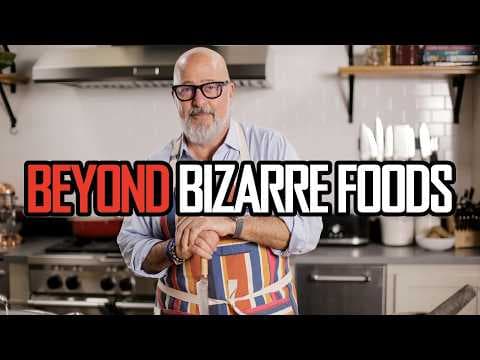
Transitioning to storytelling, Walchef asks Zimmern to recount a memorable experience from the early days of his show, "Bizarre Foods," specifically a promo shoot with Anthony Bourdain and their conversation about integrity in television. Zimmern explains that Travel Channel had acquired Bourdain's first show, "A Cook's Tour," after its initial run on Food Network, and was simultaneously launching Bourdain's "No Reservations" and Zimmern's "Bizarre Foods." The network decided to air "Bizarre Foods" before "No Reservations" on the same night.
During the promo shoot under the Brooklyn Bridge, Bourdain, who was then an acquaintance, whispered to Zimmern, "I hope you make it for more than a fucking season." Later that day, while waiting for a shot, Zimmern expressed excitement about making "great television" with integrity, joking that between them, they had "enough integrity for one normal human being." Bourdain immediately responded, "The minute you sign a contract to make television, you've lost every ounce of integrity you've ever earned in life." Zimmern admits Bourdain was largely right, especially back then, as the landscape for maintaining integrity in commercial television was challenging. He notes that Bourdain's eventual move to CNN was partly an effort to maintain integrity.
Walchef then asks Zimmern about a pivotal meeting with a TV executive who told him his show concept of "80% education, 20% entertainment" wouldn't work for commercial television and needed to be flipped. Zimmern describes the years it took to secure a meeting at Travel Channel's headquarters in Bethesda. He pitched his idea of telling cultural stories through food in remote parts of the world, tentatively titled "The Wandering Spoon." Pat Young, the general manager, praised the idea but said it was "80% education, 20% entertainment," suitable for PBS, where he would spend his life fundraising. Young challenged Zimmern to return the next day with a concept that was "80% entertainment, 20% education," promising him a decade-long television career and the chance to influence millions.
Zimmern initially had no ideas but was inspired by his grade school English teacher, Connie Mayer, who advised: "tell them what you know, then tell them what you're going to tell them, then tell them what you told them." He began describing unusual foods from around the world, starting with bourguignon snails in Paris, then head cheese in Germany, realizing he was inadvertently focusing on "foods from the fringe." He articulated his vision: to talk about popular foods in other countries that outsiders might find obscure or unappetizing, promising entertainment and education. The executives were impressed, and he was told to find a production company.
Next, Walchef inquires about the "Jay Leno moment" that saved "Bizarre Foods" after its third episode. Zimmern explains that the first season was shot with a minimal crew of three people (himself, a producer/director, and a soundman/cameraman) plus a local driver and translator. They filmed ten episodes before the first one aired, enduring grueling conditions, especially in the Amazon.
While shooting episode three in Ecuador, in the highlands of Otavalo, they stumbled upon a sign for a "bruja" (witch doctor). Zimmern, driven by curiosity, learned that the witch doctor performed exorcisms, which were expensive. He convinced his reluctant crew to film one. They negotiated a $20 "frills-included" exorcism in a tiny, windowless room. During the ritual, the witch doctor performed various intense acts, including spitting a "half-gallon of phlegm," beating two live guinea pigs against Zimmern's chest until they died, hitting him with a large bush until his body broke out in hives, and pouring homemade rum on him and lighting it on fire, burning off his body hair. The purpose was to transfer evil spirits from Zimmern into the animals or the smoke.
Six months later, after the first two episodes aired with decent ratings, episode three in Ecuador aired and saw a slight dip. Zimmern's agent believed the show would be canceled after the initial ten episodes. Depressed, Zimmern hoped for a second season to tell more human stories and eat fewer "bugs and weird things."
Then, a phone call came from "The Tonight Show with Jay Leno." An intern, then a talent booker, confirmed Zimmern's exorcism experience was real. Jay Leno wanted him on the show that week. Zimmern appeared on "The Tonight Show," which had been a lifelong watch for him. Jay Leno, known for his simple diet, was fascinated by Zimmern's exotic food and the haggis clip from "Bizarre Foods." At the end of the segment, Leno asked, "Will you come back and see us?" Zimmern interpreted this as a genuine invitation, and it proved to be the turning point. He returned four or five times, and "Bizarre Foods" was renewed. Zimmern credits this "Jay Leno moment" and the spontaneous exorcism in Ecuador as crucial to the show's survival and success.
Walchef asks Zimmern to reflect on the legacy of "Bizarre Foods." Zimmern reveals that Travel Channel abruptly shifted to a "ghost and paranormal network," canceling all his food and travel shows, including "Bizarre Foods" and "Zimmern List," which was about to win another Emmy. He finished the last pre-paid episode, "The Underground Railroad," unaware it would be the final one. Despite the abrupt end, he is immensely proud of the show, considering it a "legacy television show" that remains popular.
Zimmern then shares his grandfather's lessons: stay curious, get involved, and ask for help. Zimmern admits he never asked for help until he was 31, viewing it as a weakness. However, once he started asking, "incredible things came to pass in my life." He believes society overvalues individual knowledge and conflates ego with capability, leading to a downfall where people believe they are "the supreme decider of everything." He sees this "me, me, me-ism" as the root cause of many problems, with issues like over-reliance on phones being symptoms.
Walchef, who is in recovery, asks Zimmern to share a message of hope for those struggling with addiction in the hospitality industry. Zimmern, a recovering alcoholic with 35 years of sobriety, advises: "Pick up the phone and call someone right now. Just call one person and tell them the truth." He emphasizes that addicts often hide the truth, even from themselves. He shares that his own turning point was telling one person the truth, even though he didn't get sober for another three days. He continues to attend three meetings a week, do service work, and mentor others, because he doesn't want to return to "that hellhole." He likens addiction to a broken arm, where one would seek medical help, but addicts often deny their disease. He encourages a simple first step: "call someone, tell them the truth, the whole truth, and nothing but the truth. So help you, God, and see what happens."
Finally, Walchef asks about Zimmern's current projects. Zimmern mentions working on new cookbooks, filming season seven of "Wild Game Kitchen," and leading travel trips to Japan. He acknowledges living in an "attention economy," competing for attention through TV, books, YouTube, and social media. However, he dedicates 50% of his time to working with global NGOs like the United Nations World Food Program, the International Rescue Committee, and the Nature Conservancy, and serving on boards for nonprofits like Giving Kitchen. He hopes this balance of "me, me, me" content creation and "you, you, you" philanthropic work balances out.
Walchef thanks Zimmern, expresses gratitude for his mentorship, and asks if he would return to the show. Zimmern, with humor, attributes his willingness to his "huge ego and no self-esteem whatsoever" as a recovering alcoholic in television, confirming he would return. The episode concludes with a brief appearance by Walchef's daughter, Mila, an aspiring storyteller with her own YouTube channel.