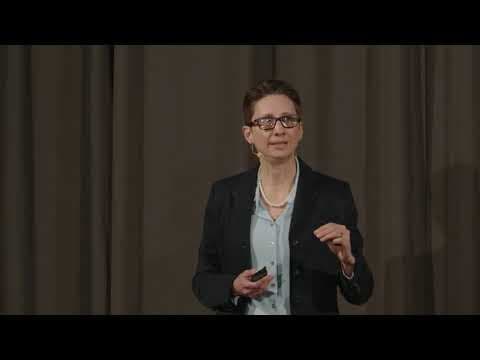
Magic of the Moment | Christina Gavegnano | TEDxEmory
Audio Summary
AI Summary
The speaker shares a personal journey that culminated in a breakthrough in HIV treatment, emphasizing how seemingly insignificant moments can lead to profound change. The narrative begins by referencing the early days of the AIDS epidemic in 1981, the year of the speaker's birth, and the scientific discovery of the HIV virus by Françoise in 1983. The speaker contrasts these global events with their own childhood dreams of becoming a basketball point guard, a role that required strategic thinking and an understanding of how different elements interact.
A turning point occurred when the speaker experienced a personal health crisis, losing their vision due to an autoimmune disease. This period of blindness, though temporary, profoundly altered their perspective and instilled a desire to alleviate human suffering. Following this, a cancer diagnosis further reinforced the unpredictability of life and the importance of pursuing meaningful contributions.
During their recovery from cancer, the speaker revisited the ongoing struggle with HIV, which at the time lacked a cure and effective treatment. This sparked a determination to dedicate their efforts to finding a solution. The speaker's academic path led them to study pharmacology and immunology, focusing on the JAK-STAT pathway, which plays a crucial role in inflammation. They recognized that excessive inflammation was detrimental in HIV infection, exacerbating the virus's progression.
A pivotal moment arrived on November 4, 2010, during a graduate student lecture. A guest speaker, laid off from Johnson & Johnson, discussed the company's discontinued research on JAK inhibitors. This information immediately resonated with the speaker, connecting the JAK-STAT pathway to HIV. The speaker had an epiphany: inhibiting this pathway could potentially eradicate HIV. This realization, though seemingly minor at the time, was the catalyst for their PhD thesis, which explored the use of JAK inhibitors for viral infections, a concept met with skepticism from established researchers.
Despite facing considerable doubt and criticism, the speaker persevered, driven by an unshakeable belief in their findings. Their PhD research provided the preclinical data for a clinical trial using a first-generation JAK inhibitor, ruxolitinib. The trial, conducted across multiple sites, eventually enrolled 60 participants. The speaker recalls a moment before analyzing the samples, insisting on a photograph of the collected patient samples, confident in the eventual positive outcome.
Years later, the speaker's PhD student presented data indicating that a 2.9-year course of the drug could eradicate HIV. This led to an oral presentation at the International AIDS Society. Coincidentally, around the same time, a team in Geneva was independently observing a similar phenomenon with a patient, dubbed the "Geneva patient," who was in long-term remission while on the drug.
The speaker eventually met the "Geneva patient," Romuald, a former model who was also blind, a parallel that deeply impacted the speaker. Romuald expressed his belief that being the "Geneva patient" was his destiny, paving the way for others to be cured. This personal connection solidified the speaker's conviction.
The success with Romuald and the "Geneva patient" led to further research, including the launch of the "Berry Cure" trial at Emory University, aiming to test the hypothesis that a longer course of the drug can lead to a cure. The speaker also reflects on the origin of HIV research at the Pasteur Institute, noting how seemingly humble beginnings can lead to world-changing discoveries.
The core message is that transformative moments often appear insignificant. The speaker encourages everyone to recognize, embrace, and act upon these moments, believing in their potential to create positive change in the world, just as controlling inflammation is now being explored for numerous other diseases, including depression, Alzheimer's, and ALS.