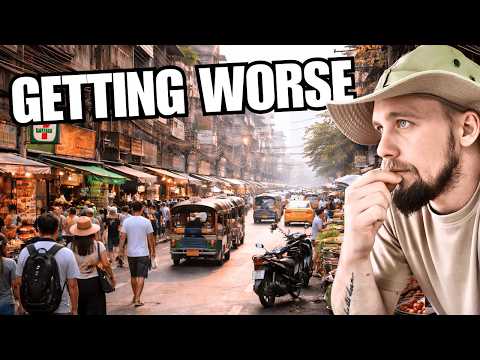
Thailand… This Is Already Hitting The Country Hard
AI Summary
The current conflict involving Iran and the resulting disruptions in the Strait of Hormuz have created a significant sense of unease in Thailand. While the Thai government has urged the public not to panic, the reality on the ground tells a different story. Citizens are already queuing at gas stations to fill their tanks in anticipation of rising fuel costs. Despite being thousands of miles away from the Middle East, Thailand’s economic structure makes it one of the most vulnerable countries in Southeast Asia to these geopolitical tensions.
The primary reason for this vulnerability is the global energy system's reliance on the Strait of Hormuz. Approximately 20% of the world’s oil supply—about 20 million barrels per day—passes through this narrow shipping lane. Because Thailand imports between 85% and 90% of its crude oil, any disruption to this route has an almost immediate impact on the country's economy. Energy imports represent roughly 4% to 5% of Thailand’s entire GDP. Consequently, when global oil prices spike, the national fuel bill rises instantly, driving up costs for transport, logistics, and electricity production. This, in turn, fuels broader inflation. Analysts suggest that for every 10% increase in global oil prices, Thailand’s current account balance could deteriorate by roughly 0.5% of its GDP.
When comparing Thailand to its neighbors, its exposure becomes even more apparent. Malaysia, for instance, is a net exporter of oil and natural gas, meaning it actually benefits from higher global prices through increased revenue. Indonesia possesses significant domestic energy resources, including coal and natural gas, which provide a buffer against price shocks. Vietnam also utilizes domestic coal and has a manufacturing-heavy economy that is less concentrated on oil imports than Thailand's. While the Philippines is perhaps the closest comparison due to its reliance on imported fuel, Thailand remains more exposed because its key sectors—tourism, aviation, and manufacturing supply chains—are exceptionally sensitive to energy costs.
The impact extends beyond the gas pump. Thailand relies heavily on natural gas and fossil fuels for electricity, so rising global prices could lead to higher electricity tariffs for households and businesses. In the agricultural sector, while Thailand is a major food producer and unlikely to face shortages of staples like rice or poultry, it is vulnerable to the rising costs of fertilizer, much of which is shipped through the Strait of Hormuz. Furthermore, the tourism industry, which was already seeing a slowdown, faces new hurdles as flight prices increase and travel routes through hubs like Dubai become disrupted.
Socially, the rising cost of living affects different groups in unique ways. In urban areas, the increase in food and delivery prices hits hard. Conversely, some rural populations might show more resilience; many live on the edge of the cash economy, relying on subsistence farming and minimal electricity usage. However, for those in rural areas who run small shops or rely on vehicles for business, the rising costs are a major threat.
On-the-ground reports indicate that some petrol stations have already begun implementing purchase limits, ranging from 500 to 1,000 Baht. These local policies suggest underlying supply concerns that contradict official government messaging. While a total societal collapse is not expected, the speaker anticipates a period of high inflation and economic strain. As a result, there is a growing interest in financial safeguards like gold and solar energy, as well as advice from financial experts to maintain three to six months of cash reserves—though many Thais may find such a goal difficult to achieve. Ultimately, the situation illustrates how a conflict in a distant region can have profound ripple effects on the Thai economy.