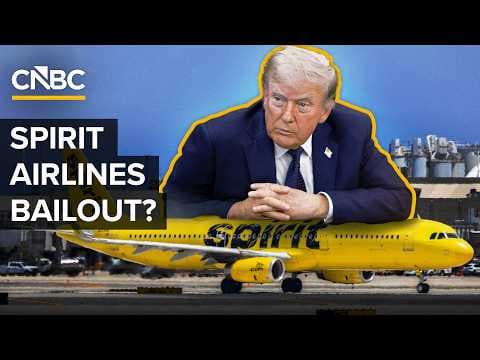
Why The Trump Administration May Bail Out Spirit Airlines
Audio Summary
AI Summary
Discount carrier Spirit Airlines is in talks with the Trump administration for a $500 million rescue package to prevent liquidation after filing for bankruptcy protection for the second time in less than a year. This bailout could save 14,000 jobs but would give the government a major equity stake in the former largest budget airline. Some argue the airline should be liquidated, while others point to precedents like airline bailouts after 9/11 and during the pandemic, and aid for automakers and banks in 2008.
However, a Spirit bailout differs as it targets one company with specific challenges, lacking a broader emergency or congressional authorization. The Trump administration has taken equity in ten companies deemed vital for national security, but this bailout could face political backlash due to the perception of bailing out a "loser." Republicans like Senators Ted Cruz and Tom Cotton oppose it, citing concerns about taxpayer money and potential government influence over a competitor.
If the bailout doesn't happen and Spirit collapses, budget travelers could face significant consequences, including reduced competition and higher prices, given Spirit operated over 51,000 domestic flights last summer. Spirit's struggles stem from shifting consumer tastes, an engine recall, a blocked acquisition by JetBlue, and the recent surge in jet fuel prices due to the Iran war, which is the second largest expense for airlines after labor. Other "marginal" companies could also face similar dire situations due to the war's uncertainty, potentially leading to more bailouts.