The power of solitude: why I spent 8 months alone in the ice | Tamara Klink | TEDxIE Madrid
Audio Summary
AI Summary
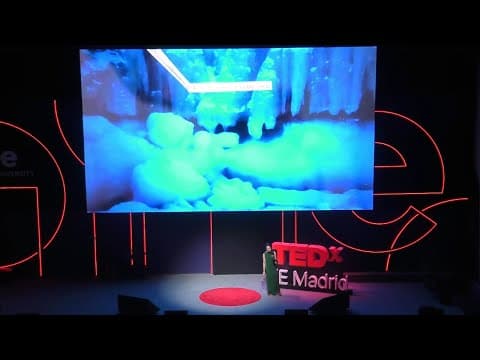
The speaker recounts her experience spending a winter alone in a small boat, trapped by ice in a fjord in Greenland, after a two-month sail from France. At 26, she faced numerous fears, from the boat’s ability to withstand ice pressure to polar bears, hunters, spirits, and even losing her mind. Despite these anxieties, she decided against giving up, as the ice had already trapped her.
Her identity, previously defined by name, origin, and face, became irrelevant. She was simply the result of her actions, a "hairless biped covered in objects," the least adapted species compared to her neighbors like foxes and ravens. Her survival depended on many people: those who designed her equipment, wrote inspiring books, provided advice (especially the Inuit people), and fought for the rights that enabled her journey. She was alone but profoundly dependent on others.
During this time, she felt a profound strangeness, realizing she hadn't smiled in a long time due to lack of company. Yet, she was happy, noting it daily in her journal. Simple tasks, like getting a glass of water, became arduous processes involving breaking ice, melting it, and conserving gas, making the resulting drink taste better than any expensive restaurant beverage. She appreciated the limited light from the moon and aurora borealis, things she took for granted growing up in Brazil. This experience taught her that abundance doesn't bring satisfaction; instead, it leads to focusing on what’s lacking rather than what’s present.
Her thoughts, once fast and self-assured, proved to be based on false suppositions. Upon returning, she found many journal entries "quite stupid," realizing that complex thought requires confronting diverse perspectives. Initially, crossing limits daily—walking as much as possible, screaming freely, letting her hair grow—brought a sense of freedom. However, this eventually became routine, and she grew accustomed to the dangers, no longer seeing them.
One day, while walking on the ice, she fell through into freezing water. With a life expectancy of three minutes, she focused on extracting herself. She struggled, hugging slippery ice, then found a weaker section, making holes with her hands, inching herself out centimeter by centimeter, feeling the water seep through her clothes and her boots grow heavy. After a grueling struggle, she managed to crawl onto solid ice. A moment of extreme calm and peace overcame her, where she felt no cold, fear, or stress. Recalling her frozen buckets of urine, she resolved not to "die as a pee," and rationally focused on returning to the boat.
Inside the boat, unsure if she was alive, she called her father on a satellite phone with only five minutes of call time. His brief, almost dismissive response confirmed her vitality: "Oh, I'm sorry. I'm getting into a plane. I don't have time. Well, call your mom. Good luck." She knew he would never speak to a spirit.
After this near-fatal incident, the places she once saw as freedom now appeared risky. Though tempted to stay in the boat until the ice melted, she realized she came to learn, which necessitated confronting risks and the unknown. She found happiness in solitude because it was her choice and temporary. She concluded that solitude, while requiring the work of many and freeing only when temporary, is worth experiencing because "we are made of solitude."
Upon leaving, she wrote in her journal that seeking love in others makes solitude an enemy, leading to a fight against it that stops oneself. Instead, she found completeness, beauty in the dark, and freedom in danger, not needing to be there to find it, but finding it there nonetheless.