The Stock Market Just Hit a Record High — And That Should Scare You
Audio Summary
AI Summary
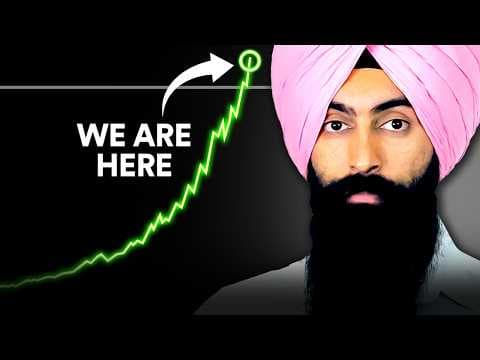
The stock market has recently reached new record highs, experiencing an 11-day consecutive winning streak, the longest since 2021. This surge is occurring despite ongoing geopolitical tensions in the Middle East, a 33% increase in gas prices, and record-high credit card debt in the United States. Gold prices are also rising, suggesting a divergence between market sentiment and broader economic concerns.
The speaker highlights that market movements can sometimes be illogical and that the stock market and the economy don't always move in tandem. The International Monetary Fund (IMF) has released a report predicting a global economic slowdown, which could significantly worsen and lead to substantial global inflation if the Middle East conflict persists. This scenario, a combination of slowing economic growth and high inflation, is known as stagflation. The last time the U.S. experienced stagflation, approximately 50 years ago, it was characterized by high unemployment, rising prices, and falling wages, leading to a severe stock market downturn, with the market losing about half its value. During that period, gold prices boomed as investors sought refuge from a weakening dollar.
The speaker emphasizes the importance of understanding how money moves to become a smarter investor, rather than getting caught up in media hype and emotional reactions, which are often driven by the need for clicks and views. True wealth building, according to the speaker, comes from understanding market fundamentals.
A primary concern currently is the impact of the Middle East conflict on oil prices. Historically, oil price shocks have often led to economic pain, unless the shock is very short-lived. The duration of the current conflict is a key question for investors. Rising oil prices directly translate to higher gas prices, impacting consumers already struggling with inflation. This also drives up the cost of transportation for goods, making groceries more expensive, and increases the cost of agricultural inputs like fertilizer, further contributing to inflation. Air travel also becomes more costly.
The speaker points to record-high credit card debt as evidence of the financial strain on many Americans. This debt accumulation is often a consequence of inflation, exacerbated by government spending and money printing during the pandemic, which devalued the dollar and increased the cost of goods faster than wages. Consequently, many Americans are financially worse off than before the pandemic, despite earning more nominal income. The conflict in the Middle East, by further increasing the cost of essential goods like gas and energy, intensifies this pressure, forcing more people into credit card debt to cover rising expenses.
The economy relies on spending. When people have less disposable income due to higher costs and debt, their spending decreases, which can harm businesses and slow economic growth. This could lead to reduced hiring, store closures, and layoffs, negatively impacting the economy.
Traditionally, when the economy slows, the Federal Reserve (the U.S. central bank) stimulates it by cutting interest rates and printing money. Lower interest rates make borrowing cheaper, encouraging spending on big-ticket items like houses and cars. It also incentivizes cash-out refinances, providing individuals with more money to spend. Money printing, by injecting funds into the government, can lead to stimulus checks, which, while intended to boost the economy, primarily benefit investors by increasing consumer spending at businesses they own. This process, the speaker argues, tends to make the rich richer and the average person poorer due to the devaluation of the dollar.
Investors are currently grappling with the uncertainty of the Middle East conflict and its potential impact on oil prices and the economy. They are weighing the possibility of the Federal Reserve cutting interest rates and printing more money to stimulate the economy, which would benefit investors, against the risk of rising inflation, which might prompt the Fed to raise interest rates. The Federal Reserve's response to inflation in the past, such as in the 1970s and 2022, involved aggressive interest rate hikes. The current dilemma for the Fed is whether to prioritize fighting inflation by raising rates or stimulating the economy by cutting rates and printing money.
For individual investors, the advice is to focus on the long term, looking 10, 15, or 20 years ahead. The speaker believes the economy will continue to grow over the long term and advises buying assets, especially during periods of fear and market downturns when others are selling. The strategy recommended is "Always Be Buying" (ABB) and "Buy the Dip" (BTD), particularly during market crashes when assets are discounted. The speaker stresses that attempting to time the market is a losing strategy, as nobody can predict short-term movements.
The core message is to cut through the noise and emotions that drive many investors, as emotions are the "enemy of profits." Instead, investors should focus on financial fundamentals and a long-term strategy. Recessions are a natural part of the economic cycle and present significant buying opportunities. The speaker mentions past market crashes, such as those in 2025 and 2026, driven by events like tariff announcements, which ultimately created buying opportunities. The key takeaway is to remain calm, stay financially educated, and invest based on long-term financial prospects rather than short-term news or market volatility. The speaker also promotes their free newsletter, "Market Briefs," and a free investing masterclass as resources for investors.