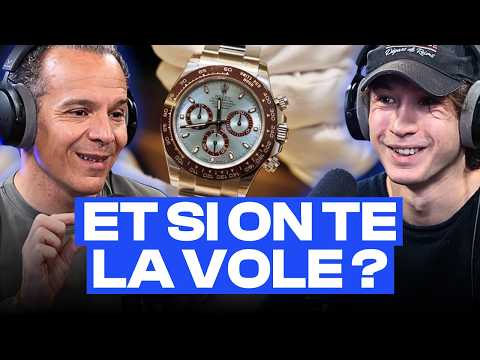
Montres, bijoux, sacs : 70% des grandes fortunes sont mal assurées (et vous aussi) - Quentin Roy
AI Summary
The video discusses the challenges and inadequacies of insuring luxury goods, highlighting a significant gap in the protection of high-value items. Statistics show a drastic increase in thefts in Europe, particularly in Paris, making luxury items vulnerable. The core problem identified is that standard home insurance (MRH in France) is ill-suited for luxury assets, which are often unique, possess immense concentrated value, and are highly portable. A single watch, for instance, can be worth more than an entire apartment, and standard policies fail to adequately cover these risks.
Mathieu Stéphanie introduces Quentin Rois, co-founder of Grace, a company aiming to solve this insurance problem for luxury goods. Grace provides a technological and insurance infrastructure that allows luxury brands to offer protection directly to their customers. The brand finances this insurance, allowing customers to receive a replacement item or store credit if their purchased luxury item is stolen or damaged. This approach fosters a post-purchase relationship between the brand and the client, particularly in the event of a traumatic loss.
The discussion delves into specific scenarios, such as purchasing a luxury bracelet from Messica. If the bracelet is stolen, Messica, through Grace, can offer a replacement. This coverage is not an additional cost for the customer; instead, the brand absorbs it as a means to enhance customer experience and loyalty. This is particularly relevant as luxury items are increasingly viewed as investments, with some items like luxury handbags having seen significant value appreciation over time.
The "safe box paradox" is explored, where the fear of theft or damage prevents owners from enjoying their luxury possessions, leading them to remain in safe storage rather than being used. This defeats the purpose of acquiring such items for enjoyment and appreciation. An example is given of a friend in Dubai who avoids wearing his valuable watch collection when visiting Europe due to security concerns.
The conversation then shifts to identifying which luxury items are most frequently targeted. Rolex watches are identified as the "king of theft," representing a significant portion of stolen luxury items. Other frequently stolen watch brands include Omega, Cartier, Audemars Piguet, and Patek Philippe. Jewelry, such as rings, bracelets, and necklaces, are also high on the list. Luxury handbags from brands like Hermès, Chanel, and Saint Laurent are also targets, leading some owners to carry fake bags or leave their valuable ones at home when going out. This creates a "culture of fear" around luxury goods, partly fueled by the increased visibility of these items through social media and influencers.
The limitations of standard home insurance (MRH) are detailed. MRH is designed for general household items and is not equipped to handle the concentrated value, mobility, and fluctuating worth of luxury goods. For instance, a single Rolex worth €15,000 could exceed the sub-limits within an MRH policy, which might cap coverage for valuable items at €1,500 per object, even if the overall furniture coverage is higher. This means that even if a policy states a high coverage limit, sub-limits and exclusions can leave owners significantly underinsured.
The discussion outlines three levels of MRH coverage:
1. **Standard MRH:** This is the most common type, where furniture and valuable items are covered under a general policy. It often has strict sub-limits for individual items (e.g., €1,500 per object) and typically covers items at "valeur vénale" (market value at the time of loss, depreciated over time), not replacement value. This means an item that has appreciated in value might be reimbursed at a significantly lower, depreciated rate.
2. **MRH with Valuable Item Extension:** This level allows for specific declaration of valuable items, increasing coverage limits and sub-limits. However, it still often operates on a "valeur vénale" basis, requiring owners to fight for replacement value, especially for items that have appreciated. The premiums for this extended coverage can significantly increase the overall MRH cost.
3. **Expert Level/High Net Worth Insurance:** This is a specialized contract designed for affluent individuals with significant assets. It offers global coverage, protection against unexplained losses (common with jewelry), and "valeur agréée" (agreed value) coverage. Under this model, the value of the item is agreed upon at the time of policy inception, and the insurer reimburses that agreed-upon amount without depreciation, eliminating disputes over value at the time of a claim. These policies are typically underwritten by specialized insurers and come with higher premiums but provide comprehensive protection.
The "rule of proportionality" within MRH is highlighted as another pitfall. If the declared value of household contents (e.g., furniture) has significantly increased over time, and the policyholder hasn't updated their declaration, the insurer can reduce the payout proportionally in case of a claim. This underscores the importance of regularly reviewing and updating insurance policies.
The conversation also touches upon the challenges of insuring art, which is less frequently stolen than luxury goods due to difficulties in resale and its static nature. However, specialized policies are available for high-net-worth individuals.
The concept of "asymmetry of information" in insurance is discussed, where insurers lack complete knowledge of a client's lifestyle and risk-taking behavior. This can lead to "anti-selection," where those with higher risk profiles are more likely to seek insurance, driving up premiums for everyone. Grace aims to mitigate this by insuring all clients of a partner brand, creating a more balanced risk pool.
The distinction between luxury goods and consumer electronics like smartphones is drawn. While expensive, smartphones are considered more functional and less about brand heritage and patrimonial value, making them less likely to fit the definition of luxury in an insurance context. Standard insurance, including credit card benefits and MRH, often provides some coverage for phones, but the effectiveness and claims process can be cumbersome.
The importance of proper documentation, including photos, proof of purchase, and certifications, is emphasized for all valuable items. This is crucial for validating claims, especially when dealing with items that have appreciated in value. For second-hand luxury purchases, obtaining certification from the brand is recommended.
The episode concludes by stressing that insurance should not be viewed as a cost but as the "price of freedom," enabling individuals to use and enjoy their possessions without constant fear. Grace's model aims to make this freedom accessible by partnering with luxury brands to offer integrated insurance solutions. The discussion also briefly touches on the emerging insurance market for cryptocurrencies, acknowledging the specialized nature of this asset class and the challenges faced by traditional insurers in understanding it. Finally, the importance of regular communication with insurers and brokers, and the proactive management of insurance policies, is reiterated to ensure adequate coverage and avoid potential pitfalls.