The Iran Economic Shock Just Started (how to protect yourself)
Audio Summary
AI Summary
The current global economic situation is on the brink of significant changes, largely driven by the recent conflict in Iran and its repercussions. While headlines may suggest a calming situation, the financial consequences are just beginning to unfold for the average person. This summary will outline six key impacts this situation will have on personal finances, emphasizing the need for quick action and informed decision-making.
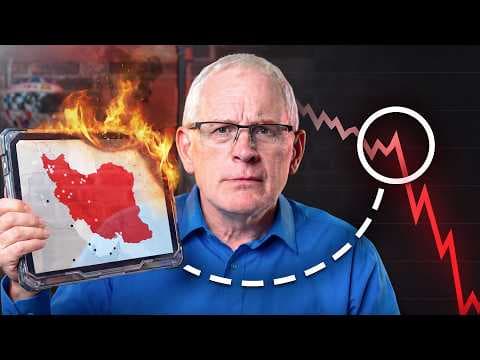
The conflict began on February 28th with a coordinated strike by the US and Israel on Iranian military sites, nuclear facilities, and leadership, dubbed Operation Epic Fury. Iran retaliated immediately with missiles and drones targeting Israel, US bases, and allies in the Middle East. A critical turning point occurred on March 2nd when Iran closed the Strait of Hormuz. This strait is vital, as it's the transit point for 20% of the world's oil, with no viable alternative route. The closure caused oil prices to nearly double within weeks, rising from approximately $61 a barrel to over $118 by the end of March—the largest increase in almost 40 years. Although a two-week ceasefire was announced, the situation remains ambiguous, with both sides declaring the strait open but disagreeing on what "open" truly means, who controls it, and for how long. The US Navy continues to advise vessels to avoid the waterway due to an unclear mine threat. This ongoing uncertainty is sufficient to perpetuate economic damage, as the initial shockwave has already been set in motion. The focus here is not on the politics or military tactics, but on the tangible effects on personal finances, jobs, and daily life over the next 6 to 12 months.
The first major impact is rising prices. Despite any perceived calm in the conflict, energy bills, food prices, and transport costs are unlikely to decrease soon. The analogy of food poisoning illustrates this: even after stopping the intake of a harmful substance, its effects take time to manifest and work through the system. Oil, often an invisible ingredient, influences the cost of almost everything. From cultivation and processing to packaging and transportation, every step in the supply chain incurs costs that escalate with rising oil prices, ultimately reflected in consumer receipts. Energy prices have already seen double-digit increases this year, and further significant rises are anticipated in the coming months. This means higher energy bills, more expensive food, and increased transport costs for everyone. To mitigate this, individuals should exercise caution with significant financial commitments, as monthly expenses are likely to continue climbing. It's advisable to save extra money for breathing room before signing new leases, taking on debt, or making large purchases. Staying informed is crucial, as the economic landscape is complex and rapidly changing.
The second impact directly affects paychecks: job insecurity. When household bills increase and consumer spending declines, the economy experiences strain, potentially leading to job losses at an inopportune time. Businesses face a double squeeze: their operational costs (transport, manufacturing, electricity) rise, while consumer demand simultaneously falls due to increased household expenses. This pressure often begins with minor adjustments like cutting overtime and freezing hiring, but can escalate to layoffs as the crisis persists. Warning signs were already present before the oil shock, with slowing job growth and companies pulling back. The current hiring rate mirrors levels seen during the 2008-2009 financial crisis. An energy shock layered onto an already struggling job market accelerates these trends. Historically, energy spikes lead to business contraction, slower hiring, and job reductions. To protect oneself, it's important not to assume income is guaranteed, even in seemingly secure jobs. Employees should strive to become indispensable by taking on more responsibility, enhancing skills, or ensuring their company genuinely needs them. Starting an online side hustle with the potential for substantial income, such as $10,000 per month, is also recommended. Learning a valuable online skill can be achieved with focused effort, potentially making one proficient enough to offer services to businesses. Additionally, individuals should not rely solely on government intervention.
This leads to the third impact: the government's limited ability to intervene effectively. Unlike past crises (e.g., 2008 or the pandemic) where governments could cut interest rates, print money, and issue stimulus checks, the current situation presents a different challenge. Central banks typically cut interest rates to stimulate borrowing and economic activity. However, with rising inflation—exacerbated by the recent oil price surge—cutting rates would inject more money into the economy, further driving up prices. Moreover, the US national debt stands at $39 trillion, with annual interest payments nearing $1 trillion. Printing more money would be akin to advising someone already struggling with maxed-out credit cards to borrow more, which is unsustainable and could trigger a domino effect of negative consequences. Therefore, individuals should not expect government interventions to make things easier, as the usual playbook has changed.
Combining these three factors—rising prices, a weakening job market, and limited government tools—creates a scenario known as stagflation. This is the fourth impact. Stagflation is a particularly difficult economic situation characterized by high prices and a weak economy. The tools used to fix one problem tend to worsen the other. In a normal recession, the economy shrinks, jobs are lost, spending drops, and prices typically fall. Stagflation, however, is its "evil twin": the economy slows, but prices continue to rise, threatening income while the cost of living climbs. Measures to combat inflation (raising interest rates) worsen the recession, while measures to combat a recession (cutting rates, printing money) exacerbate inflation. This creates a "quicksand" effect where efforts to improve the situation can deepen the problem. US inflation recently jumped to 3.3% from 2.4%, and Goldman Sachs has lowered its GDP growth forecast to 2.1%. This combination of rising prices and a slowing economy is a textbook setup for stagflation. An AI model by Moody's, which has accurately predicted recessions within 12 months every time it crossed a 50% probability threshold, is currently at 49%—and this was calculated before the Iran war. The last significant period of stagflation in the 1970s lasted a decade, characterized by high prices, weak growth, and declining living standards. During stagflation, cash loses value to inflation, and risky growth investments can fall due to economic contraction. Those who fared best in the 1970s owned real assets that held their value. Diversifying away from solely cash savings or growth stocks into assets that retain value during inflationary periods is a prudent strategy.
The fifth impact concerns the US dollar's status as the world's reserve currency and its potential weakening. The dollar serves as the primary currency for international trade and a safe store of wealth for governments globally. The US faces three difficult options, all of which could weaken the dollar. Option one: continue raising interest rates to control inflation, which would likely crash the stock market, increase borrowing costs, and lead to a deep recession. Option two: print more money to sustain the economy, potentially sending inflation into double digits and eroding savings. Option three: declare the ceasefire a success and withdraw from the Iran situation. However, if the US cannot ensure the reopening of critical shipping lanes, other countries may question its strength and the dollar's necessity. This questioning is already evident, with foreign central bank holdings of US treasuries reaching their lowest level since 2012. Instead, these institutions are increasingly shifting their reserves to gold, which now constitutes 24% of central bank reserves worldwide, surpassing US treasuries at 21%. While a dollar collapse isn't imminent, the actions of global money managers suggest a need for individuals to consider diversifying their savings and investments beyond a single currency or asset type, as a weaker dollar means reduced purchasing power globally.
The sixth and final impact highlights the disproportionate effect of economic crises on different income levels. While rising grocery bills might be an annoyance for high-income earners, they can be life-altering for those on lower incomes. Low-income households spend a significantly larger portion of their income on essentials like food (nearly 33% compared to 13% for middle-income households). When oil prices double and food costs jump, the impact is profoundly different, potentially affecting basic necessities like commuting to work. Governments often attempt to intervene with subsidies and price caps, but research indicates that during crises, large food and energy corporations often make substantial unexpected profits, with a significant portion going to shareholders. The money intended to protect ordinary citizens often flows to those who already own these corporations. This pattern, seen during the 2008 financial meltdown where the top 1% captured 95% of income gains, suggests the middle class is being squeezed, and external salvation is unlikely. Therefore, individuals must take personal responsibility for their financial well-being, focusing on skill development and financial knowledge to navigate these challenging times and emerge stronger.