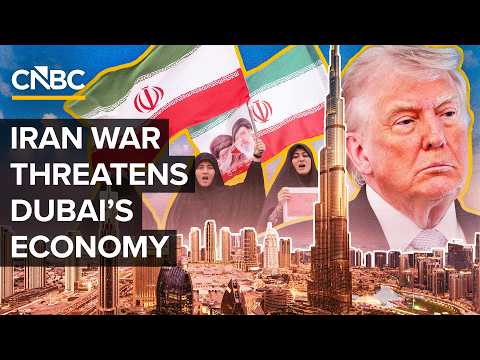
How Trump’s Iran War Is Threatening Dubai’s Reputation As A Safe Haven
Audio Summary
AI Summary
The United Arab Emirates (UAE) has been severely impacted by the war against Iran, experiencing greater repercussions than any other Middle Eastern or Gulf nation. News of an eleventh-hour ceasefire deal between the U.S. and Iran has caused U.S. stock futures and global equity markets to surge, with hopes that Iran will engage in good faith negotiations. However, concerns remain about potential Iranian attempts to undermine any fragile truce.
The conflict poses a significant threat to the UAE's carefully constructed economic model and its image as a safe haven. While wealthy residents are not necessarily leaving, major decisions are being postponed. The recovery of the UAE's reputation as a safe haven will take considerable time, far longer than repairing physical infrastructure like runways.
The economic fallout has been particularly evident in air travel, with dozens of international airlines suspending Gulf flights. Dubai International Airport experienced damage from debris early in the conflict, forcing capacity reductions. Fuel costs have risen sharply, and war risk insurance premiums for Gulf routes have also increased. The prolonged conflict is causing structural damage to Dubai's position as a global transit hub, a cornerstone of its economic strategy. The UAE's logistical importance is immense, with Jebel Ali being the largest port in the Middle East and among the top 10 globally. Its strategic location at the intersection of Europe, Asia, and Africa places it within an eight-hour flight of 80% of the world's population. However, Iranian missile and drone attacks have placed critical infrastructure like Jebel Ali at risk, leading to a significant drop in shipping volumes through the Strait of Hormuz. This disruption pressures Dubai's entire logistical value proposition as a re-export hub.
The UAE's energy sector, a major contributor to its economy with a production capacity of around 4 million barrels per day, has also been hard-hit. Iranian attacks have targeted critical energy infrastructure, impacting oil prices and leading to a 30% increase in fuel prices within the Emirates, a rare occurrence. The timeline for restoring oil and gas infrastructure to pre-war levels is a major concern, with recovery potentially measured in years.
Financially, the UAE's stock markets in Dubai and Abu Dhabi have lost approximately $120 billion in value. The Dubai financial market saw a 16% plunge in the first month of the war, and the Dubai International Financial Center experienced a period of inactivity. Despite the widespread worry, daily life in Dubai continues with people frequenting restaurants and malls, though a general sense of caution prevails. Tourism, which accounts for 11-15% of Dubai's GDP, has been severely detrimental affected. The government has introduced a rescue package to support these struggling sectors.
The UAE insists that a ceasefire is insufficient and requires security guarantees from Iran. This conflict is expected to lead to a re-evaluation of Gulf foreign relations, not only with Iran but also with the United States, raising questions about the reliability of the U.S. security umbrella. The long-standing security partnership between the UAE and the U.S. is a factor in Iran's targeting of the UAE, which Iran perceives as a launchpad for U.S. operations. The conflict is likely to solidify the security relationship between the U.S. and the UAE, with both nations aligned in their goal of preventing Iran from attacking U.S. allies in the Gulf.