10 Recent AAA Games That Actually KILLED IT
Audio Summary
AI Summary
This video highlights ten recent AAA games that have "killed it," meaning they have exceeded expectations and delivered exceptional experiences, despite the general perception of AAA gaming as often disappointing.
Starting at number 10, **Resident Evil Requiem** is praised for Capcom's consistent quality. The game successfully blended the horror-focused gameplay of Resident Evil 7 with the action-oriented style of Resident Evil 4, a risky premise that paid off. The reviewer notes it's the smartest thing Capcom could have done, mastering both styles and combining them. The game is a celebration of the series, filled with easter eggs and callbacks, and became the fastest-selling Resident Evil game ever, selling 6 million copies.
At number 9, **Call of Duty Black Ops 6** is presented as a bright spot in a decade of often disappointing Call of Duty titles. While acknowledging the franchise's rough patches, the reviewer highlights Black Ops 6's entertaining campaign with classic set-piece moments and wild gameplay swings, including a notable hallucination/zombie ghost level and a well-executed open-world segment. Despite a cliffhanger ending and inconsistent presentation, it's considered a relative masterpiece compared to its predecessors and successors.
Number 8 is **Death Stranding 2**. Hideo Kojima is credited with delivering a sequel that expands on the first game, offering more stealth and Metal Gear-like elements. The game is praised for its engaging and entertaining nature, with constant introduction of new elements, varied terrain, and unique hazards. While some find it too easy or the dialogue excessive, these are seen as characteristic of Kojima's style, reminiscent of classic PlayStation 1 and 2 era games with modern conveniences and impressive visuals. It's described as a weird yet digestible game that rides the line between avant-garde and crowd-pleasing.
**Marvel's Spider-Man 2** ranks at number 7. While initially some found it less coherent and mechanically fresh than the first game, the reviewer believes it's a standout title, delivering one of the best traversal systems and offering absurd, cinematic, and interactive moments of visual spectacle. The action sequences, like the Sandman opening and the Venom rampage, are highlighted as highlights that put live-action movies to shame. The game is commended for its boss fights, particularly the encounter with Kraven.
At number 6 is **Indiana Jones and the Great Circle**. Despite initial skepticism due to Bethesda's quiet approach, the game proved to be an excellent Indiana Jones adventure and one of the best immersive sims. It blends linear story and set pieces with massive open zones, allowing players to approach situations stealthily or aggressively, even incorporating social stealth. The game successfully adapts the slapstick nature of the movies into its combat, using makeshift weapons for absurd and fun encounters.
**Elden Ring's Shadow of the Erd Tree** takes the number 5 spot. This DLC is considered almost a sequel in scale and quality, expanding on Elden Ring's open-world gamble. It's described as incredibly challenging, dense with new content, and more accomplished than previous FromSoftware DLCs. The interconnected world, seamless transitions, and challenging boss encounters are praised, with a new system that rewards exploration and gradually powers up the player, making it more accessible than traditional Souls-like games.
Number 4 is **Black Myth Wukong**. This game is lauded for its simple yet deep combat system, limited moveset, and single weapon that still offers mechanical depth. The main draw is its incredibly lush visuals and a vast number of unique enemy and boss encounters, all well-designed and challenging. While some segments can feel like boss rushes, the overall experience is a long and traditional action game with Souls-like elements, striking a balance between Souls-like unforgiving difficulty and Devil May Cry-style action.
**Final Fantasy VII Rebirth** is ranked at number 3, described as a "quadruple A" game with mind-boggling production values and immense self-indulgence from Square Enix. The game is massive, with bespoke environments, detailed animations, and unique interactions, making the previous remake look like a tech demo. Even the mini-games are elaborate. The reviewer calls it an "irresponsibly big game."
At number 2 is **Alan Wake 2**. Remedy's longest and most self-indulgent game, it features unique segments like a rock opera retelling and an abstract short film. It's essentially two distinct campaigns stitched together, both feeling complete and rarely intersecting in ways that don't feel earned. The game is well-made, looks fantastic, and expands the Remedy Connected Universe, offering a satisfying continuation to Alan Wake's story.
Finally, at number 1 is **Donkey Kong Bonanza**. Developed over seven to eight years, this game, despite not having the traditional AAA graphical prowess of other titles on the list, is highlighted for its innovation and excitement. It transforms traditional platforming into something more free-form, allowing players to climb anywhere and smash almost anything. The game takes Mario Odyssey's approach to freedom and pushes it further with open levels that can be dismantled. Nintendo is recognized for reinventing its franchises and pushing game design forward, with Bonanza being a AAA title exhibiting indie innovation.
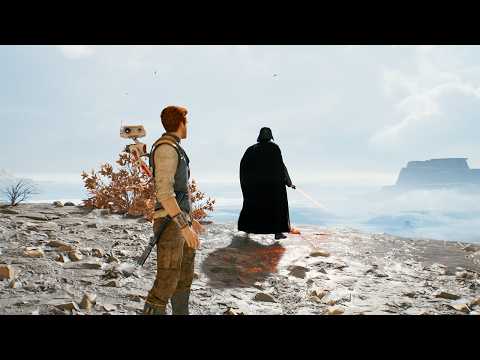
The video also includes a couple of bonuses: **Star Wars Jedi: Survivor**, praised for being bigger, better, and more polished than its predecessor, with deeper combat and rewarding exploration, and **Resident Evil 4 Remake**, which successfully enhanced one of the most revered games of all time. Lastly, **Kingdom Come Deliverance 2** is mentioned as a AAA game with an indie heart, featuring fantastic production values, beautiful design, an intriguing story, and hardcore RPG mechanics, blending elements of Red Dead Redemption with esoteric European RPGs.