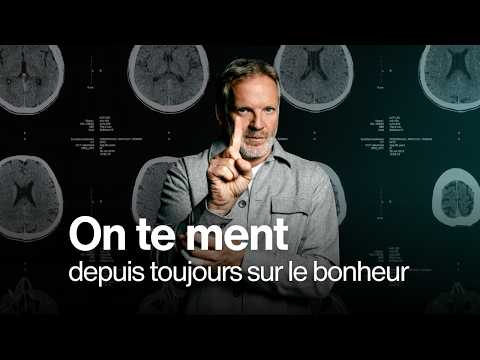
Les 4 Hormones qui CONTRÔLENT votre cerveau (et leur côté obscur)
AI Summary
In 1954, researchers James Olds and Peter Milner conducted a groundbreaking experiment at McGill University that serves as a chilling warning for modern humanity. They implanted an electrode into the "pleasure center" of a rat’s brain, connecting it to a lever that the animal could press to receive a direct discharge of pure pleasure. The results were catastrophic: the rat became so obsessed with the lever that it stopped eating, drinking, and ignoring potential mates. It pressed the lever up to 7,000 times per hour until it eventually died of exhaustion. This rat, the video suggests, is an extreme version of the modern human trapped in a cycle of hormonal manipulation.
Our brains are governed by four primary "happiness" hormones: dopamine, serotonin, oxytocin, and endorphins. While we are often told these are our allies, each possesses a "dark side" that can make us dependent, manipulable, and ultimately miserable.
**Dopamine: The Illusion of Happiness**
Dopamine is widely misunderstood as the hormone of pleasure. However, neuroscientist Wolfram Schultz demonstrated that dopamine is actually the hormone of *anticipation*. In his studies with monkeys, the dopamine spike occurred when the monkey saw the signal for a banana, not when it actually ate it. Dopamine makes you believe you will be happy, driving you to scroll through social media or wait for a package delivery.
Dr. Anna Lemke, an addiction expert at Stanford, explains that the brain functions like a balance between pleasure and pain. Every dopamine spike is followed by an equivalent "crash" to maintain homeostasis. This is why, after hours of scrolling TikTok, you feel empty and irritable rather than satisfied. Furthermore, Professor Robert Lustig notes that excessive dopamine actually destroys serotonin receptors. In short, the more you pursue cheap pleasure, the less capable you become of experiencing genuine happiness. This is a mechanism exploited by the tech industry through variable reward loops, similar to slot machines, to keep 4.7 billion smartphone users hooked.
**Serotonin: The Trap of Social Status**
Serotonin is often linked to well-being, but its evolutionary roots lie in social status. Research by Michael McGuire showed that alpha primates have higher serotonin levels, which drop when they lose their status. The dark side of serotonin is that the brain cannot distinguish between authentic respect and artificial status.
Today, we chase serotonin through "likes," job titles, and luxury goods we cannot afford. This artificial status is fleeting, requiring constant renewal. Psychologist Jean Twenge analyzed data from 11 million adolescents and found that since the rise of smartphones around 2012, depression rates have surged by 60%. Our brains, designed for small groups of 50 people, are now struggling to process constant comparison with four billion people online.
**Oxytocin: The "Us vs. Them" Molecule**
Known as the "love hormone," oxytocin is released during physical touch, sex, and bonding with children. While neuroeconomist Paul Zak calls it the "moral molecule" because it increases trust and empathy, it has a dangerous exclusionary side. Oxytocin creates selective trust; it strengthens the bond with your "tribe" but increases aggression and mistrust toward outsiders.
This chemical "us vs. them" mentality explains why teenagers join gangs or why people remain in toxic, abusive relationships. In the cycle of domestic violence, the reconciliation phase floods the brain with oxytocin, creating a chemical trap that makes it physically painful to leave. Cults also use this mechanism by isolating individuals and creating an intense, controlled "new family" environment where oxytocin bonds the member to the group while detaching them from the rest of the world.
**Endorphins: Masking the Alarm**
Endorphins are the body’s natural painkillers—literally "endogenous morphine." They allowed our ancestors to continue running despite injuries. However, the danger lies in the fact that endorphins *mask* pain rather than eliminate it.
Some people become addicted to the relief that follows pain, leading to risky behaviors like extreme sports or the "no pain, no gain" culture. This mindset encourages people to ignore vital signals of exhaustion or injury, potentially leading to burnout or physical collapse. Pain is a signal, but endorphins simply "turn down the volume" on that alarm.
**The 45-Day Path to Balance**
None of these hormones are inherently evil; they were designed for survival. However, our modern world hijacks these systems. To reclaim control, the video suggests a 45-day cycle to rewire neural reward circuits. This includes a radical 30-day "dopamine fast" to restore receptor sensitivity.
Practical steps include replacing "cheap" dopamine (scrolling, junk food) with high-effort rewards like reading or exercise. For serotonin, the goal is to measure value through personal accomplishments rather than external validation. For oxytocin, one should invest in reciprocal, healthy relationships. Finally, for endorphins, one must learn to listen to pain and prioritize recovery as an act of intelligence. True happiness is not found in a fleeting chemical spike, but in a deliberate, daily balance.