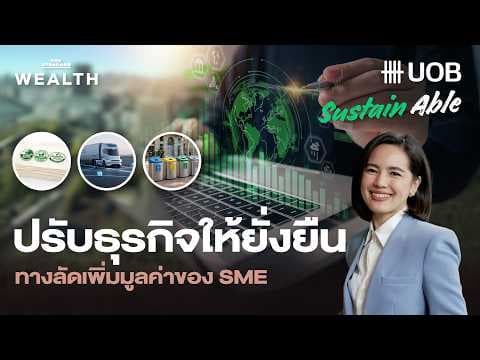
โอกาสทองของ SME ในเศรษฐกิจคาร์บอนต่ำ | UOB SustainAble EP.2
Audio Summary
AI Summary
For SMEs, maintaining sales and managing cash flow are difficult challenges, making long-term sustainability seem unattainable. However, integrating sustainability isn't a burden but a stepping stone to higher product prices, appealing to major clients, and reducing expenses. UOB Sustainable explores why Thai SMEs must embrace green practices.
The business world is interconnected, with over 90% of Thai businesses recognizing sustainability's importance, yet only half act on it. This creates a risk for SMEs. Large companies, both Thai and global, are setting net-zero goals, requiring supply chain partners to reduce carbon emissions (Scope 3). If an SME cannot demonstrate carbon footprint reduction, they risk losing business to green-supporting providers. Stricter global regulations, like Europe's CBAM, also impact export businesses. Consumer trends show 78% are willing to pay more for environmentally conscious brands. Failing to adapt means falling behind competitors.
Opportunities exist within these challenges. LT Automotive Co., Ltd., a third-generation rubber business in southern Thailand, adapted to the EU Deforestation Regulation (EUDR) by adjusting inspection processes and achieving E-code sustainability assessment. Their smoked rubber sheets transformed into premium raw material for leading brands, increasing sales and customer trust due to traceability and EUDR compliance. This gives them greater bargaining power.
Another example is Impact Muang Thong Thani partnering with "Keep" to manage event waste, sorting and storing data for sustainable development. This reduced costs and attracted corporate clients prioritizing sustainability. KMP Corporation, a logistics business, created a shared platform for transport, reducing empty trips, fuel costs, and carbon emissions, increasing profits and encouraging partners to adopt sustainable practices.
Hotels with Green Hotel Certificates attract high-quality tourists, particularly from Europe and Scandinavia, who pay more for truly green accommodations. This expands the customer base without price competition.
UOB offers three steps for SMEs to begin their sustainability journey. First, the free UOB Sustainability Compass online tool assesses a business's current level and provides a customized roadmap. Second, the Sustainability Innovation Program connects SMEs with trusted green tech partners for solutions like solar energy or waste management, and helps access government funding. Third, UOB provides funding solutions like Solar U Energy or Green Loans with tailored interest rates to shorten break-even points.
Sustainability should be viewed as a ladder for growth and expansion. Start small, use available tools, consult experts, and secure reliable funding. Building a sustainable business is crucial for survival and growth.