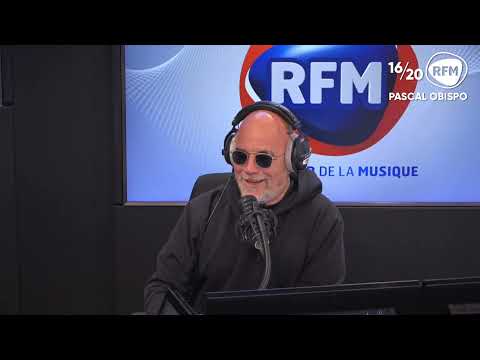
Pascal Obispo : "Je voulais montrer tout ce que ces artistes nous avaient légué"
Audio Summary
AI Summary
Pascal Obispo is featured on RFM to discuss his upcoming album, "Heritage," which is a collection of duets with various French artists. He explains that he decided to release multiple duets before the album's full launch on May 22nd to give listeners a taste of the collaborations. The album, "Heritage," is described as an anthology of French songs, with Obispo aiming to embody the spirit of the artists he's singing with and adapt their lyrical styles as a composer.
Obispo mentions that the album will feature 25 songs in total, with the first volume releasing on May 22nd and a second volume expected in October. He highlights that he wanted to move away from the traditional approach of releasing a single followed by an album, instead opting to showcase the duets upfront. He also introduces an accompanying application, described as an "Instagram for listening," which will allow access to more songs.
The conversation then focuses on the first single released from the album, a duet with Francis Cabrel titled "Il faudrait que pleuve l'amour" (It Should Rain Love). Obispo expresses his excitement about this collaboration, noting that while he has sung with Cabrel before in a choir, this marks their first official duet. He emphasizes his role as a composer who sings, a position he finds fulfilling and that guided his approach to this album. He sought out artists who inspired him and whose music resonated with his own life experiences.
Obispo elaborates on his inspirations, mentioning his lifelong admiration for artists like Claude François, Marc Idzard, Paul Nareff, Souchon, and Wouzy. He also pays homage to Johnny Hallyday, with a song titled "Appelle-moi Johnny" (Call Me Johnny), which also references Souchon and Wouzy. This inclusion demonstrates his intention to celebrate and acknowledge the artists who have shaped French music. The musical style of "Heritage" is described as having a 70s spirit, with influences of artists like George Harrison and blues chords.
The discussion also touches upon other collaborations on the album. Obispo reveals virtual duets with Michel Delpech, for whom he previously recorded an album of 18 titles, and with Daniel Levy. He also mentions a virtual duet with Philippe Pascal, whom he considers an idol. Another notable collaboration is with the artist Icar, with whom he shares a humorous exchange about incorporating Icar's unique expression "du coup" into a song. Icar sends a video message expressing his hope that "du coup" can be included in a future song, playfully suggesting it's negotiable. Obispo finds this humorous and plans to incorporate it, seeing it as a way to add a touch of "punk" and address annoying, yet funny, aspects of life.
He also mentions other artists featured on the album, including Zazie, Renaud, Gaëtan Roussel, Axel Bauer, Michel Jonas, and Julian Clerc. The song "White is White" by Michel Delpech is also highlighted, with Obispo having created a virtual duet for it.
Obispo explains his decision to release the second volume of "Heritage" in October, drawing a parallel to George Lucas's approach with Star Wars, releasing films out of chronological order. He views this as a playful and unconventional way to present his work.
The segment concludes with Obispo expressing his gratitude for being on RFM and sharing his music. He then introduces a song by The Cure, "Boys Don't Cry," as a closing track, mentioning Robert Smith, Simon Gallup, and Laurence Tolhurst as the band members at the time. The interview ends with thanks exchanged between Obispo and the RFM hosts.