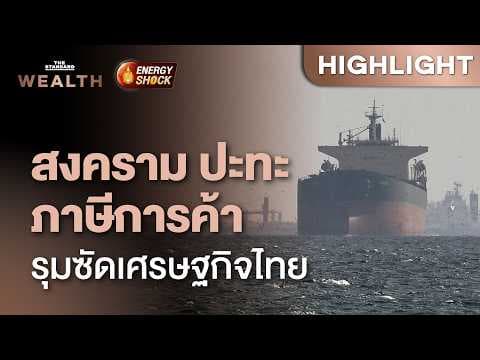
2 ความเสี่ยง ‘มาตรา 301-สงครามตะวันออกกลาง’ รุมซัดเศรษฐกิจไทย | THE STANDARD WEALTH
Audio Summary
AI Summary
The discussion focuses on the Thai economic situation, highlighting several key challenges and potential impacts. A significant concern is the ongoing trade dispute with the United States, specifically the potential imposition of Section 301 tariffs. The speaker explains that the US Supreme Court ruled against reciprocal tariffs, leading to the consideration of Section 301 as an alternative. This section allows for investigations into unfair trade practices, and the US has initiated such a process, with Thailand needing to submit defense documents by April 15th. The outcome is expected by June, before the expiration of the current Section 122, which currently imposes a 10-15% tariff. The effective rate for Thailand has been around 19.4%, and while a reduction is anticipated under Section 122, the new Section 301 tariffs could vary significantly by product.
The investigation under Section 301 focuses on three main allegations against Thailand: overproduction capacity, the use of forced labor in imports (specifically mentioning the fishing industry and pet food/clothing), and a substantial trade surplus with the US. The Thai representatives are preparing to defend against these claims.
Beyond trade issues, the war in the Middle East is another major factor impacting the global and Thai economies. This conflict directly affects energy consumption and prices. The speaker expresses greater concern about the Middle East situation than the trade tariffs, emphasizing its broader economic implications. The potential for rising oil prices is a significant worry, as it can lead to inflation, although the current economic momentum in Thailand is weaker than during the Russia-Ukraine crisis. Unlike the previous period of reopening and stimulus, Thailand's economy is showing a downward trend, with projected GDP growth slowing significantly in the coming quarters.
This economic slowdown, coupled with a decline in consumer savings (which have fallen below the trend line due to prolonged sluggishness), means that businesses may struggle to pass on increased costs to consumers, potentially limiting inflation. However, the government's ability to provide financial support is also constrained by increasing public debt, which is nearing its ceiling. This limits the scale of stimulus measures compared to the COVID-19 or Russia-Ukraine periods.
The oil fund is a critical element in managing fuel costs. If global oil prices remain around $90-100 per barrel, the fund could incur substantial losses, requiring government subsidies and impacting public finances. The speaker outlines scenarios where diesel prices could lead to significant deficits for the oil fund. The duration of the Middle East conflict is a key variable determining the extent of these impacts.
Several sectors are identified as particularly vulnerable. The automotive industry and its parts, tires, and businesses heavily reliant on trade with China are at risk due to the Section 301 tariffs. Tourism is also affected by rising oil prices. Household debt is a concern, as a sluggish economy and potential price increases could exacerbate existing debt burdens. Supply chains, particularly in petrochemicals, are also impacted.
Conversely, some sectors may benefit or remain resilient. Advanced technology, including hard disk drives, electronic components, and sectors supporting AI and data centers, is seen as a growth area. Public utilities and healthcare are considered defensive sectors with consistent demand. Gold is also mentioned as a long-term investment, particularly in the context of potential dollar devaluation.
Investment advice for navigating this volatile environment includes avoiding sectors heavily reliant on exports to the US, automotive, rubber, and businesses with high debt levels. Investors are advised to consider offensive strategies in areas like gold and energy (e.g., PTT EP), and defensive strategies in healthcare. Short-term bond investments are suggested, with a cautious approach to longer-term bonds due to interest rate uncertainty.
For the government, recommendations include focusing on water management, supporting the oil fund, carefully considering monetary policy in light of inflation and economic growth, attracting Foreign Direct Investment (FDI), and actively pursuing Free Trade Agreements (FTAs) with Europe.
From a public perspective, saving money, diversifying investments, avoiding new debt, and clearing existing debt are crucial. Replacing conventional energy sources with renewables is also advised due to price fluctuation risks.
The overall outlook for Thailand's GDP is projected to be around 1.4% in the next four years, with a potential downside to 1% if the conflicts and trade issues persist. Export forecasts have been revised downwards, potentially reaching -4%. The situation is characterized by dual pressures from trade taxes and rising oil prices, creating a complex and uncertain economic landscape.