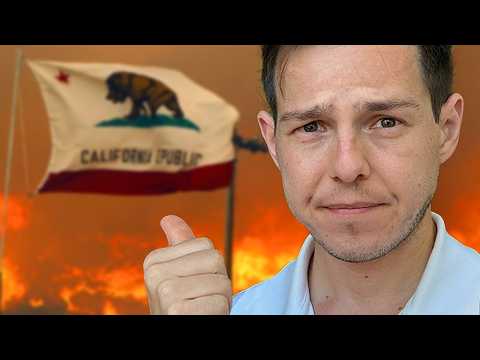
I'm Selling Everything...What Happened
Audio Summary
AI Summary
The speaker is making the difficult decision to sell all of their Los Angeles properties, a move they never anticipated making, especially given past advice from wealthy real estate buyers who regretted selling properties. The primary reason for this decision is that these properties are not generating substantial income. After accounting for property taxes, increasing insurance costs, repairs, maintenance, property management fees, city registration, and various miscellaneous expenses, the total cash flow from these properties amounts to only 4-5% of the built-up equity. This return is comparable to risk-free investments like treasuries, municipal bonds, savings accounts, and money market funds, but without the associated time, risk, headaches, endless restrictions, constant communication, negotiations, and exorbitant permit fees imposed by the city of Los Angeles.
The decision stems from a desire to simplify life and reduce the immense mental burden associated with property ownership. The speaker emphasizes that the cost is not merely financial but also includes significant time, stress, and mental energy. While real estate was instrumental in their early success and identity, the emotional attachment is no longer outweighing the practical costs. The "buy and hold" strategy, while previously effective, has not accounted for the opportunity cost of mental bandwidth, stress, increased restrictions, and decreased returns.
The speaker debunks the myth of real estate as passive income, even with a property manager, noting that constant issues, minor repairs, inspections, and new city ordinances invariably demand time and attention. These ongoing distractions, likened to "background noise," pull focus away from more important tasks. This realization aligns with a broader effort to eliminate anything that no longer serves them, including shutting down a coffee company, scaling back YouTube content, and selling their "forever home." Each time something has been released, it has brought a sense of clarity and well-being.
The speaker now values the ability to focus 100% of their attention on a single task each morning, something impossible with the constant demands of managing multiple properties. They have come to realize that simplicity is not just a luxury but a foundation for a happy and productive life, as too much going on negatively impacts work, creativity, and decision-making.
A significant part of the video is dedicated to explaining how personal data is collected and sold by data brokers, leading to an inundation of spam calls, emails, and phishing attempts. The speaker introduces Incogni, a sponsor, as a solution. Incogni contacts data brokers to request the removal of personal information and handles any objections. They also conduct repeated removal requests to ensure information stays off the market and offer an unlimited plan for submitting custom links for removal of information found on shady websites. The speaker stresses that removing personal information from these databases helps regain privacy and reduces vulnerability to scams and targeted attacks. A promotional offer for Incogni is provided.
Returning to the property sales, the speaker clarifies that they are not panic selling. The properties are well-maintained with good tenants and are being sold at a fair price in a softening market where inventory is up and buyers have more negotiation power. By selling now, the speaker can invest the equity into markets immediately, potentially earning more without the associated work, and effectively buying back their time and mental energy.
The most challenging aspect of this decision is the feeling of giving up a core part of their identity. Real estate defined their career and was the genesis of their YouTube channel. However, they acknowledge the "sunk cost fallacy" – holding onto something simply because it was part of their past, even if it no longer serves their future.
The speaker also touches upon the broader housing crisis in Los Angeles and California, arguing that restrictive policies like rent control and slow, unpredictable permitting processes are exacerbating the problem by discouraging landlords and developers from adding more inventory. They advocate for incentivizing private development and creating a system that supports rather than hinders investment in housing.
The freed-up capital from the property sales will be invested in a diversified portfolio including tax-free municipal bonds, the S&P 500, international and emerging stocks, and a Bitcoin ETF for additional diversification. This strategy aims to replicate rental income without the associated headaches, taxes, insurance renewals, and risks. This shift allows the speaker to dedicate 100% of their attention to core tasks, such as expanding their podcast, "The Ice Coffee Hour," establishing a private entrepreneur group, and creating niche content for channel members.
The speaker concludes by encouraging viewers to take risks and try new things, emphasizing that the worst-case scenario is gaining valuable experience. For investors considering selling rental properties, the advice is to carefully analyze the financial and, crucially, the mental costs. If the numbers, including stress, don't justify the returns, selling should be considered.