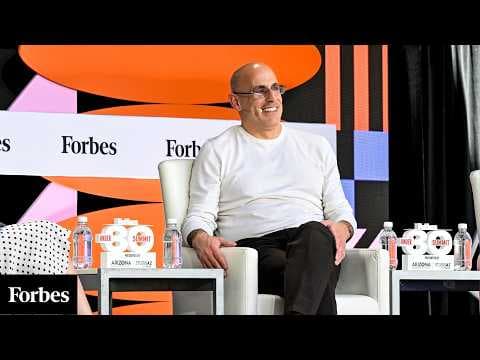
Business Lessons From A Two-Time Unicorn Founder
Audio Summary
AI Summary
The speaker, a successful entrepreneur known for building and selling companies like Diapers.com to Amazon and Jet.com to Walmart, shared insights into entrepreneurship, fundraising, and company building. He emphasized that few founders of this generation have achieved what he has, and his experiences offer valuable lessons for early-stage entrepreneurs.
He began by addressing the question of whether entrepreneurs are born or made. He believes the defining characteristic of an entrepreneur is the willingness to work 100 hours a week for something with a low probability of success. Unlike a traditional job with a known salary and bonus structure, entrepreneurship demands intense effort with an uncertain outcome, requiring a mindset comfortable with failure and risk.
A key insight he shared is that the status quo is often riskier than imagined, while the risk of change is often overestimated. He advises entrepreneurs to be objective, constantly evaluate new information from customers, the market, and competitors, and understand that taking risks can often reduce the overall risk of a startup. He illustrated this with his experience at Wonder, where the company initially operated 450 trucks that cooked and delivered food to homes. Despite a positive customer experience, an objective assessment of capital return and other issues led to a major pivot. The company had tested a brick-and-mortar model, and faced with insufficient capital to run both the truck business and the new model, he made the difficult decision to halt the truck operations, losing $100 million and taking revenue to zero to start over with the brick-and-mortar model. He stressed that while this seemed like a high-risk move (zero revenue, potential investor backlash), remaining with the truck model, if objectively assessed, would have ultimately failed. This self-awareness and objectivity are crucial, as many entrepreneurs tend to overestimate their current position.
Regarding fundraising, he highlighted the significant effort and time required. He has personally raised over $3 billion across 15 rounds, enduring approximately 2,800 rejections out of 3,000 pitches – a 93% rejection rate. His hit rate is about 1 in 14 investors. He dedicates hundreds of hours to perfecting pitch decks and stories, often conducting 100 or more pitches per round, and advises starting the fundraising process about six months before the desired closing date. He also challenged the conventional wisdom about dilution, stating that founders should not focus on it. Instead, the goal should be to raise as much capital as can be efficiently deployed to create shareholder value, as it's rare that the investment won't grow the share price by more than the dilution.
He also discussed his "VCP" (Vision, Capital, People) framework, which he considers the heartbeat of his businesses. He spends 80-90% of his time on VCP, even thinking about it before bed. At Wonder's R&D Center, there's a dedicated "VCP room" with whiteboards detailing every aspect: vision statement, strategies, critical metrics, organizational structure (color-coded by level), capital plan, mission, values, behaviors, compensation system, and performance management system. He meets with his leadership team weekly to continuously tweak these components. He believes that once VCP is correctly established, it attracts the best people and fosters an environment where "magic happens."
He advised founders to be highly intentional with their time, focusing on foundational pieces and hiring the right people. If a founder is doing day-to-day work, it indicates they haven't hired the right person. His goal is to reach a point where he can focus entirely on VCP, allowing the team to execute. Effective communication of the vision and strategy, down to the nuances of every word, is vital to ensure everyone in the organization makes decisions aligned with the founder's intent.
On the topic of finding passion, he advised aspiring entrepreneurs to follow their passion rather than solely focusing on market gaps or money-making opportunities. He believes any business can succeed with 100 hours of work per week for a low probability of success, provided there is unwavering passion. This passion is essential to sustain commitment through difficult times.
Regarding building a network, he emphasized the value of co-founders, especially best friends, for support and shared commitment during the lonely and challenging early stages of a startup. However, he cautioned against extensive "networking" for networking's sake, stating that true startup founders should be 100% focused on their business. Investors often become advisors and mentors, offering genuine insights into the business.
For founders launching a business today, his primary advice is to be "AI native." He believes companies starting now must integrate AI from the ground up, allowing them to build similar-sized businesses with a fraction of the workforce. He also mentioned his personal use of AI to direct his daily meals, feeding it blood biomarkers, sleep data, and exercise data to achieve health goals, highlighting it as a future trend in personalized nutrition.
Finally, reflecting on his early pitches for Diapers.com, he wished he had given himself the advice to "go all in" and remove any "plan B" or escape ramp. While he wouldn't recommend putting every last dollar into a venture as he did (emptying his bank account), he advises investing enough to feel uncomfortable and create a mindset where failure is not an option. He continues this practice, having invested a substantial portion of his net worth into Wonder.