Il prétendait être leur fils disparu : Le mystère Frédéric Bourdin - Old Thread
AI Summary
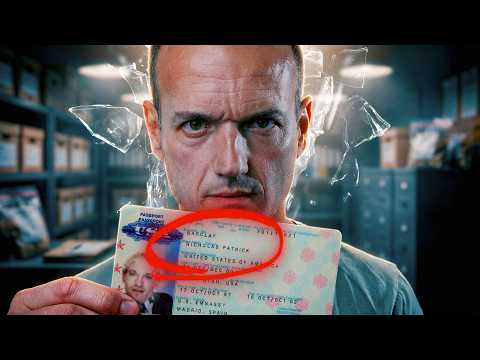
On October 18, 1997, at San Antonio Airport in Texas, a local television camera filmed a woman awaiting her son's arrival. She hadn't seen him in three years and had lived in agonizing uncertainty about whether he was alive or dead. When he finally appeared, she paused, then embraced him tightly. She believed it was her son, Nicolas Barclay, who had vanished at 13 and was supposedly found in Spain after three years. However, the man she was holding was not Nicolas Barclay; it was Frédéric Bourdin, a 23-year-old Frenchman.
Bourdin had successfully infiltrated the family, convincing the American embassy, Spanish social services, and even the FBI to issue him a passport under the name of a child he had never been, nor even met. He would live in their home for five months, sleeping in the missing son's bedroom, attending a Texan high school, and making friends. What makes this story particularly astonishing is his motive: he didn't do it for money, but simply to experience, for a few weeks, what it felt like to have a loving family. Bourdin, later dubbed "the Chameleon," usurped over 500 identities across Europe. Behind these actions, there might even be an unsolved murder.
Bourdin's strategy for becoming someone else began long before Texas, in a Parisian suburb. Born in Nanterre on June 13, 1974, his mother, Giseline, was just 17 and unmarried. At two and a half, he was entrusted to his maternal grandparents in Mouchamps, a small village. Growing up, he felt like an outcast, dressed in second-hand clothes and lacking a father figure. At 12, he was placed in a youth home, which he fled at 16. This was when Frédéric Bourdin began his life of impersonation.
His first attempt was in Paris, where he claimed to be Jimmy Sale, a lost British teenager. Though Jimmy Sale existed, Bourdin's poor English quickly exposed him. This failure taught him a crucial lesson: to be believed, he needed to master the language, history, and culture of his target. He dedicated himself to observing others, becoming fluent in English with a perfect accent, and nearly bilingual in Spanish. He also studied the intonations and mannerisms of teenagers in these languages, as well as in French. His goal was always to pass for an adolescent, not an adult. He used depilatory creams to hide facial hair, wore caps to conceal his hairline, and presented himself as small and vulnerable. Bourdin understood that portraying a child in distress would trigger adults' protective instincts, causing them to cease questioning and accept his story.
From 1990 to 1997, Bourdin adopted multiple identities across Europe, often posing as Spanish orphans or Bosnian refugees fleeing the Balkan wars. The timing was strategic, as the conflict in ex-Yugoslavia made verification difficult. His modus operandi was consistent: he would enter a youth home, foster family, or hospital, receive shelter, warmth, food, and attention, then leave and repeat the process elsewhere with a new identity. By 2012, he claimed to have assumed over 500 identities in nearly every European country, driven by a desire to "be part of something."
By 1997, 23-year-old Bourdin had an Interpol file. Each time he was exposed, arrested, and released in one country (as his impersonations involved no deaths or serious harm), he would reappear in another under a new identity. Local police initially saw him as merely a strange child, but the repetitive pattern eventually led to his identification in Interpol databases. Psychologists who evaluated him estimated his IQ at around 139-140. He was trilingual, a strategist capable of improvising an identity from scratch in hours, and never stole money or physically harmed anyone. Crucially, he had never usurped the identity of a real missing child until that night in October 1997.
In a youth home in Linares, southern Spain, Bourdin faced a judge who threatened to take his fingerprints. He knew this would reveal his Interpol record and expose his imposture. With only one night to devise a plan, he called the American sheriff's services, obtained the number for the National Center for Missing and Exploited Children, and, pretending to be the Spanish director, reported an American teenager whose identity couldn't be established. An assistant provided profiles, and the name Nicolas Barclay, a blonde, blue-eyed, 13-year-old American boy who disappeared in San Antonio in 1994, caught his attention.
Despite his dark hair, brown eyes, French accent, and being 23 years old (seven years older than Nicolas would have been), Bourdin decided he could pull it off. In a single night, he fabricated an elaborate story. He dyed his hair blonde and convinced another child to tattoo a small cross between his thumb and forefinger, mimicking a mark Nicolas had. To explain his physical discrepancies, he claimed military captors had injected chemicals into his eyes to change their color. His French accent was attributed to three years of forced captivity in Europe, and his more mature appearance to the trauma he endured. He spun a tale of being abducted in San Antonio, sold to an international pedophile ring, held captive for three years, abused, and finally escaping. This narrative was strategically chosen because people are reluctant to question a victim of sexual abuse, invoking a "victim protection bias" that neutralizes critical thinking, even in seasoned professionals.
The next morning, Bourdin called the American embassy in Madrid, claiming to be Nicolas Barclay. The embassy contacted the family in Texas, and Nicolas's half-sister, Carey, flew to Spain. Despite undeniable physical differences, Carey, upon seeing him, asked, "My God, Nicki, is that you?" Bourdin replied, "Yes, it's me." During the return journey, Carey unknowingly fed him details about Nicolas's life, showing him photos and prompting him to "remember." The American embassy issued him a passport in Nicolas Barclay's name, and they flew to Texas.
For five months, Frédéric Bourdin lived with the Barclay family on the outskirts of San Antonio. He enrolled in high school, made friends, and even dated a girl. He slept in Nicolas's room and wore his clothes. Inconsistencies were explained away: his brown eyes were due to chemicals from his captors, his accent to his time in Europe, and his memory gaps to trauma. Every piece of evidence that should have exposed him was met with a bizarre yet coherent explanation.
The family's belief in such an improbable story can be attributed to three psychological mechanisms. First, confirmation bias: once the belief that "my son has returned" was established, the brain sought reasons to maintain it, amplifying confirming evidence and rationalizing or ignoring contradictory information. Second, ambiguous loss, a concept theorized by psychologist Pauline Boss. Families of missing children experience a unique form of grief, a state of both presence and absence, keeping them perpetually open to a reappearance. Bourdin's arrival offered them the priceless gift of ending uncertainty, making a few inconsistencies a small price to pay for such relief. Third, the "truth-default theory" by psychologist Timothy Levine, which posits that in ordinary communication, honesty is the default mode. People generally believe what others say unless there is a strong, usually verbal, signal to doubt.
It wasn't just the family who believed him. The American embassy, Spanish social services, and FBI agents all accepted his story, issuing him an American passport. The federal government's stamp on his identity made it difficult to doubt.
As Christmas 1997 approached, Bourdin's actions took an inexplicable turn. He stole Carey's car, drove to Oklahoma, and self-mutilated, leading to his hospitalization in psychiatry. The motive remains unclear, but it eventually led to his return to Beverly, Nicolas's mother, where his deception began to unravel.
In late 1997, the American investigative show "Hard Copy" learned of Nicolas Barclay's miraculous return. They sent private detective Charlie Parker to prepare a report. Meeting Nicolas at Beverly's home, Parker noticed something amiss. He saw a childhood photo of Nicolas with blue-gray eyes, contrasting with Bourdin's dark brown eyes. Discreetly photographing Bourdin, Parker used a little-known identification technique: ear morphology. Human ears are as unique as fingerprints, and their cartilage structure doesn't change with age. Parker asked the cameraman to zoom in on Bourdin's ears during an interview and later compared them to childhood photos. The ears did not match.
Parker alerted the FBI, and Special Agent Nancy Fisher took over the case. Fisher, despite admitting to being captivated by Bourdin's "performance," obtained a court order in February 1998 for fingerprints and a DNA test. Bourdin resisted, attempting to delay the inevitable by inventing a false lead about a "Jonathan Duran" who supposedly held crucial information. He eventually agreed to a blood test but retracted at the last moment. Sensing his deception was exposed, Bourdin confessed on February 24, 1998. The FBI obtained his fingerprints, and Interpol confirmed his identity and all his previous aliases. On March 6, he was arrested. In September 1998, he pleaded guilty to document fraud and perjury in federal court, receiving a six-year prison sentence, several times higher than usual recommendations. The judge justified the severity due to the emotional harm inflicted on vulnerable victims and Bourdin's deliberate obstruction of the investigation.
Bourdin served his full sentence, but before moving on, a crucial question arises: what if the Barclay family knew from the beginning? Since his arrest, Bourdin maintained that the family knew he wasn't Nicolas from day one, not due to pathological grief or cognitive bias, but because, he alleged, they were concealing a murder. He claimed Carey coached him on memories in Spain, telling him, "Remember, remember." In the 2012 documentary, he stated, "If you ask me if she believed I was her brother, no, she decided I was going to be her brother."
Several independent elements lend credence to this theory. Jason, Nicolas's older brother, called the police three months after Nicolas disappeared in September 1994, claiming to have seen his brother trying to break into the family garage. Police found no evidence. Such calls are common in family murder cases, as they create false proof that the victim is still alive, thus confusing the investigation. Furthermore, when "Nicolas" returned, Jason did not greet him at the airport, ask him questions, or express joy or relief. Bourdin suggested that the real Nicolas was killed by his family, and his impersonation served to clear them of suspicion. Following Bourdin's accusations, a murder investigation was opened but quickly closed, officially remaining unsolved.
However, it's essential to acknowledge that Frédéric Bourdin is a professional, brilliant liar. His theory of a complicit family, while compelling, also serves to divert attention from his own crimes, casting him as a whistleblower or even a victim. Given his ability to deceive an FBI agent, an American embassy, and social services across multiple countries, he could easily sway public opinion to his advantage. The simpler, more probable reality, supported by the psychological mechanisms discussed, is that a poor, devastated family, suffering from three years of ambiguous grief, encountered an extraordinary manipulator adept at assuming identities. They likely wanted to believe, and did believe, because it offered immense relief from their suffering. Even Agent Fisher stated that Bourdin could convince anyone if they were alone with him. The absolute truth remains unknown; Nicolas Barclay is still officially missing.
Bourdin's story didn't end there. Expelled to France in October 2003 after serving his six-year sentence, he resumed his impostures three months later. In February 2004, he called the gendarmerie, claiming to be Léo Balé, a 6-year-old boy who disappeared in the mountains in 1996, meaning he would now be 14. Despite Bourdin being 30, his juvenile appearance allowed him to deceive gendarmes and doctors for three days until a DNA test revealed the truth. In August 2004, he went to Spain, claiming to be an orphan from the March 11, 2004, Madrid bombings, leveraging the national tragedy and similar psychological triggers he used in other cases. Police again unmasked him.
In May 2005, Frédéric Bourdin finally stopped. In a 2012 interview, he attributed his change to adopting a cat. For the first time, he was responsible for another living creature, a responsibility he didn't want to abandon. The cat became his first genuine connection to his real world. In 2006, he met Isabelle, married her in 2007, and they had five children together. However, even now, Bourdin cannot be entirely himself. Recently, he admitted to playing Fortnite online, not as himself, but as a 12-year-old child. This small detail, perhaps the most revealing of all, shows that even in a seemingly normal life, the chameleon still exists.