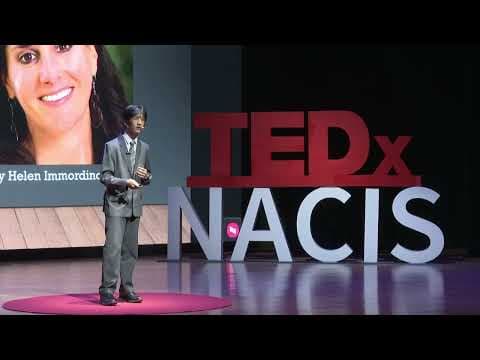
The Other Side of Laziness: Hotbed for Creativity | Chen Skyler | TEDxNACIS Shanghai Youth
Audio Summary
AI Summary
Phrases like "work hard" and "don't be lazy" are common, with laziness often viewed negatively. However, some of the world's greatest breakthroughs stem from a desire for efficiency, which can be understood as a form of "strategic laziness." This isn't about idleness, but rather achieving goals with less effort.
Our brain operates in two modes: focused and diffuse. The focused mode is for intense concentration, like studying. The diffuse mode, activated when relaxed—such as showering or playing games—is a creative powerhouse. It's when the brain makes unexpected connections, often leading to solutions that elude us during focused effort. This isn't accidental; it's rooted in neuroscience. Neuroscientists have shown that during rest, a network in our brain called the default mode network becomes highly active. This network is crucial for internally focused mental processes like creative thinking and making meaning from experiences, explaining why brilliant ideas often emerge when we're not actively forcing them. Strategic laziness is therefore not a lack of discipline, but an engagement of a vital part of the brain's creative circuit.
However, a "lizard brain" instinct, referring to primal brain structures, often holds us back. It favors predictable, busy work and fears the uncertain wandering of strategic laziness. True innovation requires quieting this fear and trusting the creative processes that emerge during rest. Constant busyness can overcrowd the brain, preventing big-picture thinking. Strategic laziness, by allowing the brain to rest and reconnect, enables it to think expansively.
Therefore, moments of "doing nothing" are not wasted time but essential for fostering brilliant ideas. Scheduling deliberate breaks, like walks or daydreaming, allows the brain to engage its diffuse mode. Laziness should be seen not as an enemy of productivity, but as a partner for creativity.